FLOWBIO SENSOR – measuring sodium and fluid loss.

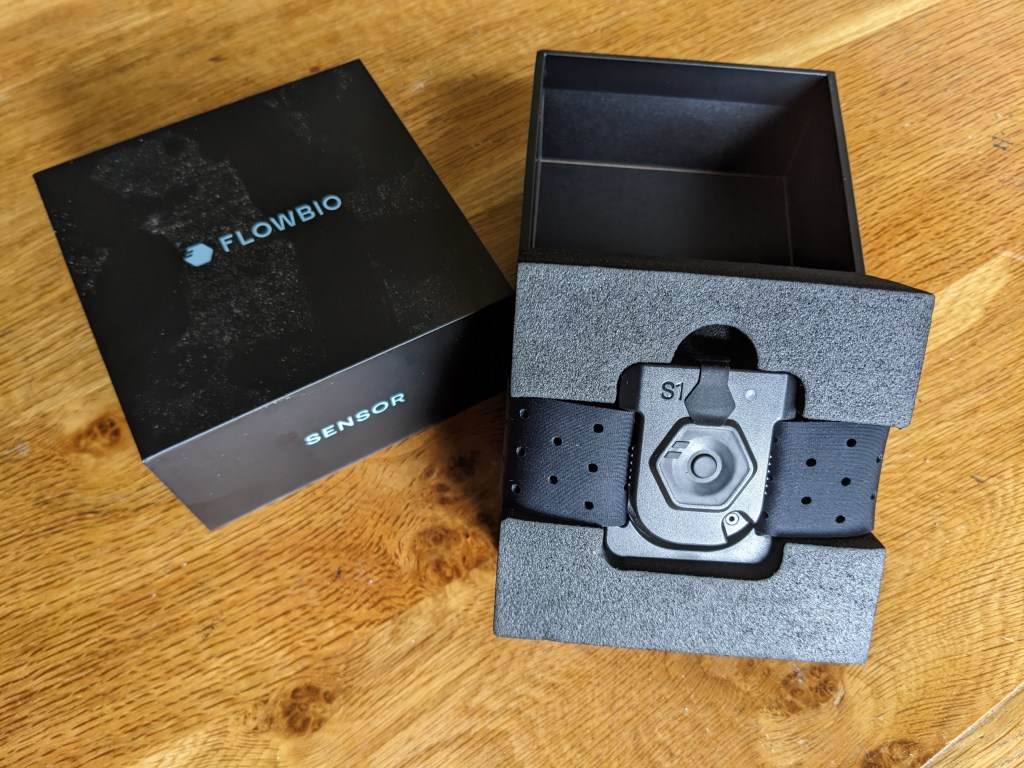
This is a great little gadget which I have found useful and easy to use. I have trialled it for a couple of months, with a bit of a gap when my watch died. I have tried to use it in different conditions and situations. It should arrive with you in a neat box containing the sensor, arm band for attaching, charging cable, two bottles for cleaning and two tiny plugs for the charging point to stop sweat getting into it.

Charge it, then protect the charging point with one of the tiny silicon covers provided. This prevents sweat entering the charging point. Download the app onto your phone. Sign in and follow the instructions. There is an app for both apple and android. I am working off android and I haven’t had any issues so it must be fairly simple. It asks you which of the main sports hydration brands you use, and it then uses this information to make it easier to enter what hydration you have taken in a session. Then you are ready to go.

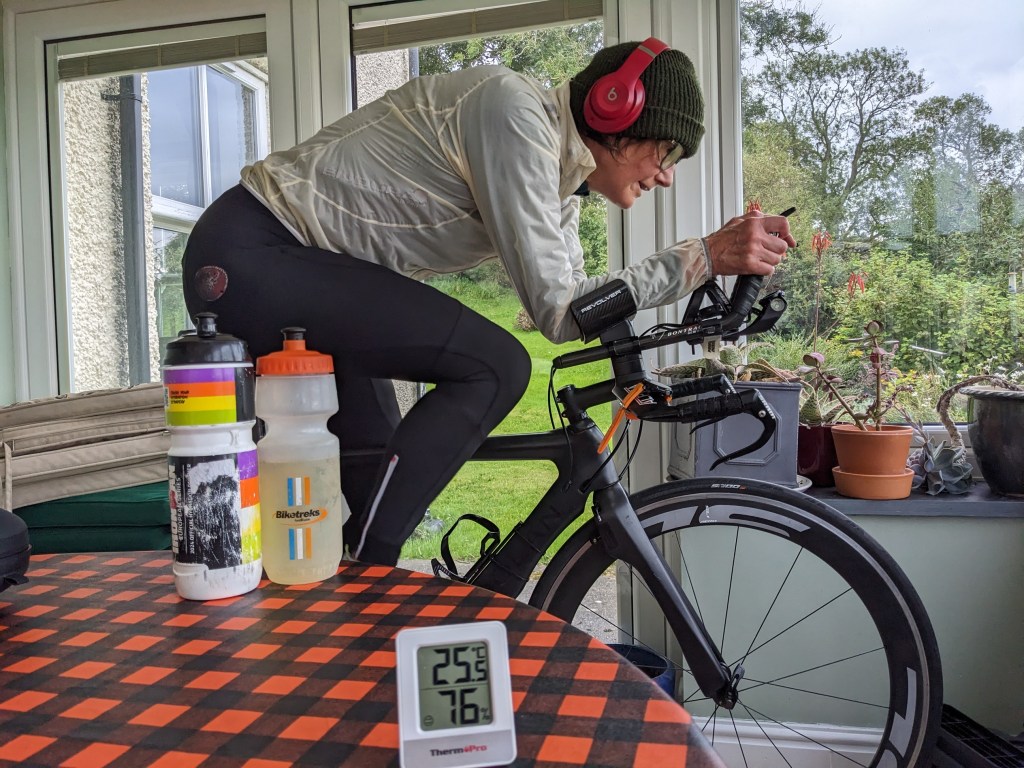
Your first session the recommendation is to work out in temperatures above 20 degrees and to hold a HR of at least 130 for a minimum of one hour. I interpreted this as work just into zone 3 (garmin) and I was probably the lower side of this in our conservatory and it seemed to work ok. After that sessions need to be longer than 30 mins to generate sufficient data. It will only work for cycling and running, no other sessions currently.  It can be used when racing triathlon, it can be worn safely under a wetsuit but will not record on the swim, only on the bike and run.
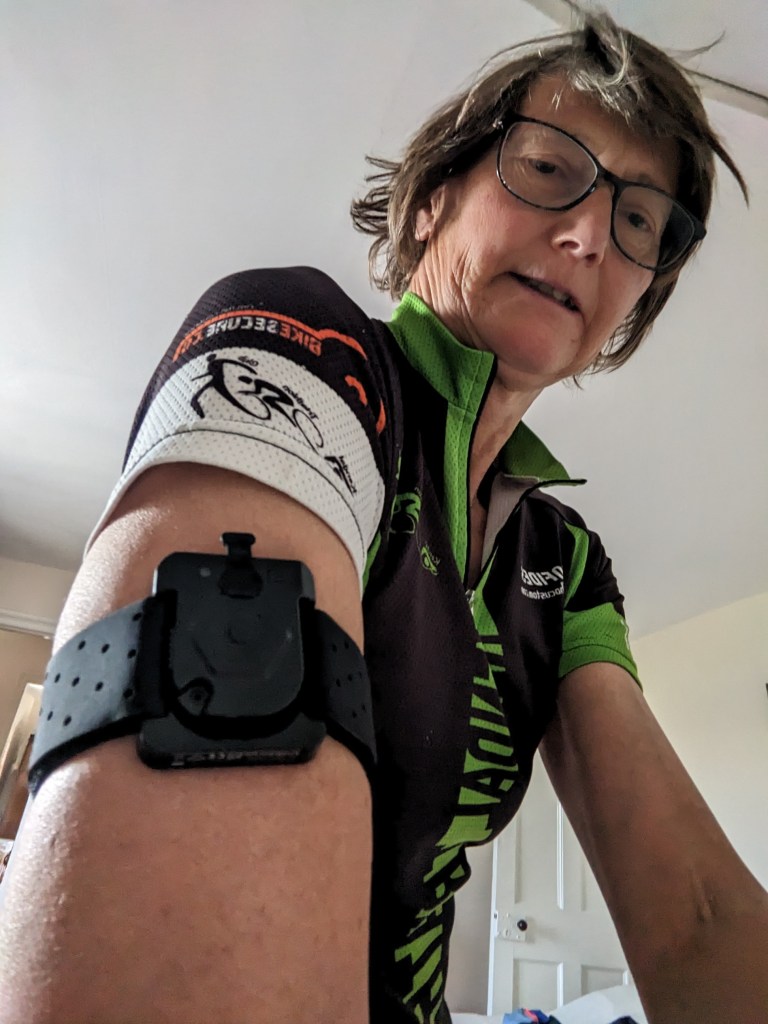
Before a session put the arm band around your arm and tighten it. Then turn the sensor on by pressing the button in the middle for two seconds. Lights will flash green.  Also turn on your tracking device – garmin or whatever.
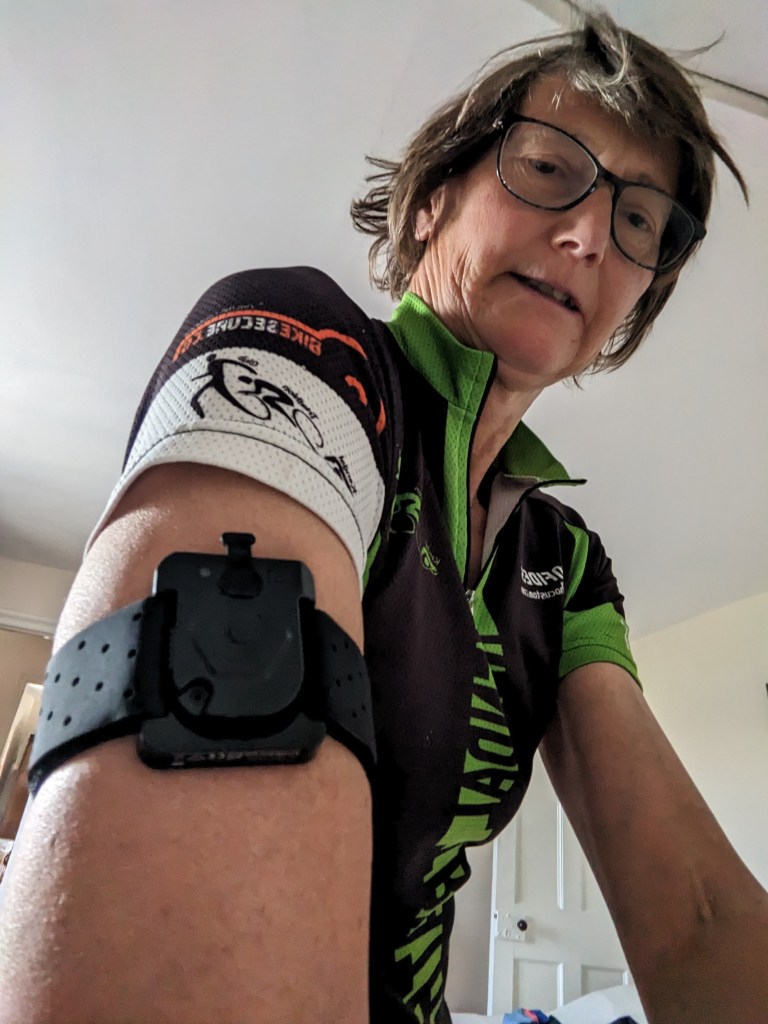
Complete your session. Turn the device off by pressing the button in the middle for two seconds. The light will go clear then turn off. Finish your session on your tracking device and encourage the sensor to synch with the app. I find this easiest by going into the App and ‘settings’ and pressing ‘Sensor connection’. When connected the light on the sensor will turn blue. Then, after a while, your app will display information concerning your use of sodium and loss of fluid during your session. You have the option to upload the quantity of fluid and sodium you have consumed to the app if you wish. The app will then work out the recommendation for refuelling sodium and fluid to replace losses from the session. You can obviously work them out yourself if you choose.

It also enables you to put in data for your next session – distance, sport, effort etc, and it will then work out your fluid and sodium needs. Clever bit of kit.

DateSessionLength Hr Min = mTemp CSweat loss (Litres)Sweat loss L/hrSodium Loss mgSodium Conc Mg/LComment
27/8Cycle medium1 hr 0.420.474931160Heat training indoors
28/8Cycle easy1 hr13.30.230.214712024 
28/8Run easy30 m14.20.210.40192907 
29/8Cycle medium1:18 0.370.305131373OGE indoors
31/8Run easy1:1618.40.700.607521079 
31/8Run hard      No data
2/9Cycle medium44m25.50.370.524391175Heat training & OGE indoors
7/9Cycle hard1:3216.90.840.5718232175Racing triathlon
7/9Run hard1:0216.90.700.688001139Racing triathlon
14 SeptBike medium3:14111.170.3815971366Racing triathlon
14 SeptRun med2:1014.51.260.5817101360Racing triathalon
19 SeptBike Med2:3016.80.750.309711297mtb
21 SeptBike Easy1:30120.250.243551395 
23 SeptBike Easy1.24100.210.212811311 
24 SeptRun Easy41min100.190.272551343 
26 SeptWalk Fell5:3912.81.100.2317861625Fell walking
27 SeptWalk Fell5:3513.70.620.17592958Fell walking
30 SeptBike Medium1:05200.350.344371240Heat training indoors
20 OctoberRun hard51:0213.10.440.516291446Duathlon race
20 OctoberBike hard1:19:0213.70.390.315031299Duathlon race*

*Watch didn’t record last run.

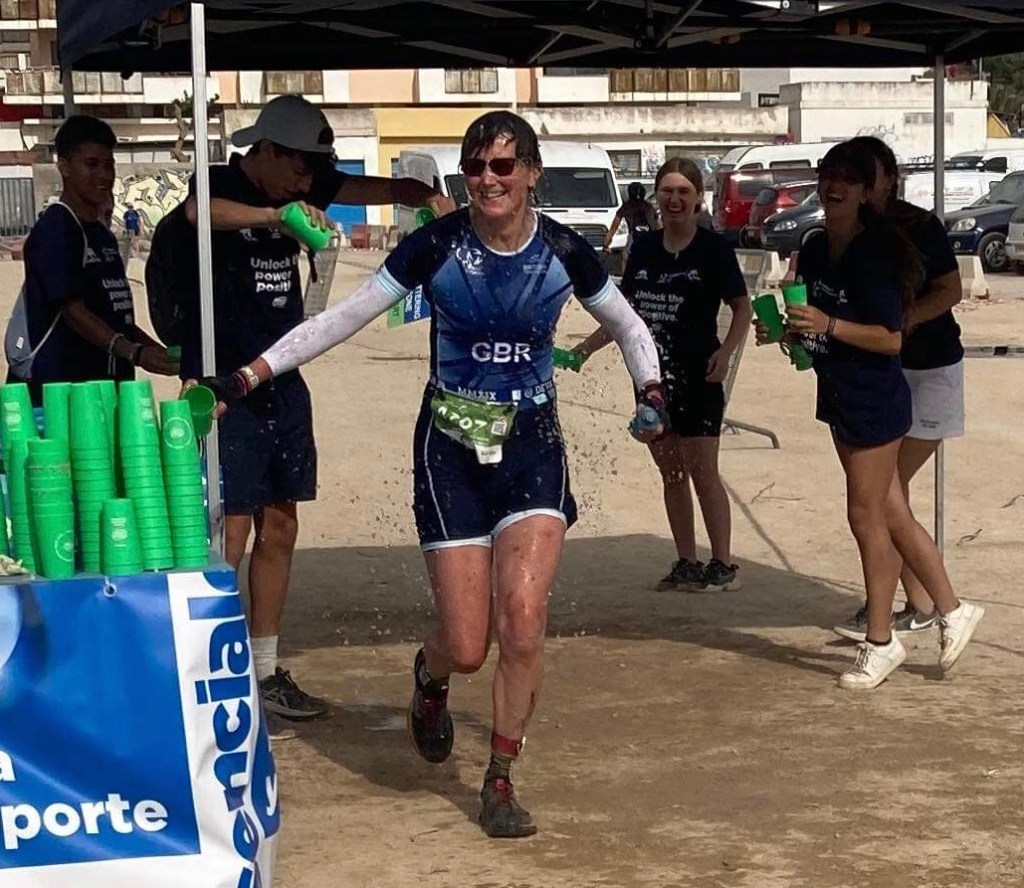
Racing Vitruvian middle distance, 14th September, with sensor on my arm.
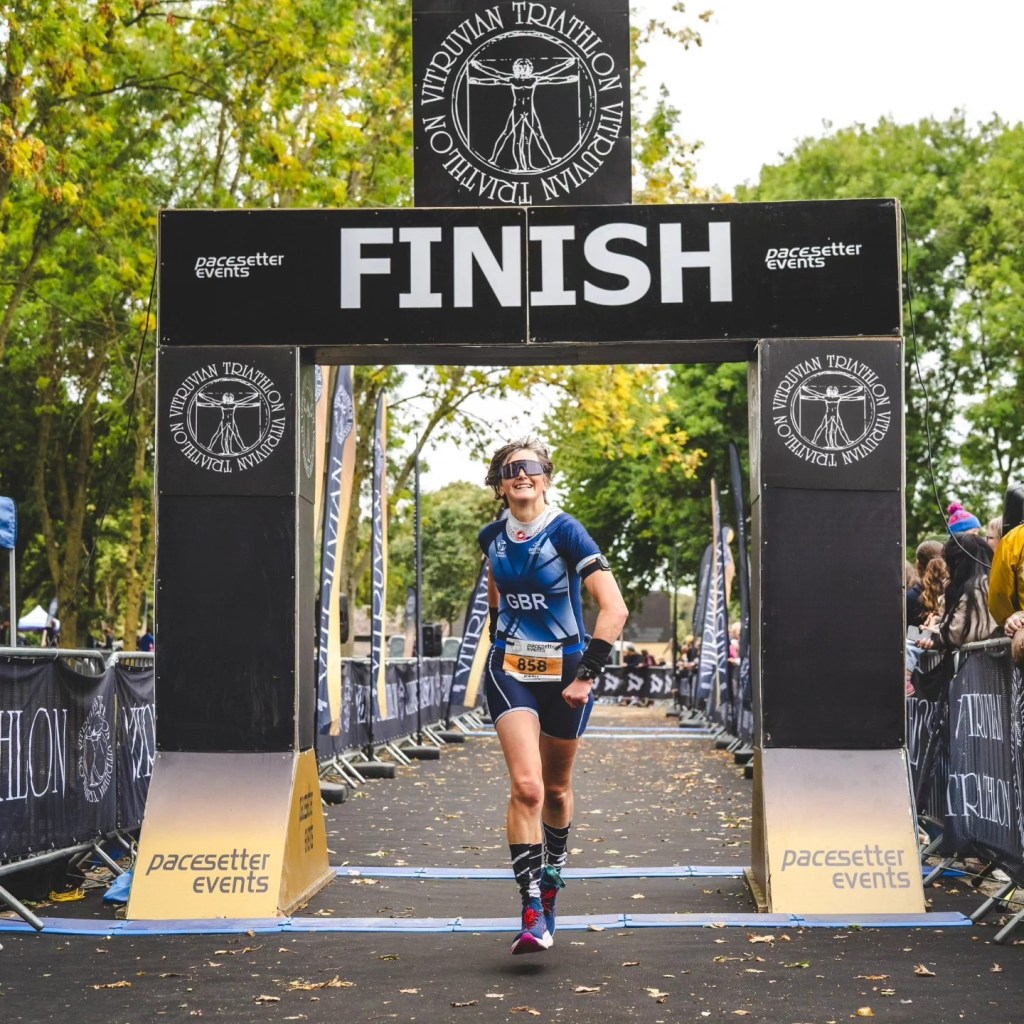
My sodium concentration is about 1300mg/L, give or take a bit. So most of the main brands of sports fuel need additional salt added. I should be at 650mg per 500ml.

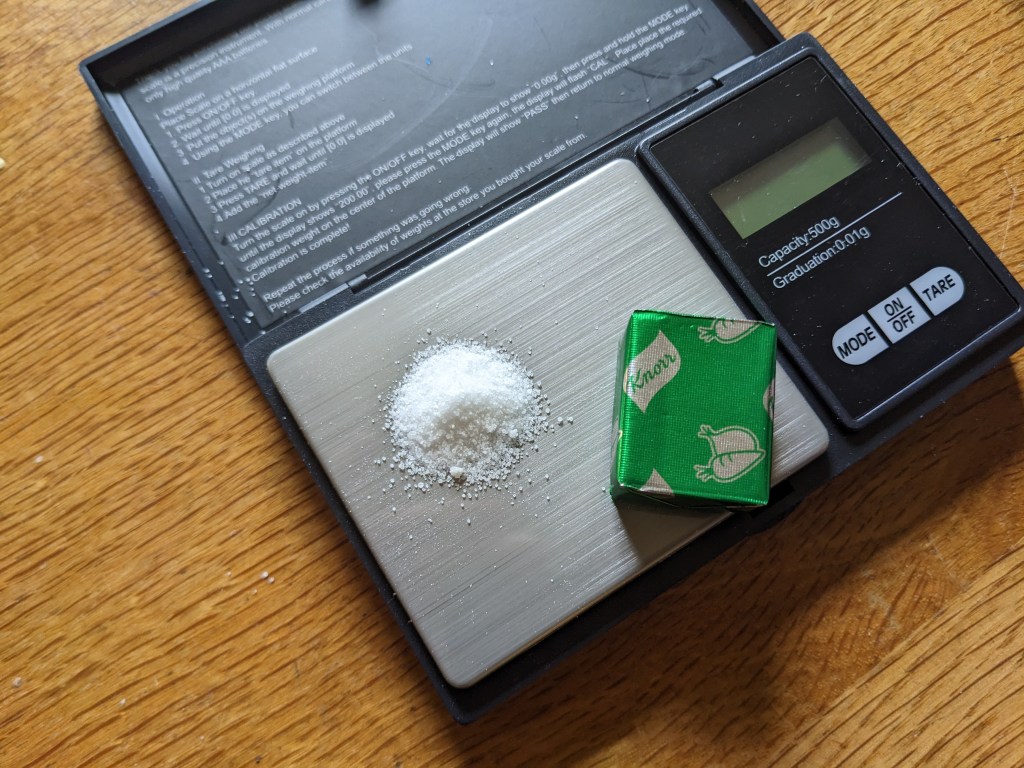
Some sports drinks have some sodium added, some don’t. The amount in most drinks is often insufficient to replace our losses. Additional salt tablets or sticks are options as is table salt. If you use salt in your own drinks you avoid the acid which is in most electrolyte tabs, so that is better for your teeth. Remember a gram of salt is 40% sodium and 60% chlorine. There are 387mgs of sodium in a gram of salt. Microscales enable you to weight these quantities accurately and are very cheap to buy. Adding salt to sports drinks eg SiS Beta fuel also helps dampen the sweet taste and can make them more tolerable. A gram of salt is shown on the microscales below with a stock cube for scale.
BrandSodium mg Per 500ml
SiS electrolyte tab345
Precision Hydration 1000 tab500
Styrkr electrolyte tab500
Beta fuel (SiS)zero
Styrkr drink mix54
SiS gel4
Bulk hydration drink255
Skratch drink400

The sensor doesn’t take account for your sodium intake in your diet, so consider that. There are also some thoughts around it’s accuracy – like any gadget it isn’t foolproof. According to their FAQs the accuracy rate for sodium loss is 90% in lab conditions and 83% in the field. Fluid is 73% accurate, with as little as 250ml difference to in-field gold standards. Not perfect but better than nothing and we often forget that data is frequently only an approximation eg your garmin sleep data.

But at least it should show you that a policy of ‘nil by mouth’ training isn’t going to give you the best results for your efforts. Hopefully it will help on my constant quest to persuade people to eat and drink sufficient fuel for training.
https://flowbio.com/?

Racing in the Heat

When it says race day is BOILING how do you cope?

There are many things you can do and there are, as with most things, choices to be made. These are around preparation, planning, finance, time and mental space.

Let’s look simple before we get complex.

The first, and unglamorous, thing to consider is your general hydration. As a 64kg human I should be drinking two litres of liquid a day, not including caffeine and alcohol. Then I need to drink additional amounts to hydrate during exercise. If you aren’t meeting your basic need for fluid (and we get worse at this as we age) then you are not in the optimal position to race well in the heat. The standard amount to consider drinking during exercise is 500ml per hour. If  you aren’t able to do this in practice, or are one of the ‘I don’t need it’ brigade, then you aren’t suddenly going to be able to double this in hot conditions to ensure you are optimally hydrated. Practice, it’s a discipline.

Months before your race you may know that it is likely to be hot eg the Europeans in Istanbul, any race in France or Spain in the summer. Therefore you can choose to be scientific and use a flow bio sensor. https://flowbio.com/  This will give you data about your sodium and fluid losses so you can accurately compensate for them.  Sodium losses significantly contribute to performance decline and may contribute to cramps. Cramp is a multi-dimensional issue so remember that lack of salt may not be the issue. 

A cheaper option is to have a sodium loss test with Precision Fuel and Hydration. The nearest venue in the NW is Total Tri near Knutsford. https://www.totaltritraining.com/sweat-testing-centre-precision-hydration/

The result of this will tell you how much sodium you lose in one litre of sweat. My sodium loss is 716mg per litre, I am a light sweater. A teaspoon of salt contains about 2350mg sodium and that is 40% of salt, the other 60% is chlorine. Salt is sodium chloride.   However this is only half the story. You then need to work out how much you are likely to sweat during your race and this means replicating race conditions. I haven’t managed to persuade myself that working my socks off for three hours in my conservatory at 30 degrees is worth gaining the knowledge of how much I sweat during a cross triathlon. Especially considering what a negative impact on my training week that would deliver.

The value of knowing this early is that you can then practice replacing your likely losses during training. Just as your gut needs training to absorb race nutrition, it needs to be trained to absorb sodium and fluid. If you have high blood pressure you might wish to take this advice with a pinch of salt, and check with your doctor. Many triathletes have very low blood pressure and ingesting enough salt to cure a small ham will not, as far as I am aware, create any issues.

Nearer to the time one can focus on kit preparation. This is very budget dependant!. White is the golden word for kit, except for the bottom half of your tri suit. A dark colour here definitely hides a multitude of sins.

For the cycle white shoes which should be a large enough size to allow your feet to swell in the heat are good and they should have lots of air flow. If you are riding long distance it is a certainty that your feet will swell. The bottoms of shoes tend to be black so you can paint them with white tippex to reduce the heat absorption from tarmac. A helmet can be white, whether it is aero or road is personal preference. A road helmet is cooler but slower so there is a balance to be found. Tri suits can cost hundreds and if you have the choice one designed for heat, possibly with heat dissipating graphene or UVP protective fabric, can be beneficial. Material moves through air faster than skin, it reduces dehydration and can be made wet so increases cooling. So white arm and calf sleeves can help you go faster and stay cooler.

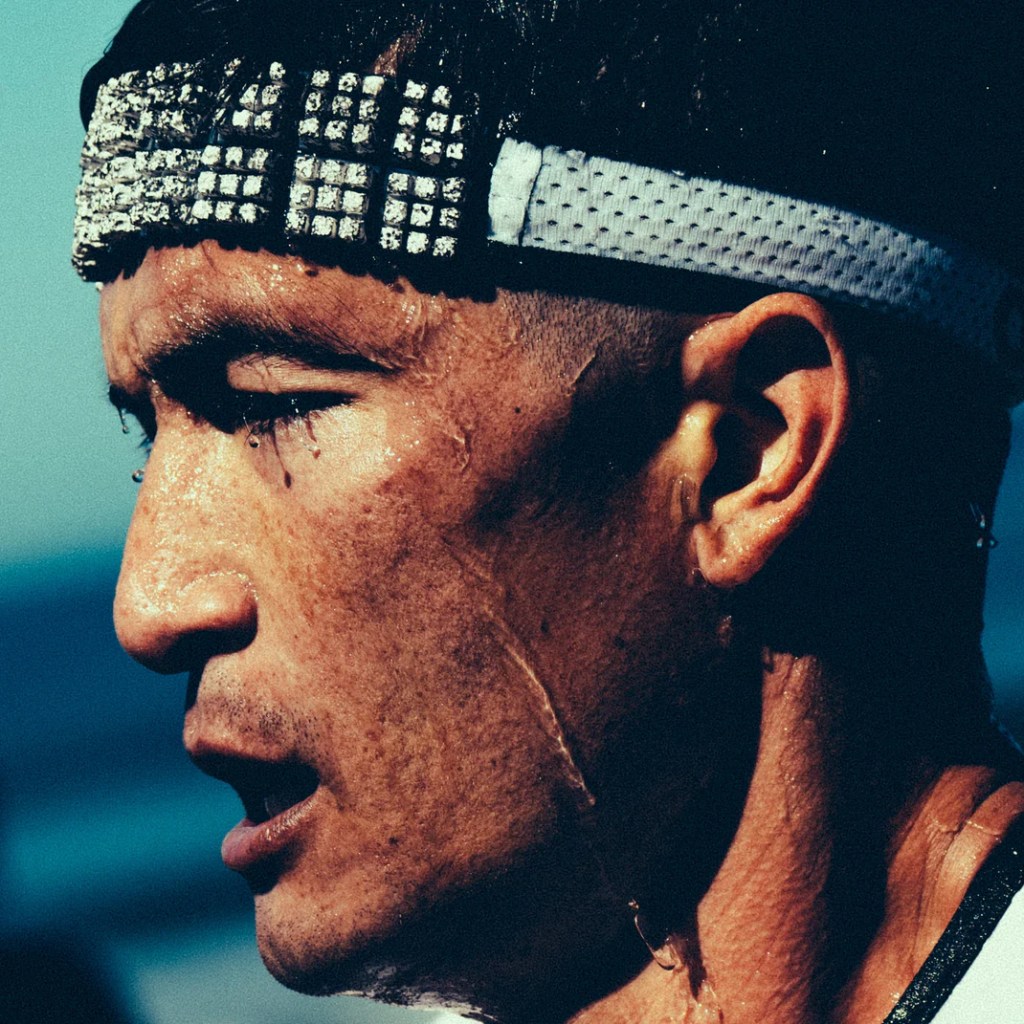
For the run again consider a larger size of running shoe if going long distance. Wear sunglasses and have a light, white run cap for the run, or a visor. I prefer the cap as you can wet it at feed stations and it keeps the sun off your head. Neck coolers are seen more often in the land of ultra runners but definitely worth a look if you are racing long distance. They can be soaked then placed around the neck hence cooling the blood in the arteries and therefore cooling the circulatory system. You could also buy one of those fancy Omius cooling headbands the pros wear. There were quite a number being sported at the Pontevedra World Championships 2025 on amateur athletes. But £200 is a lot to spend on something so small I will lose it, so I haven’t.

Remember to make any kit changes when you still have sufficient time to test them. Eg if you buy arm sleeves how do they feel under your wetsuit? Can you get your wetsuit off with them on?

Be aware that it may be a non wetsuit swim. Generally wetsuits are optional when the water is between 16 and 24.6 degrees Centigrade. However there are variations depending on the race distance, conditions and competitors ages so always check. The decision is made an hour before race start. It is hard to practice for this in the UK as our outdoor temperatures are usually cool but the least you can do is wear your tri suit in the pool a few times. In some races it is legal to wear a swim skin if wetsuits are illegal. More kit! And remember to practice with that too! However remember that it is illegal to wear arm or calf sleeves in the swim if it is non wetsuit so you need to consider this in your prep.

Then heat train. This is deserving of an article in it’s own right so I will say little about it here. Heat training will help your overall performance in any temperature and your ability to race in hot temperatures. You can do active or passive heat training, the first involves sessions where you are very overdressed, the second means doing sessions to raise your temperature then hopping in a sauna or hot bath. It is also sensible to practice eating and drinking when doing these sessions, digestion is a lot harder in the heat and some food eg Beta chews or jelly babies become very unappetising when hot (and melted) so fuelling strategies may need to be altered.

Almost at race day now.

Your heart rate elevates as your core temperature increases and the amount of effort you can produce drops. Ie performance declines. So the lower you can keep your core temperature on race day the faster you will go.

In the run up you can use electrolyte tablets to ensure your salt and electrolyte levels are topped up and make sure you have good hydration. Stay out of the heat in the days beforehand and keep the weight off your feet.

Race day –

Keep cool by whatever means you can.

If you are waiting for a later start use an ice vest which will keep you cool for about an hour.

Stay in the shade if possible.  

Use suncream, a water resistant brand can usually be put on beforehand and will last all race. However if you are doing ironman or an ultra epic you may wish to have some additional cream somewhere.

Have cold drinks available while you wait. 500ml of iced carbohydrate solution in the hour beforehand in a thermos cup helps.

Give yourself ample time to get ready, this reduces the possibility of you becoming hot and bothered.

The cooler you can keep your core temperature the longer it will take to rise and the better you will perform.

Put your wetsuit on as late as possible, bearing in mind it’s a pig to get on properly if you are sweaty. While waiting for the swim again seek shade, don’t just stand in the sun because everyone else is. Take a disposable litre bottle with you full of cold water and pour that down the inside of your wetsuit during the wait for the start. This will cool you by sealing the wetsuit with cooler water than your swim venue water.

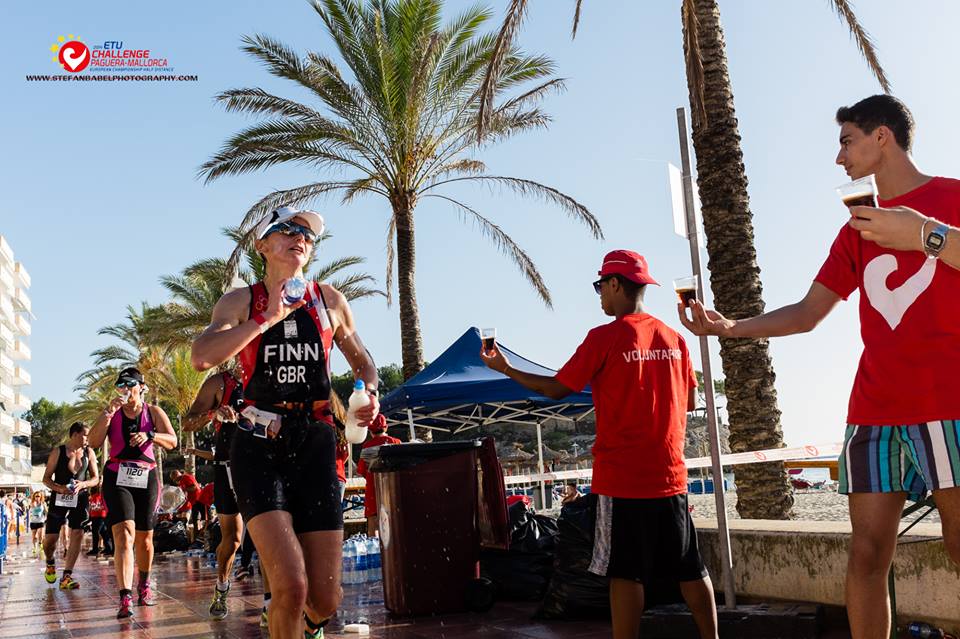
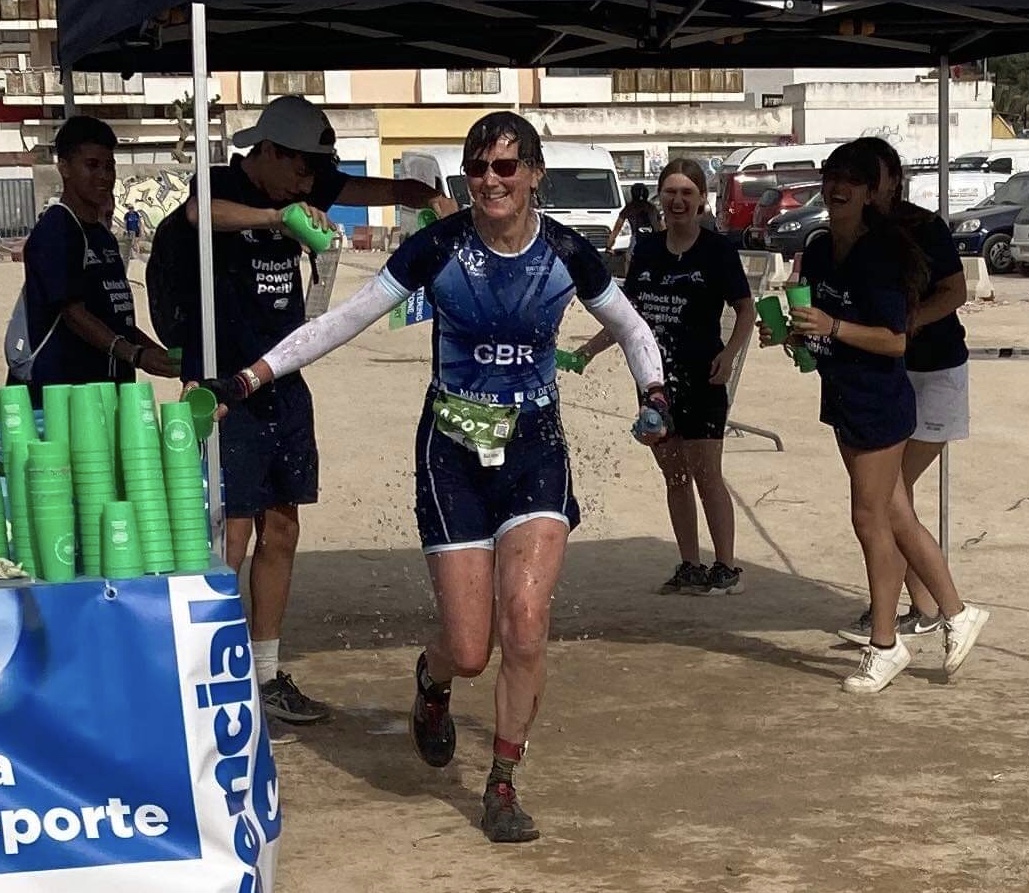
Ice or freeze your drinks for the bike if the timings work. Add salt to them, now you have practiced. Expect to drink more than normal, remember 500 ml an hour is normal, it may go up to over a litre in very hot conditions. You shouldn’t pee more, you will be sweating it out. Use the water stations to cool you. If you can grab a bottle while moving and empty it over you, then chuck it. But if you need to grab bottles for drinking too then don’t be afraid to stop briefly on longer races, the volunteers are usually really good at helping soak you. Carry additional salt tablets or electrolyte tabs on longer races. Hyponatraemia is a serious, potentially fatal, condition caused by drinking so much plain water that you dilute your sodium balance. Drink a mixture of water and electrolytes.

In T2 grab your cap, and neck cooler if using, and use another disposable litre bottle of water to pour over yourself, including your cap, before going out on the run. You may choose to take a run flask with you to help keep electrolytes up. Again use the water stations on the run for hydrating and for cooling – pour cups over you. Make use of any shade on the route, it’s worth crossing the road for that! And if anyone has a hose out make sure you run through it. If you are really lucky they may have ice or sponges. Take both! Stick the sponge in the neck line of your suit and put ice down the front of your suit – you want it landing in your groin where the blood is near the surface and you will get the biggest cooling effect.

If you do start feeling ill sometimes the most courageous thing you can do is stop and dnf that day. There will always be another race and heatstroke can have serious consequences.

Be aware that your thermostat often gets very confused racing and it’s possible that you may get very cold immediately afterwards.

After all that – enjoy!

Bladder Issues

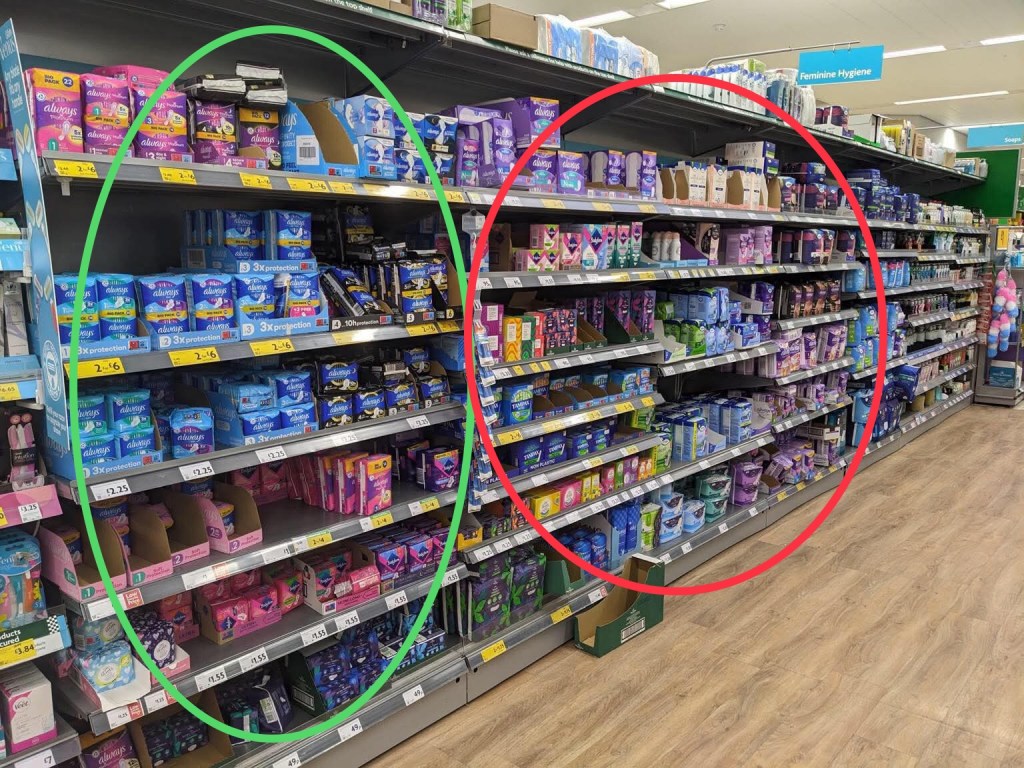
This looks like an unspoken epidemic in the UK with the incontinence pads taking up more room in the supermarket than period products. (three sets of shelves to one)

43% of women in the UK in their 50s will suffer and this rises to 51% of women over 65. Main contributory factors are giving birth naturally, menopause and ageing when facia damage and muscle weakness become issues. Chronic constipation, heavy or repeated lifting without correct abdominal bracing, constant coughing eg smokers chronic cough, being very overweight or frequent vigorous high impact exercise may also contribute. It is not solely a female issue but it impacts far fewer men.

There are two main types of urinary incontinence – urge and stress.

Urge incontinence – this is when you are desperate to go to the loo and can’t hold it, this may involve some leaking. Urge is mostly caused by your bladder being irritated by insufficient fluid or by the nature of the fluids consumed. It is also triggered by hormone imbalances during menopause. It is normal for you to urinate 4 to 8 times a day, or every two to three hours. It is also very common to get up once in the night to urinate. If you are constantly up and down in the night, and/or peeing super frequently with desperation, please make an appointment with your GP

If you go more frequently what actions can you take?

You can remove irritants from your diet. This will prove very hard for many as the biggest culprit is caffeine, closely followed by alcohol. Then fizzy drinks, so beer is a bit of an issue! Other irritants are citrus fruits and juices, chocolate because it contains caffeine, green tea and tomatoes. You may be more irritated by some things than others so it is worth testing things out.

You can make sure you drink enough non irritant fluids. We need approximately two litres a day, without factoring in dehydration from exercise. This can include water, milk, decaffeinated drinks, herbal teas, diluted fruit juice (non citrus) and milk shakes. You can also add in there electrolyte drinks, and sports carbohydrate drinks. The sugars in some sports drinks may be irritants for you though, experiment with different brands.

As we become older we lose our thirst mechanism so it becomes more and more of a discipline to drink. ‘I’m not thirsty’ doesn’t cut it.

In menopause HRT and oestrogen pessaries may provide some relief from urinary urges.

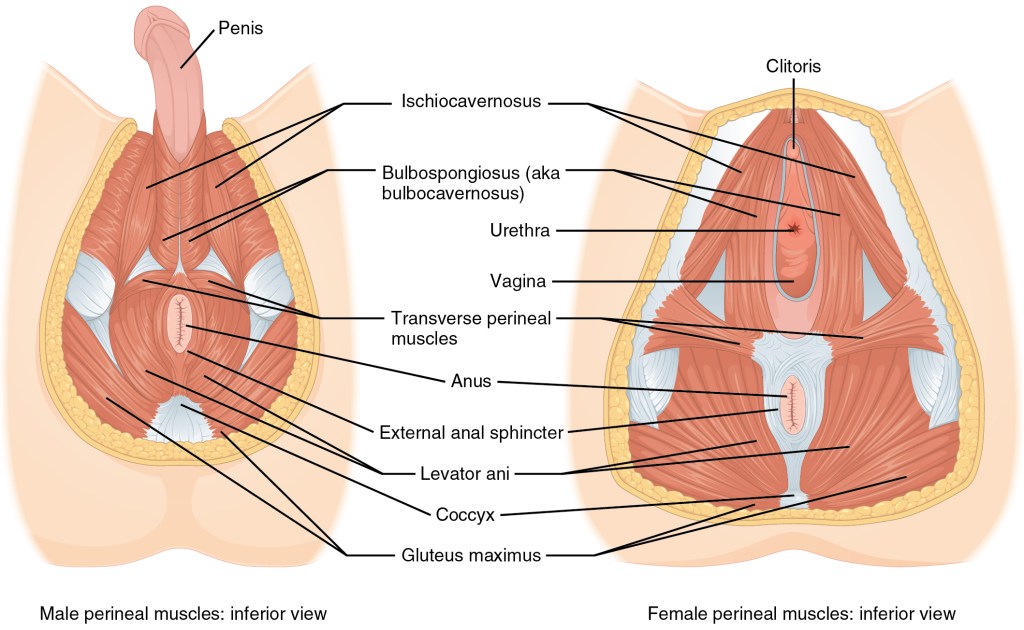
Stress incontinence – this is when you leak urine without meaning to. For example when laughing, sneezing, coughing, skipping or running. The most common reason is that the pelvic floor muscles are not functioning correctly. All the bladder, bowel and sexual functions require good pelvic floor function. The pelvic floor muscles are thin bands of muscles in a figure of eight around the anus, urethra and vaginal opening which form a thin sheet of muscle. They support the bladder, uterus and bowels. Like any other muscle in the body they may become weak, overstretched, slow to work, too tight or torn. And just like any other muscle in the body we should look after them by exercising them regularly. But if you are like most humans you will forgot or ignore them as ‘out of sight out of mind’. The time we generally start to think about them is when they stop working properly!

What should we do? We should do pelvic floor exercises daily. This involves tightening your pelvic floor and holding for ten seconds. Do this ten times.

Then quickly tighten them and let go after a couple of seconds, also do this ten times. When doing both exercises relax the pelvic floor completely in between each exercise.

If you don’t know where they are try stopping the flow of urine while you are urinating and be aware of which muscles you are activating. Only do this to get the feel for what your are trying to do, don’t do it regularly. The muscles around the anus should contract as well as the ones at the front of your lower abdomen, just above your pubic bone.

If you are currently experiencing leakage do pelvic floor exercises three times a day for three months. If you are still struggling after this go and see your GP. There are solutions and there is no reason why you should suffer for years. Your GP may prescribe menopause treatment, examine you, to ensure there are no other issues which need treating, and may refer you to an NHS specialist physiotherapist. Taking this course of action may ease embarrassment, self esteem issues and loss of confidence outside of the doctor’s surgery. It might enable you to enjoy things which you have given up due to bladder issues and it may save you a fortune in Tena pads over future years!

Useful contacts – NHS App Squeezy – free

Dr Bri on YouTube – free, her Kegel Camp is good

Buff Muff App – cost attached

https://www.nhs.uk/conditions/urinary-incontinence/

https://my.clevelandclinic.org/health/body/22729-pelvic-floor-muscles

https://www.nuffieldhealth.com/article/how-much-water-should-you-drink-per-day

https://www.health.harvard.edu/staying-healthy/how-much-water-should-you-drink

https://www.wellbeingofwomen.org.uk/health-information/urinary-incontinence/

The off season- how have I used it?

Surely this is the time when you just kick back and relax? Or not as the case may be. I feel relaxed and healthy but realise that in the last few months I have done a considerable amount of work in different directions towards next season.  Recovery, reflection, nutrition, blood tests, kit, next year’s races, well-being, habits, body check, head sort and, of course, training – all these have recently been worked on. They are all important components of next year’s races and all take time and energy to accomplish. A little run through is below so you get an idea of what happens under the bonnet before proper training begins.

Recovery – I finished racing early in September with three races in two weeks at European level, winning two silver medals, so I was ready for a rest mentally and physically. I spent the next six weeks not doing a lot having learnt from last year when I did waaay too much and it took ages to recover.  I caught up with lots of friends, celebrated my sixtieth birthday in style and did some exercise for fun at a level where it would give me energy, not exhaust me.

Reflection – in the recovery phase I also reflected and wrote race reports, covering both what had gone well and what had I had learnt. All this feeds forwards into future races. For next year some of the biggest lessons are that I can have a strong run mentally, I need to be on top of timings in races and I badly need to sort my bike shoes out. There were many more learning points around mountain biking but those aren’t relevant next year. It’s a great time to notice the progress one has made with aims from previous seasons as well.

Blood tests – my lovely doctor’s surgery needs to blood test my hormone levels every year as I have no working thyroid so they also tested my iron and a few other things. Iron is down again so I am back to working out how to persuade my body to absorb iron. Everything else is ok though, so that’s good. And all done for free.

Nutracheck isn’t free but it is cheap and it’s a great way of monitoring my nutrition intake. I just ran a check for a week or two. That means I weighed and recorded my food. Results showed that my fat intake is now at a respectable level, having been too high. I need to be mindful of fruit and veg intake in the winter, it’s easy in the summer. I also need to continue the endless quest to eat enough protein. A daily 120g of protein takes some finding even as a meat eater. Using a free glucose monitor for a couple of weeks was really interesting. I was concerned that my constant diet of sweet stuff on the bike was spiking my sugar levels but no, flat as a board! As for the result with brown rice though, that’s another matter.

Next Year’s races – Choosing these is often hard as there are so many great things to do. This time I have ignored about eight age group opportunities and gone for a full Ironman in Vitoria, northern Spain with my practice race as a 70.3. They are good choices as I feel excited when I think about them. Whatever the aim is it has to generate that little butterfly in the pit of your stomach and put you on the edge of comfort. No, it’s not my first IM, it’s my sixth, so I know exactly what I’m getting into. The races are entered and accommodation and flights are booked.

Kit – Yes triathlon is expensive, there is no way round the fact you are using kit for three sports and things wear out. Black Friday is the instigator of a big shopping list in our house and most of our immediate kit replacement needs have now been covered. So have our specialist sports nutrition needs for next season, so much cheaper to do it now.

Habits – I’ve done some work around daily habits. This told me that some things I have tried to integrate are now habits ie I just do them automatically. These include taking Vitamin D3, standing on one leg while I clean my teeth, stretching in the evening and taking my HRV (Heart rate variability). Others I could be far better at such as skipping, doing neural gliding and calf stretching. A way to go, but it was great to see that progress has been made over the last couple of years. There was a time when standing on one leg for 2 seconds was a challenge, never mind two minutes, so the investment does pay off.

Head sort – there is a certain kind of anxiety present when racing with a partner who has had several years of heart issues and has struggled with his breathing in the swim. This was impacting my thoughts about racing so I found a lovely, friendly life coach who has helped sort my head out. Less catastrophizing and more claiming the race as my own.  Lots of positive visualisation. Sorted.

Body check – Aches and pains. I went to ‘the body man’ which was certainly an experience. ‘Oh, what a lovely body, I like your right side.’…’hum, I don’t like your left side so much though’. He does just clearly and plainly love bodies and the game of getting them to move smoothly. His pearly sheen nail varnish did make me feel more secure as I stood there being inspected in my underwear !  I was referred to the joys of Feldenkrais – look it up guys. I learn something every day. And now I’m trying to make my left foot move and left fibula rotate. If I can sort that it will help my left lower back and left shoulder …..

Well-being – there is only one well of energy and when you draw too much out for any reason things get a bit thin. After one particularly disastrous over-geared session, where my power was minimal, ‘well-being’ sessions arrived in my training diary. I’m sure that is good for me but it is really irritating sometimes. So I have spent a while working out what constitutes down time and having to implement that into my week. I have to do it or I will have failed on completing my training for the week so that’s not ok! Which reminds me I haven’t had any down time today…..

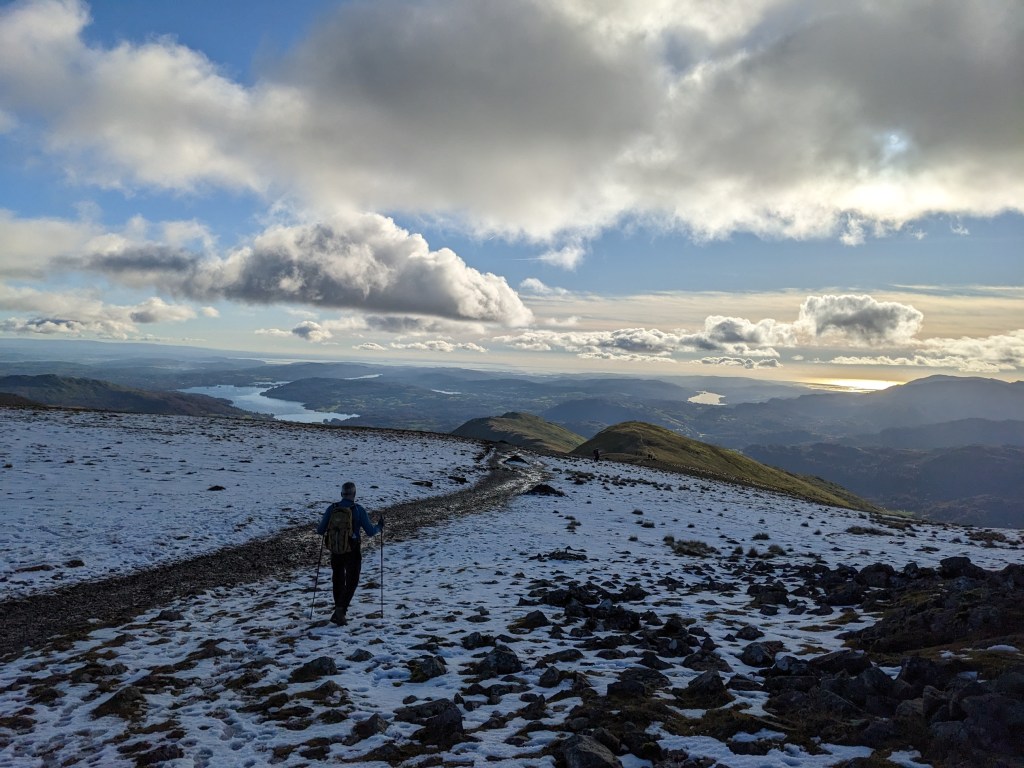
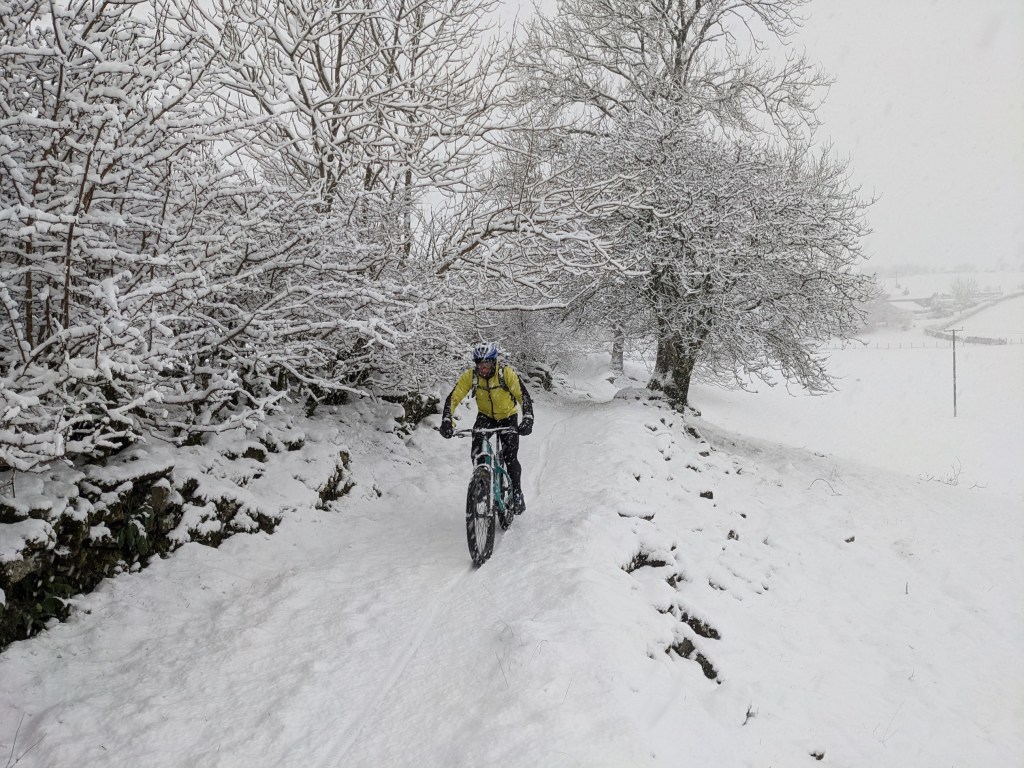
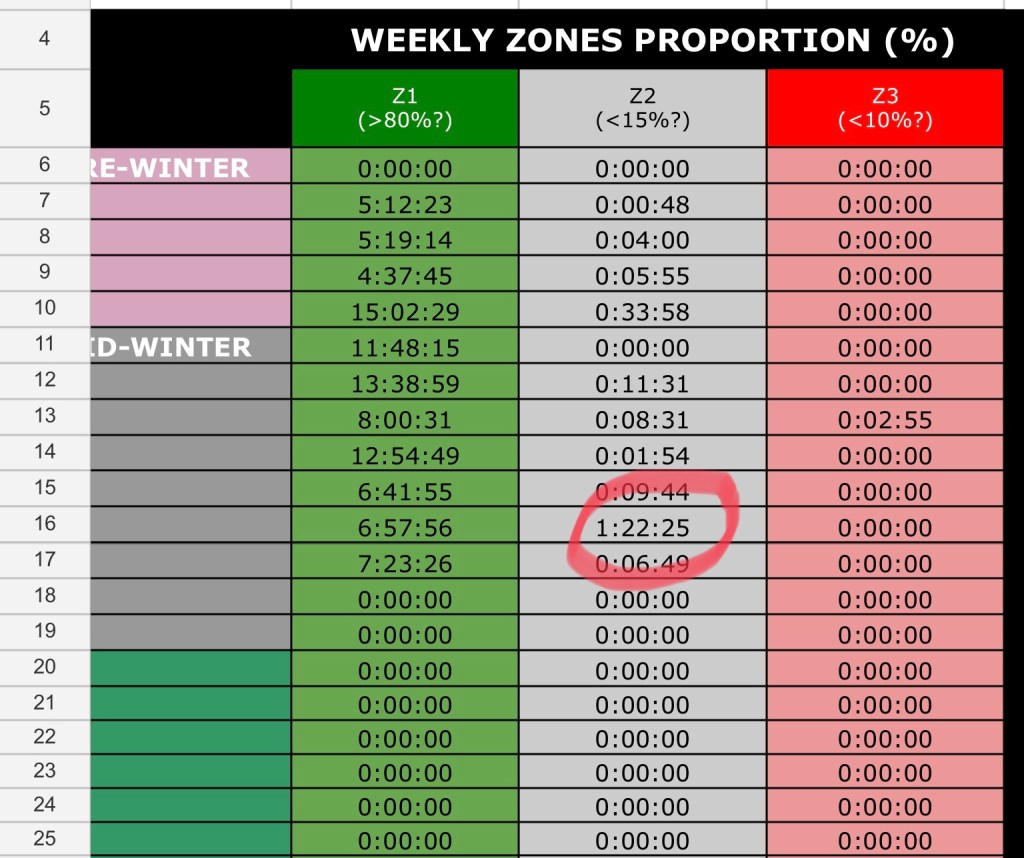
Training – oh yes, of course. I’ve done that too. It’s base time. Lots of variety, lots of fun, social trips out, fell walks, and the gym for building overall functional strength. Now it is more about skills and efficiency than speed. Specificity comes later. So I have had my swimming videoed and I am clearly as bad as last year! I have bought a cadence monitor for my winter bike to practice skill work in the form of high cadence on the wet roads. I attended off road uphill and downhill technical run training and am supporting my running with isometric strength work and skipping. It kind of averages 2 swims, 2 runs, 2 gyms, 2 bikes a week but all low key, many short and mostly in zone one on Stephen Seiler’s model. This is under lactate threshold one or in my aerobic zone depending what terminology you wish to employ. Occasionally I have been off piste by mistake like the club mountain bike ride which left me with 1 hr 22 mins in zone 2. Oooops. But the majority has remained easy. Time for harder stuff later.

The photo shows hours of training per week in my different heart rate zones since the end of September, not counting strength work. Where hours are high it includes fell walking/jogging. You can see the Mountain bike ride clearly circled in red. Apart from that small hiccup the proportion out of Zone One is very small. It will increase a little in the build phase.

So in the last four months have been ‘off’ in once sense but certainly not in another. What do you think – have I made good use of my ‘off season?’ Have you made good use of yours?