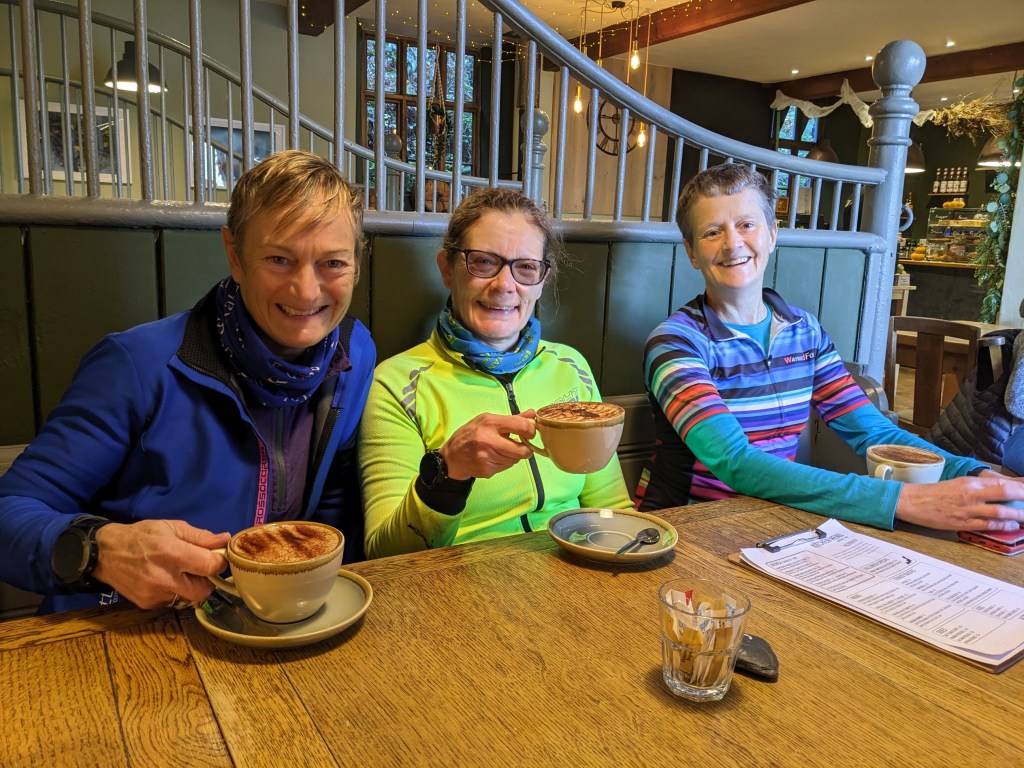
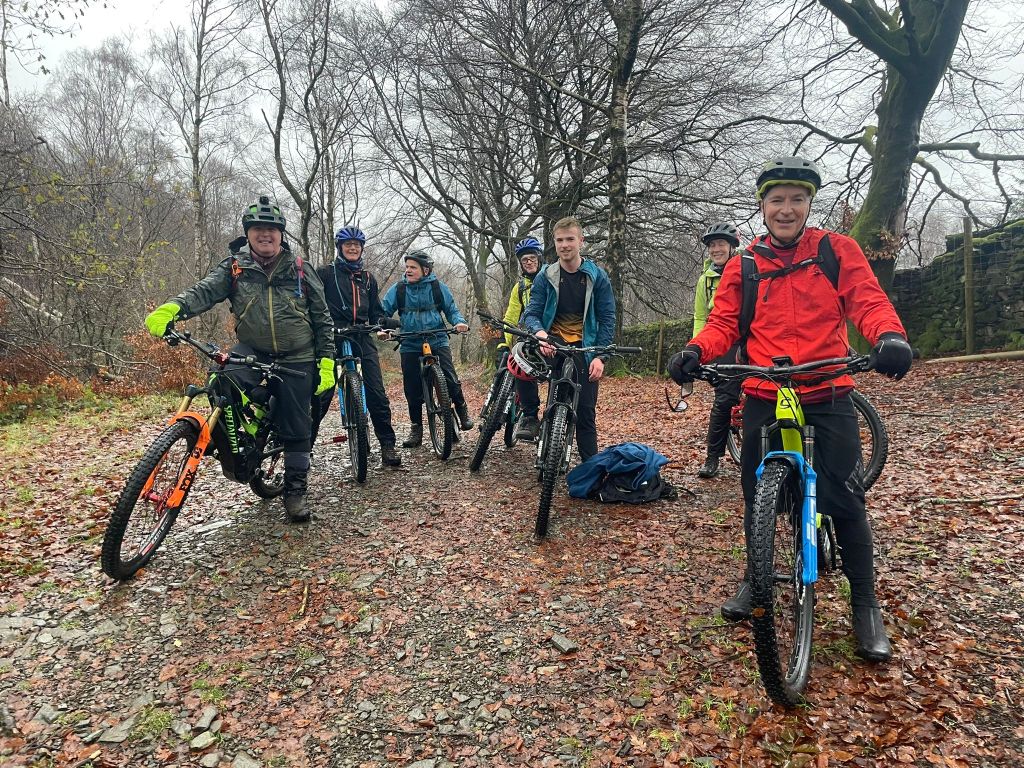
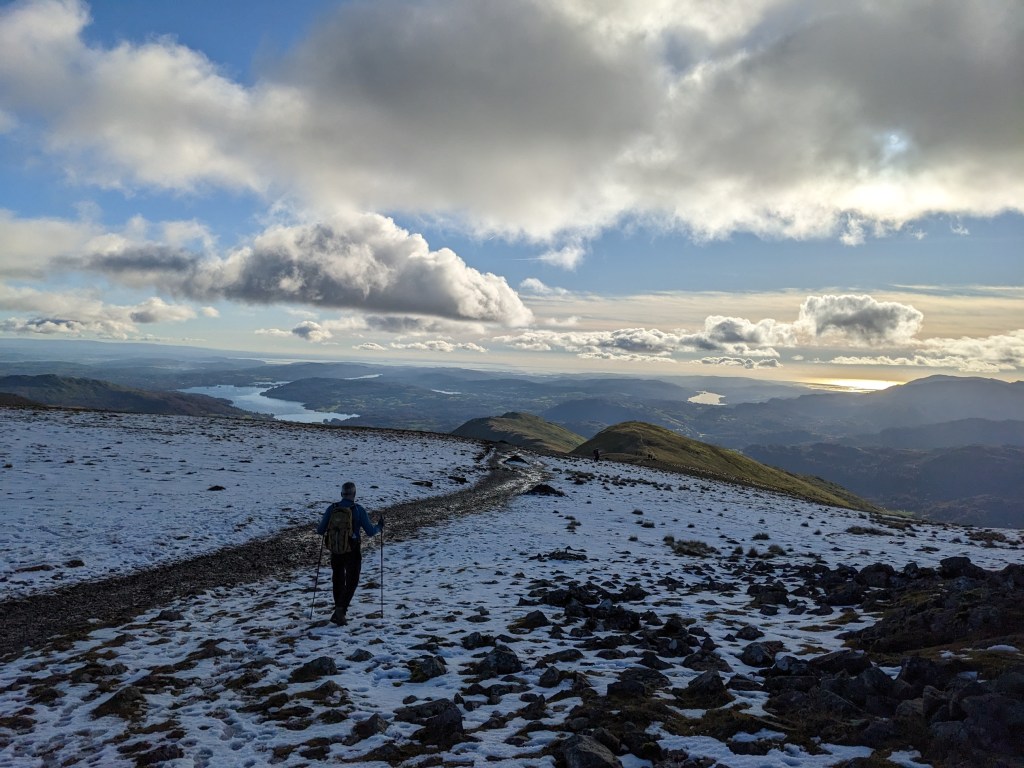
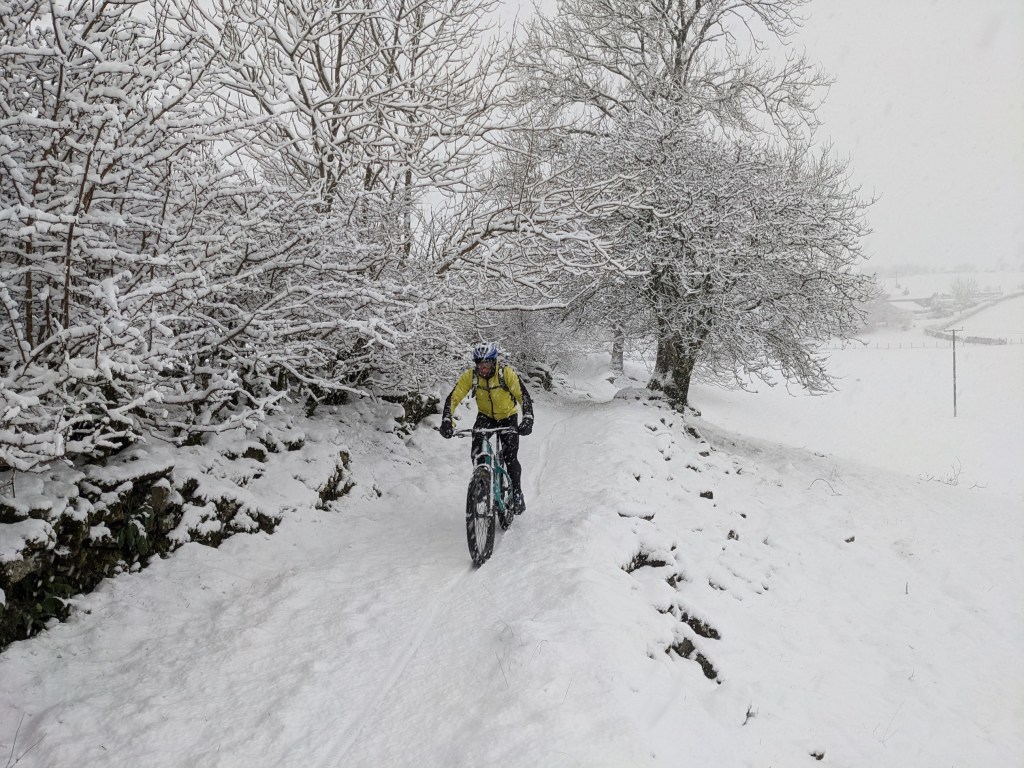
Hello…. Someone asked me why I always look so ridiculously happy on my bike (s). Riding my bike makes me tick, it sorts my head out, it brings me tranquillity and balance. It is where I find peace. I also have a dark side … I like to race.
Author: karmacycling
I love my bikes, I love riding them for the sanity they provide, the peace and space within my own head. I love the views and flowers. And I have a dark side - I also like to race.
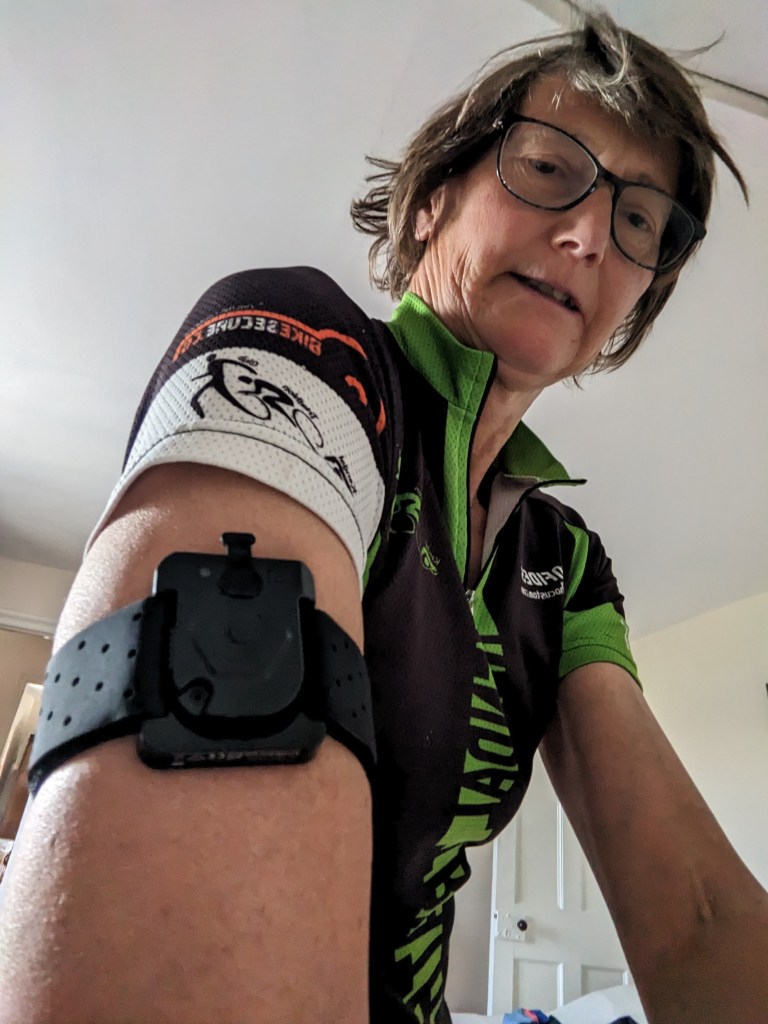
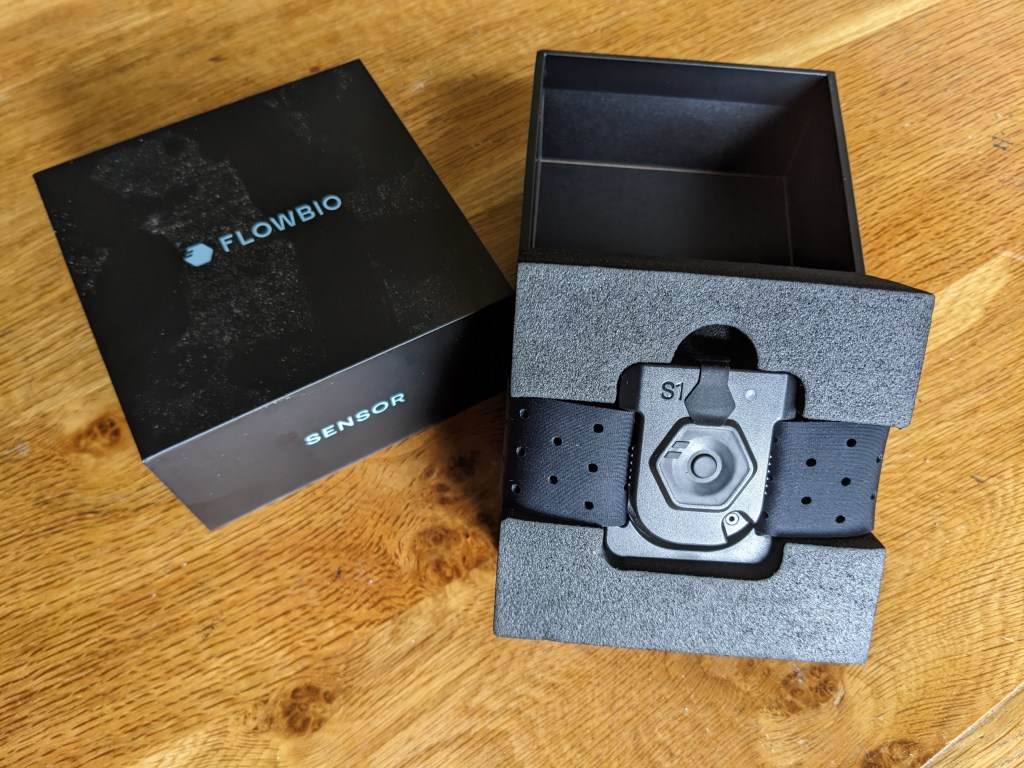
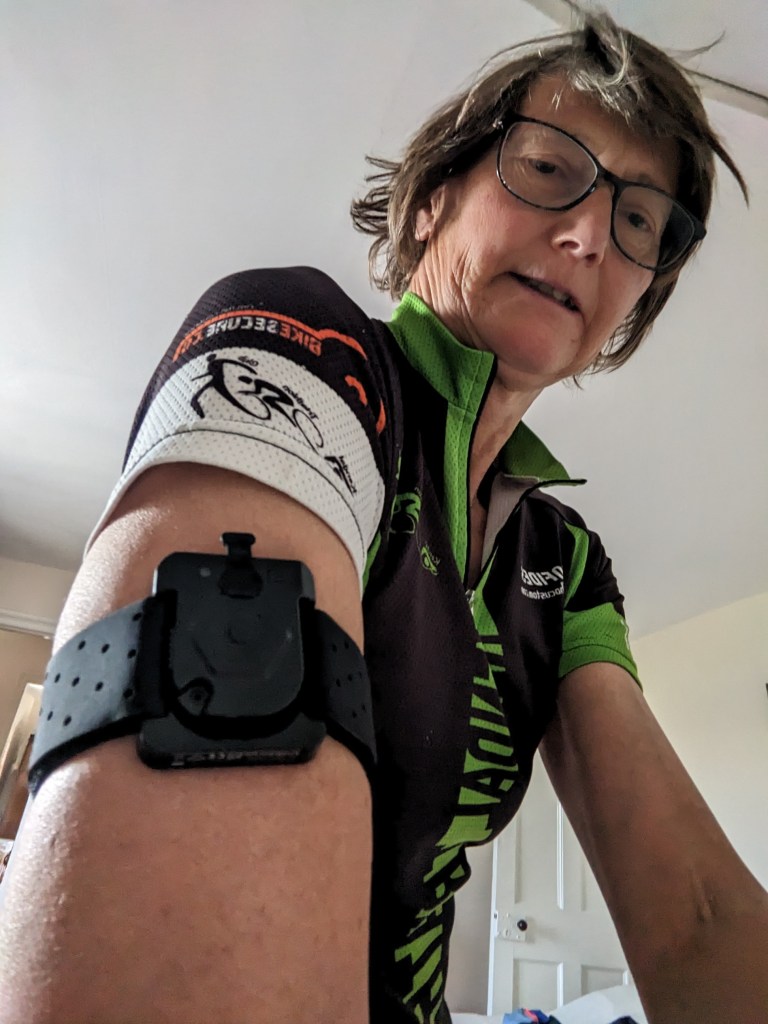
This is a great little gadget which I have found useful and easy to use. I have trialled it for a couple of months, with a bit of a gap when my watch died. I have tried to use it in different conditions and situations. It should arrive with you in a neat box containing the sensor, arm band for attaching, charging cable, two bottles for cleaning and two tiny plugs for the charging point to stop sweat getting into it.
Charge it, then protect the charging point with one of the tiny silicon covers provided. This prevents sweat entering the charging point. Download the app onto your phone. Sign in and follow the instructions. There is an app for both apple and android. I am working off android and I haven’t had any issues so it must be fairly simple. It asks you which of the main sports hydration brands you use, and it then uses this information to make it easier to enter what hydration you have taken in a session. Then you are ready to go.
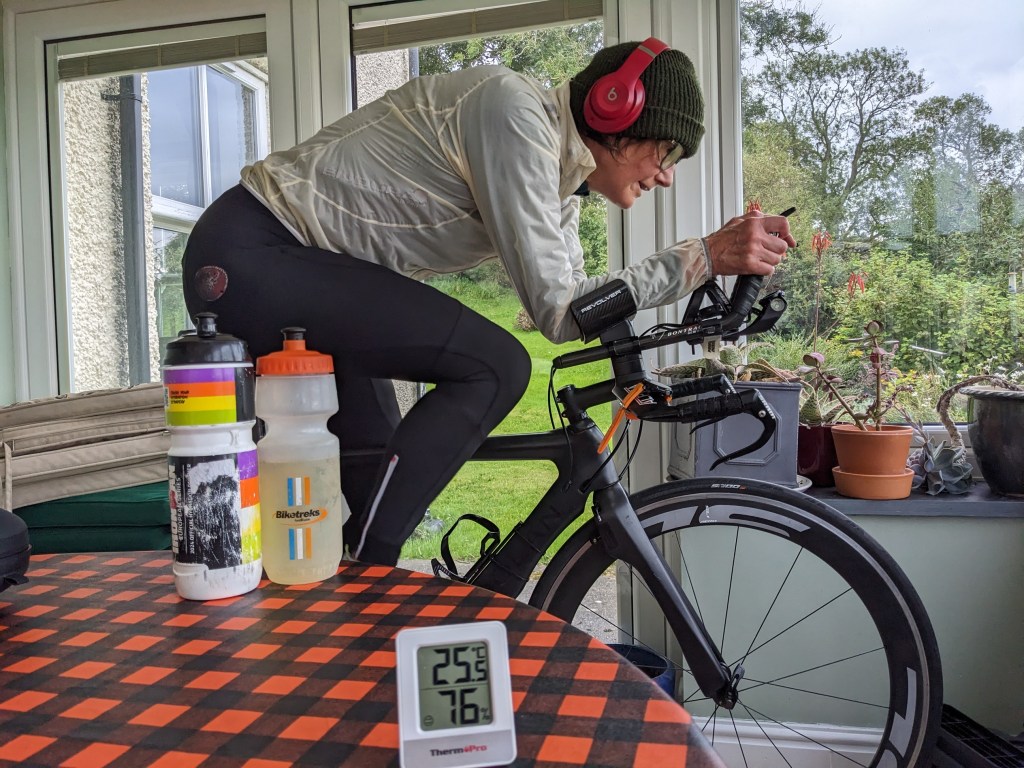
Your first session the recommendation is to work out in temperatures above 20 degrees and to hold a HR of at least 130 for a minimum of one hour. I interpreted this as work just into zone 3 (garmin) and I was probably the lower side of this in our conservatory and it seemed to work ok. After that sessions need to be longer than 30 mins to generate sufficient data. It will only work for cycling and running, no other sessions currently. It can be used when racing triathlon, it can be worn safely under a wetsuit but will not record on the swim, only on the bike and run.
Before a session put the arm band around your arm and tighten it. Then turn the sensor on by pressing the button in the middle for two seconds. Lights will flash green. Also turn on your tracking device – garmin or whatever.
Complete your session. Turn the device off by pressing the button in the middle for two seconds. The light will go clear then turn off. Finish your session on your tracking device and encourage the sensor to synch with the app. I find this easiest by going into the App and ‘settings’ and pressing ‘Sensor connection’. When connected the light on the sensor will turn blue. Then, after a while, your app will display information concerning your use of sodium and loss of fluid during your session. You have the option to upload the quantity of fluid and sodium you have consumed to the app if you wish. The app will then work out the recommendation for refuelling sodium and fluid to replace losses from the session. You can obviously work them out yourself if you choose.
It also enables you to put in data for your next session – distance, sport, effort etc, and it will then work out your fluid and sodium needs. Clever bit of kit.
Date
Session
Length Hr Min = m
Temp C
Sweat loss (Litres)
Sweat loss L/hr
Sodium Loss mg
Sodium Conc Mg/L
Comment
27/8
Cycle medium
1 hr
0.42
0.47
493
1160
Heat training indoors
28/8
Cycle easy
1 hr
13.3
0.23
0.21
471
2024
28/8
Run easy
30 m
14.2
0.21
0.40
192
907
29/8
Cycle medium
1:18
0.37
0.30
513
1373
OGE indoors
31/8
Run easy
1:16
18.4
0.70
0.60
752
1079
31/8
Run hard
No data
2/9
Cycle medium
44m
25.5
0.37
0.52
439
1175
Heat training & OGE indoors
7/9
Cycle hard
1:32
16.9
0.84
0.57
1823
2175
Racing triathlon
7/9
Run hard
1:02
16.9
0.70
0.68
800
1139
Racing triathlon
14 Sept
Bike medium
3:14
11
1.17
0.38
1597
1366
Racing triathlon
14 Sept
Run med
2:10
14.5
1.26
0.58
1710
1360
Racing triathalon
19 Sept
Bike Med
2:30
16.8
0.75
0.30
971
1297
mtb
21 Sept
Bike Easy
1:30
12
0.25
0.24
355
1395
23 Sept
Bike Easy
1.24
10
0.21
0.21
281
1311
24 Sept
Run Easy
41min
10
0.19
0.27
255
1343
26 Sept
Walk Fell
5:39
12.8
1.10
0.23
1786
1625
Fell walking
27 Sept
Walk Fell
5:35
13.7
0.62
0.17
592
958
Fell walking
30 Sept
Bike Medium
1:05
20
0.35
0.34
437
1240
Heat training indoors
20 October
Run hard
51:02
13.1
0.44
0.51
629
1446
Duathlon race
20 October
Bike hard
1:19:02
13.7
0.39
0.31
503
1299
Duathlon race*
*Watch didn’t record last run.
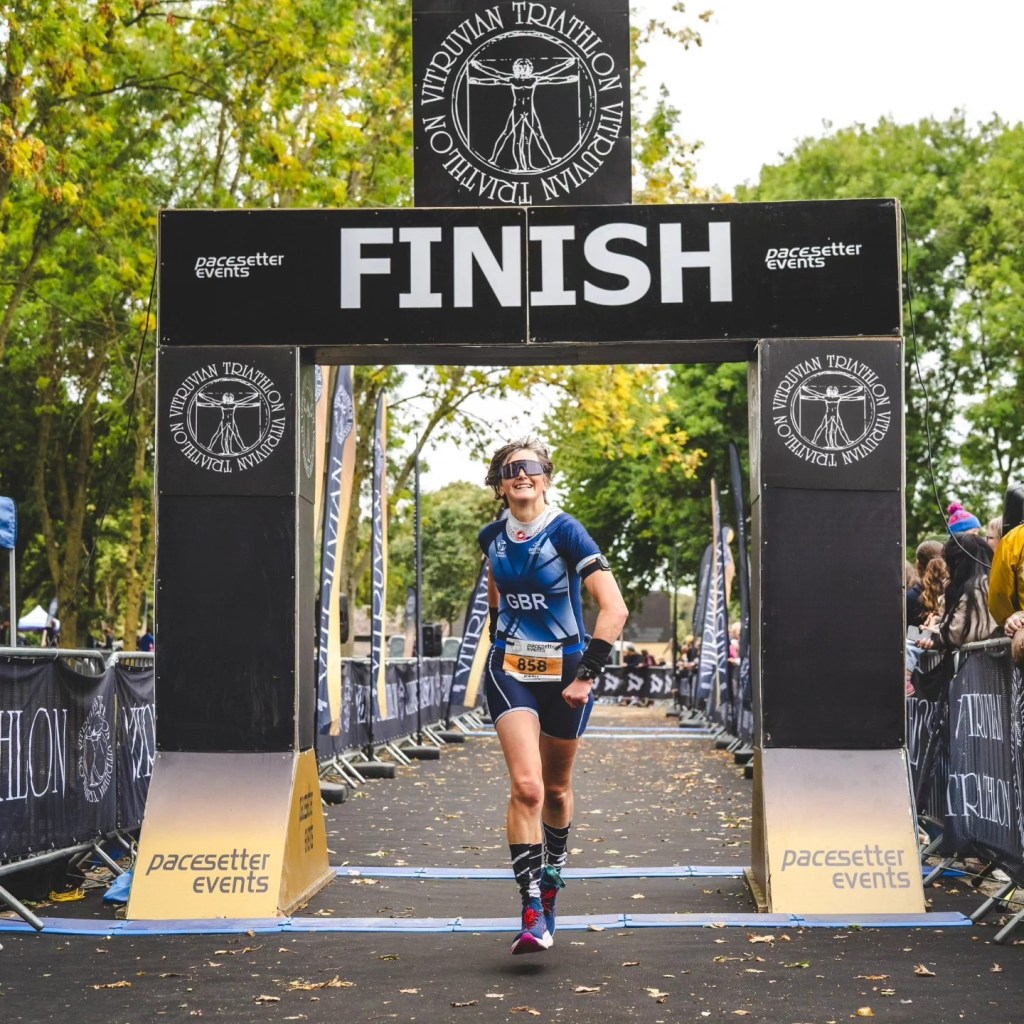
Racing Vitruvian middle distance, 14th September, with sensor on my arm.
My sodium concentration is about 1300mg/L, give or take a bit. So most of the main brands of sports fuel need additional salt added. I should be at 650mg per 500ml.
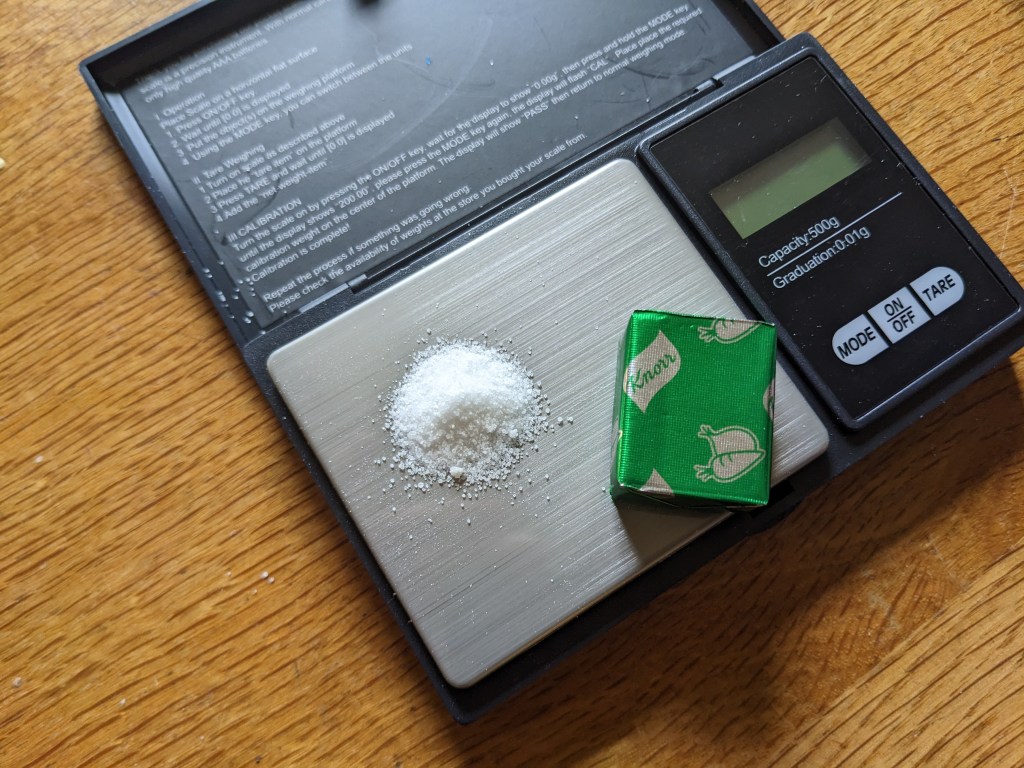
Some sports drinks have some sodium added, some don’t. The amount in most drinks is often insufficient to replace our losses. Additional salt tablets or sticks are options as is table salt. If you use salt in your own drinks you avoid the acid which is in most electrolyte tabs, so that is better for your teeth. Remember a gram of salt is 40% sodium and 60% chlorine. There are 387mgs of sodium in a gram of salt. Microscales enable you to weight these quantities accurately and are very cheap to buy. Adding salt to sports drinks eg SiS Beta fuel also helps dampen the sweet taste and can make them more tolerable. A gram of salt is shown on the microscales below with a stock cube for scale.
Brand
Sodium mg Per 500ml
SiS electrolyte tab
345
Precision Hydration 1000 tab
500
Styrkr electrolyte tab
500
Beta fuel (SiS)
zero
Styrkr drink mix
54
SiS gel
4
Bulk hydration drink
255
Skratch drink
400
The sensor doesn’t take account for your sodium intake in your diet, so consider that. There are also some thoughts around it’s accuracy – like any gadget it isn’t foolproof. According to their FAQs the accuracy rate for sodium loss is 90% in lab conditions and 83% in the field. Fluid is 73% accurate, with as little as 250ml difference to in-field gold standards. Not perfect but better than nothing and we often forget that data is frequently only an approximation eg your garmin sleep data.
But at least it should show you that a policy of ‘nil by mouth’ training isn’t going to give you the best results for your efforts. Hopefully it will help on my constant quest to persuade people to eat and drink sufficient fuel for training.
There are many things you can do and there are, as with most things, choices to be made. These are around preparation, planning, finance, time and mental space.
Let’s look simple before we get complex.
The first, and unglamorous, thing to consider is your general hydration. As a 64kg human I should be drinking two litres of liquid a day, not including caffeine and alcohol. Then I need to drink additional amounts to hydrate during exercise. If you aren’t meeting your basic need for fluid (and we get worse at this as we age) then you are not in the optimal position to race well in the heat. The standard amount to consider drinking during exercise is 500ml per hour. If you aren’t able to do this in practice, or are one of the ‘I don’t need it’ brigade, then you aren’t suddenly going to be able to double this in hot conditions to ensure you are optimally hydrated. Practice, it’s a discipline.
Months before your race you may know that it is likely to be hot eg the Europeans in Istanbul, any race in France or Spain in the summer. Therefore you can choose to be scientific and use a flow bio sensor. https://flowbio.com/ This will give you data about your sodium and fluid losses so you can accurately compensate for them. Sodium losses significantly contribute to performance decline and may contribute to cramps. Cramp is a multi-dimensional issue so remember that lack of salt may not be the issue.
The result of this will tell you how much sodium you lose in one litre of sweat. My sodium loss is 716mg per litre, I am a light sweater. A teaspoon of salt contains about 2350mg sodium and that is 40% of salt, the other 60% is chlorine. Salt is sodium chloride. However this is only half the story. You then need to work out how much you are likely to sweat during your race and this means replicating race conditions. I haven’t managed to persuade myself that working my socks off for three hours in my conservatory at 30 degrees is worth gaining the knowledge of how much I sweat during a cross triathlon. Especially considering what a negative impact on my training week that would deliver.
The value of knowing this early is that you can then practice replacing your likely losses during training. Just as your gut needs training to absorb race nutrition, it needs to be trained to absorb sodium and fluid. If you have high blood pressure you might wish to take this advice with a pinch of salt, and check with your doctor. Many triathletes have very low blood pressure and ingesting enough salt to cure a small ham will not, as far as I am aware, create any issues.
Nearer to the time one can focus on kit preparation. This is very budget dependant!. White is the golden word for kit, except for the bottom half of your tri suit. A dark colour here definitely hides a multitude of sins.
For the cycle white shoes which should be a large enough size to allow your feet to swell in the heat are good and they should have lots of air flow. If you are riding long distance it is a certainty that your feet will swell. The bottoms of shoes tend to be black so you can paint them with white tippex to reduce the heat absorption from tarmac. A helmet can be white, whether it is aero or road is personal preference. A road helmet is cooler but slower so there is a balance to be found. Tri suits can cost hundreds and if you have the choice one designed for heat, possibly with heat dissipating graphene or UVP protective fabric, can be beneficial. Material moves through air faster than skin, it reduces dehydration and can be made wet so increases cooling. So white arm and calf sleeves can help you go faster and stay cooler.
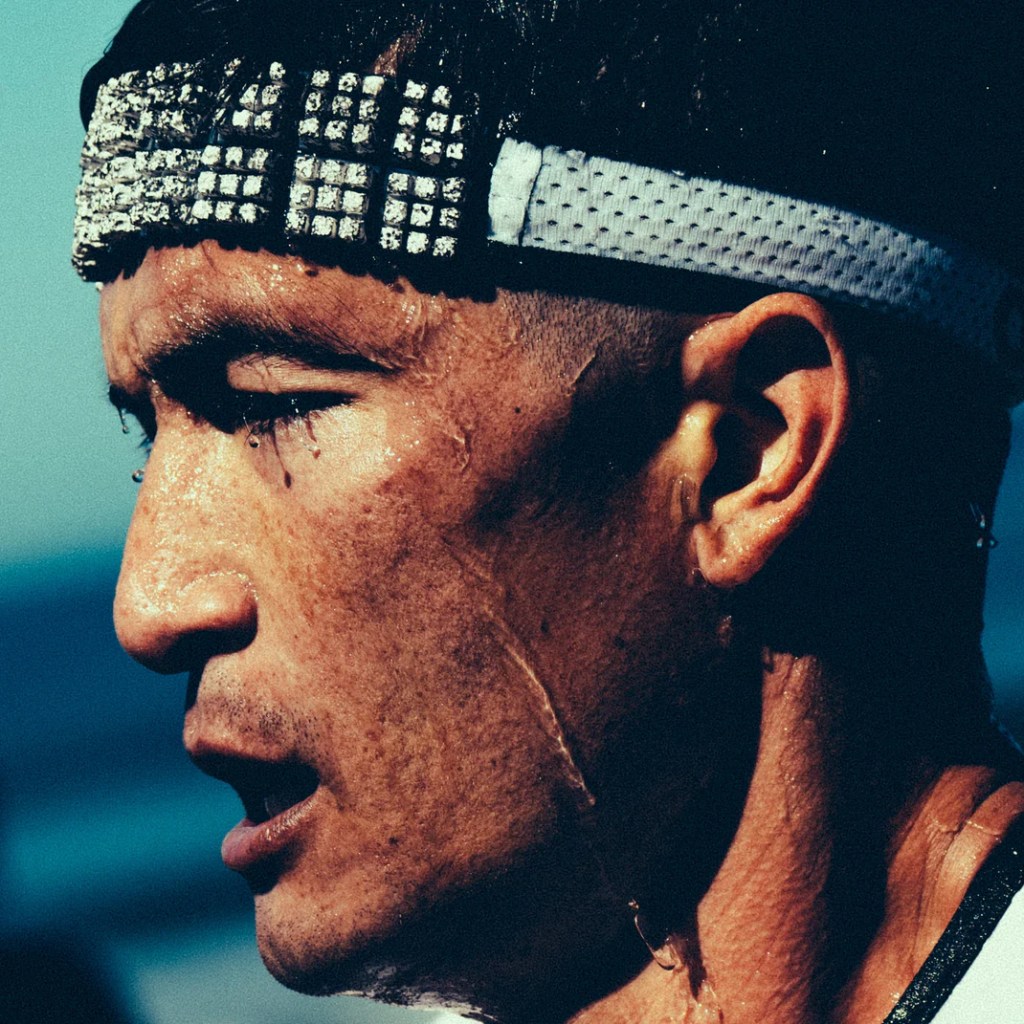
For the run again consider a larger size of running shoe if going long distance. Wear sunglasses and have a light, white run cap for the run, or a visor. I prefer the cap as you can wet it at feed stations and it keeps the sun off your head. Neck coolers are seen more often in the land of ultra runners but definitely worth a look if you are racing long distance. They can be soaked then placed around the neck hence cooling the blood in the arteries and therefore cooling the circulatory system. You could also buy one of those fancy Omius cooling headbands the pros wear. There were quite a number being sported at the Pontevedra World Championships 2025 on amateur athletes. But £200 is a lot to spend on something so small I will lose it, so I haven’t.
Remember to make any kit changes when you still have sufficient time to test them. Eg if you buy arm sleeves how do they feel under your wetsuit? Can you get your wetsuit off with them on?
Be aware that it may be a non wetsuit swim. Generally wetsuits are optional when the water is between 16 and 24.6 degrees Centigrade. However there are variations depending on the race distance, conditions and competitors ages so always check. The decision is made an hour before race start. It is hard to practice for this in the UK as our outdoor temperatures are usually cool but the least you can do is wear your tri suit in the pool a few times. In some races it is legal to wear a swim skin if wetsuits are illegal. More kit! And remember to practice with that too! However remember that it is illegal to wear arm or calf sleeves in the swim if it is non wetsuit so you need to consider this in your prep.
Then heat train. This is deserving of an article in it’s own right so I will say little about it here. Heat training will help your overall performance in any temperature and your ability to race in hot temperatures. You can do active or passive heat training, the first involves sessions where you are very overdressed, the second means doing sessions to raise your temperature then hopping in a sauna or hot bath. It is also sensible to practice eating and drinking when doing these sessions, digestion is a lot harder in the heat and some food eg Beta chews or jelly babies become very unappetising when hot (and melted) so fuelling strategies may need to be altered.
Almost at race day now.
Your heart rate elevates as your core temperature increases and the amount of effort you can produce drops. Ie performance declines. So the lower you can keep your core temperature on race day the faster you will go.
In the run up you can use electrolyte tablets to ensure your salt and electrolyte levels are topped up and make sure you have good hydration. Stay out of the heat in the days beforehand and keep the weight off your feet.
Race day –
Keep cool by whatever means you can.
If you are waiting for a later start use an ice vest which will keep you cool for about an hour.
Stay in the shade if possible.
Use suncream, a water resistant brand can usually be put on beforehand and will last all race. However if you are doing ironman or an ultra epic you may wish to have some additional cream somewhere.
Have cold drinks available while you wait. 500ml of iced carbohydrate solution in the hour beforehand in a thermos cup helps.
Give yourself ample time to get ready, this reduces the possibility of you becoming hot and bothered.
The cooler you can keep your core temperature the longer it will take to rise and the better you will perform.
Put your wetsuit on as late as possible, bearing in mind it’s a pig to get on properly if you are sweaty. While waiting for the swim again seek shade, don’t just stand in the sun because everyone else is. Take a disposable litre bottle with you full of cold water and pour that down the inside of your wetsuit during the wait for the start. This will cool you by sealing the wetsuit with cooler water than your swim venue water.
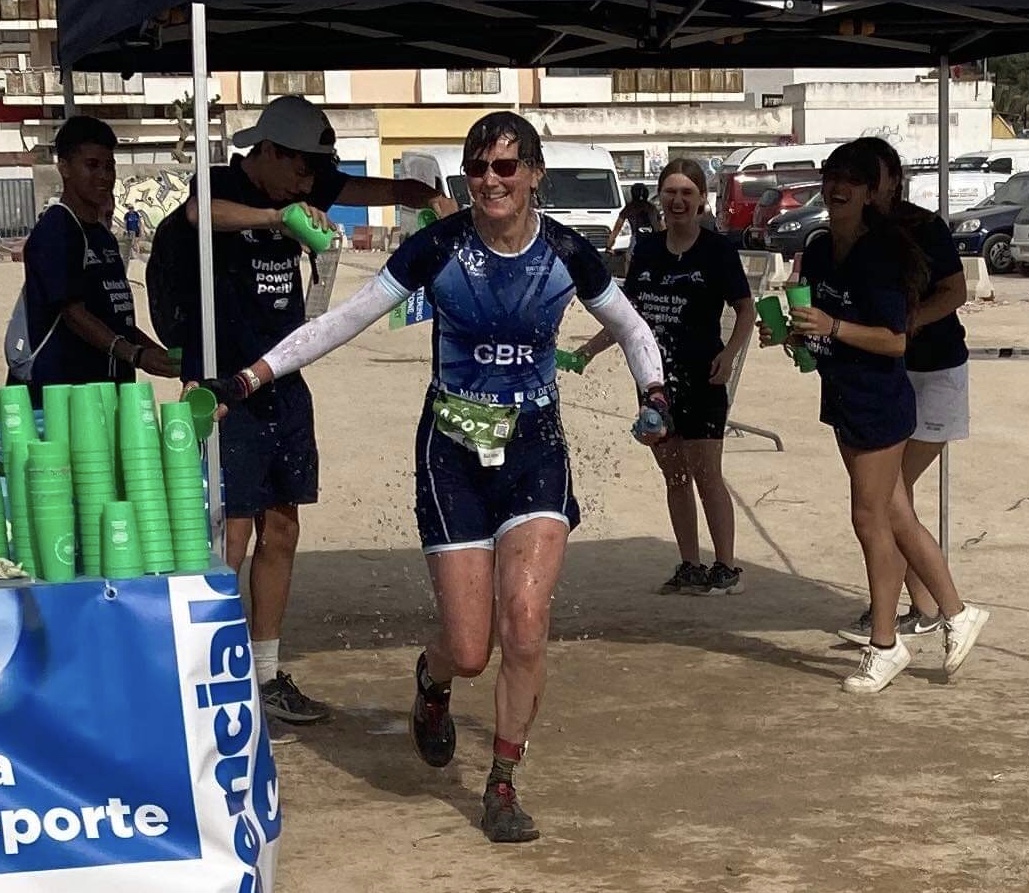
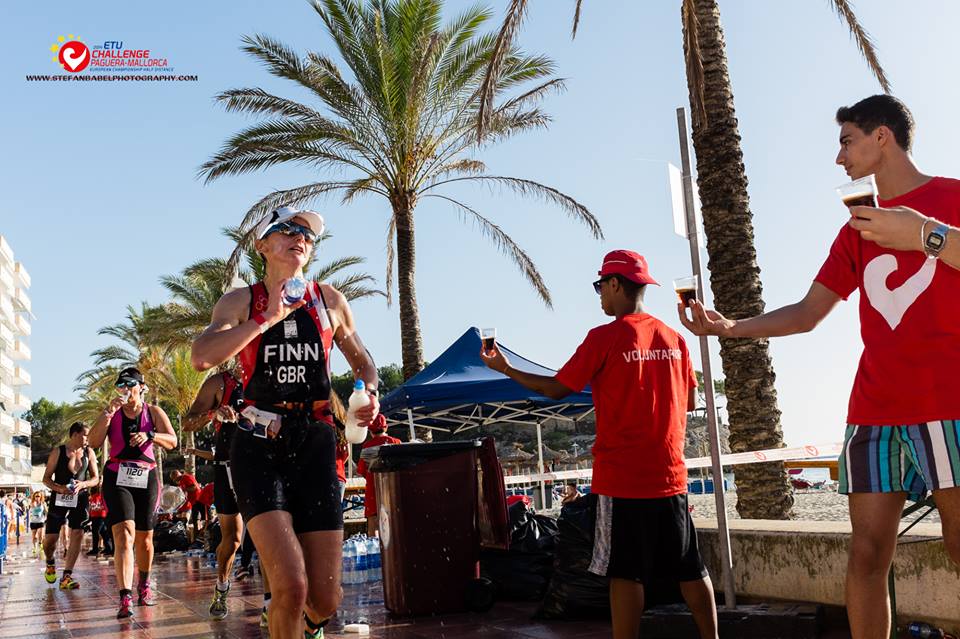
Ice or freeze your drinks for the bike if the timings work. Add salt to them, now you have practiced. Expect to drink more than normal, remember 500 ml an hour is normal, it may go up to over a litre in very hot conditions. You shouldn’t pee more, you will be sweating it out. Use the water stations to cool you. If you can grab a bottle while moving and empty it over you, then chuck it. But if you need to grab bottles for drinking too then don’t be afraid to stop briefly on longer races, the volunteers are usually really good at helping soak you. Carry additional salt tablets or electrolyte tabs on longer races. Hyponatraemia is a serious, potentially fatal, condition caused by drinking so much plain water that you dilute your sodium balance. Drink a mixture of water and electrolytes.
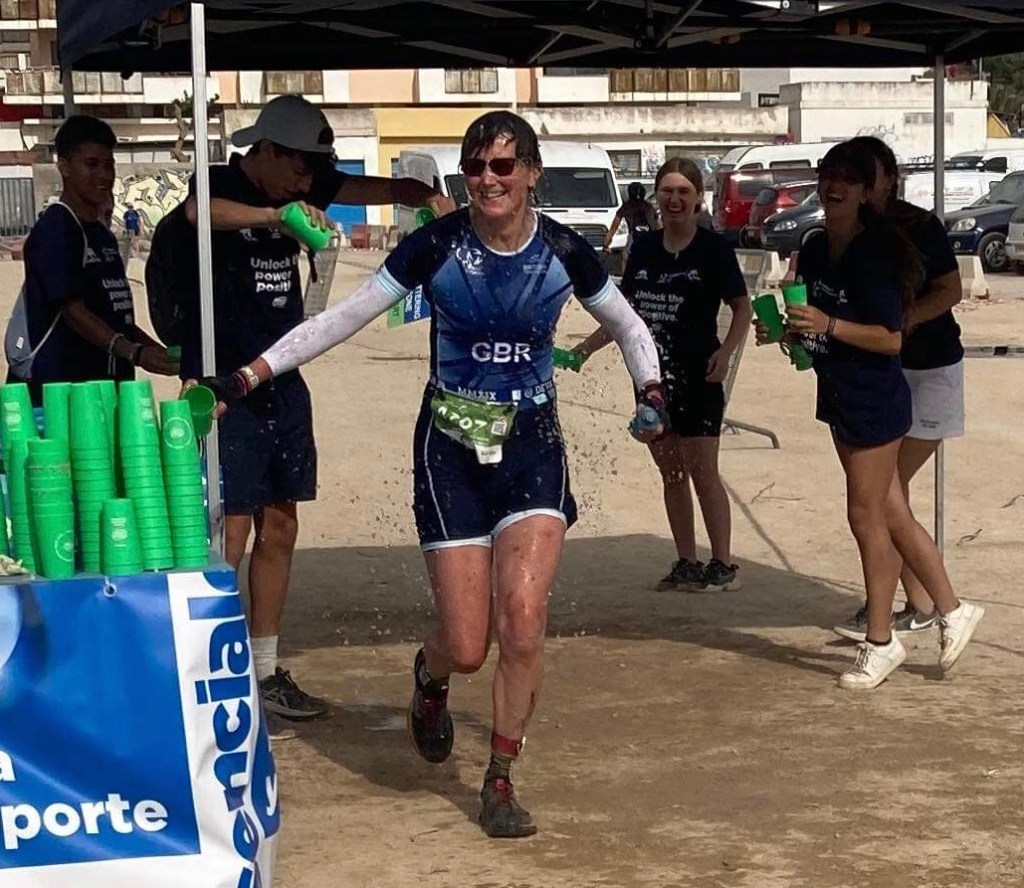
In T2 grab your cap, and neck cooler if using, and use another disposable litre bottle of water to pour over yourself, including your cap, before going out on the run. You may choose to take a run flask with you to help keep electrolytes up. Again use the water stations on the run for hydrating and for cooling – pour cups over you. Make use of any shade on the route, it’s worth crossing the road for that! And if anyone has a hose out make sure you run through it. If you are really lucky they may have ice or sponges. Take both! Stick the sponge in the neck line of your suit and put ice down the front of your suit – you want it landing in your groin where the blood is near the surface and you will get the biggest cooling effect.
If you do start feeling ill sometimes the most courageous thing you can do is stop and dnf that day. There will always be another race and heatstroke can have serious consequences.
Be aware that your thermostat often gets very confused racing and it’s possible that you may get very cold immediately afterwards.
What a whirlwind of a week that was. It brought together over 3,000 athletes, from more than 30 countries, to race in seven races throughout the week. The standard was high and the fields were large, clearly Pontevedra, in NW Spain, was the place to be.
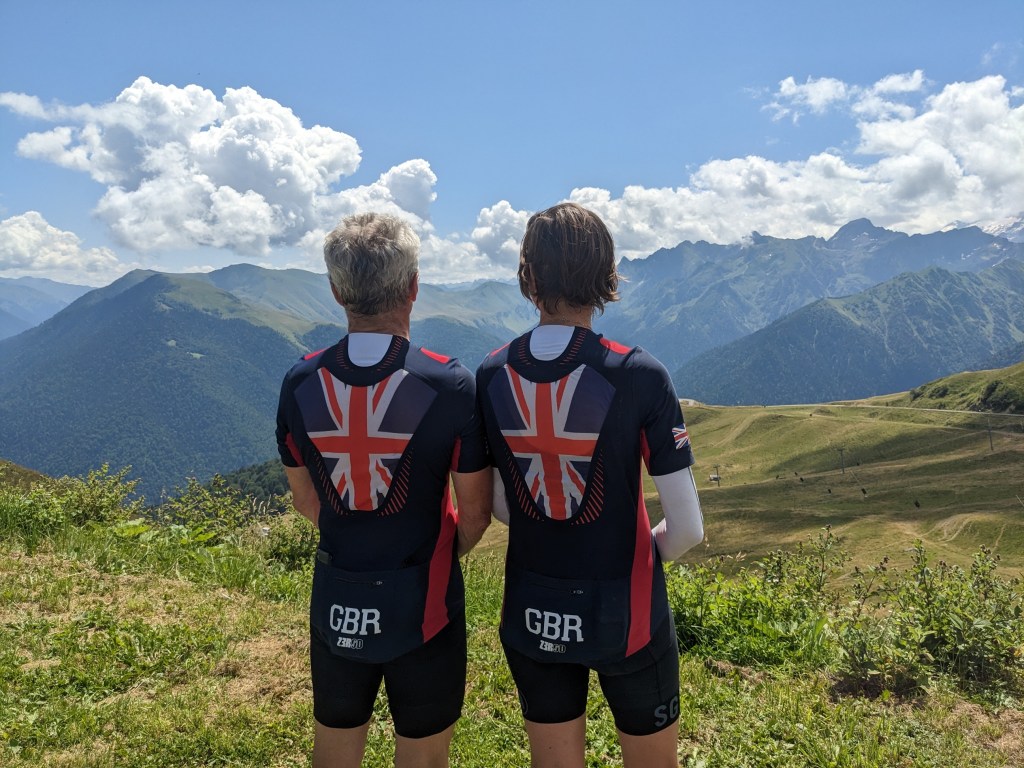
A week later we sit in the Pyrenees recovering and feeling slightly odd as all we have to do is feed ourselves – and ride our bikes if we want. What has happened to the hustle and bustle, the navigating from x to y within a time limit, checking race routes, checking bus timetables, hugging people, wondering where to find lunch.
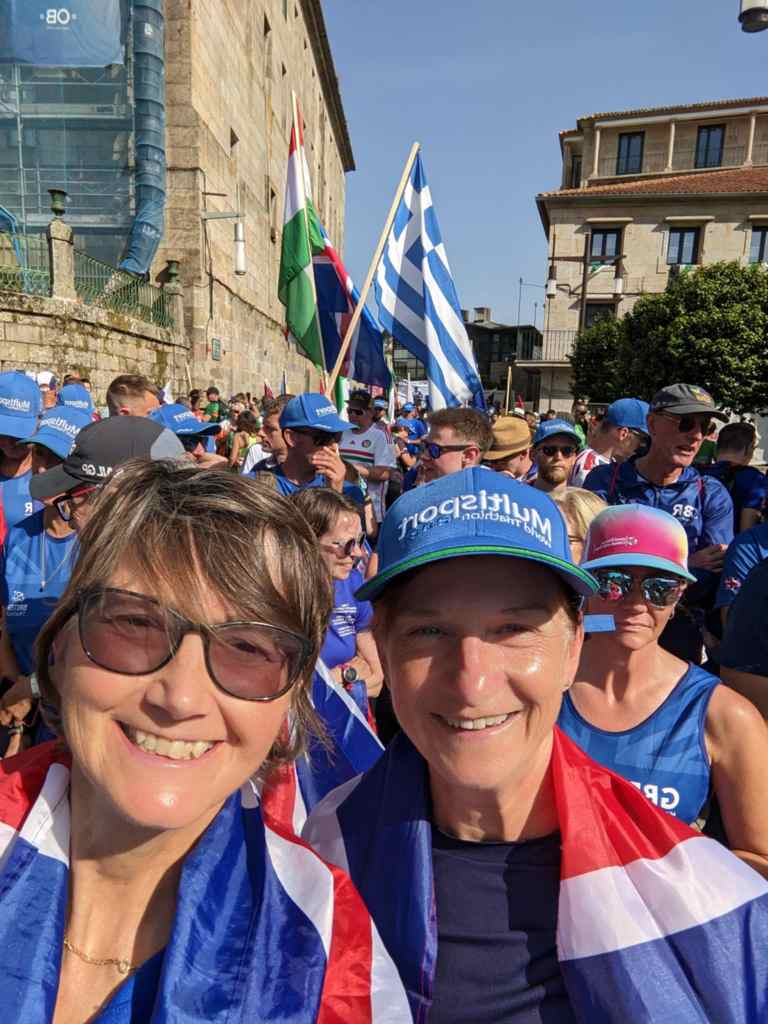
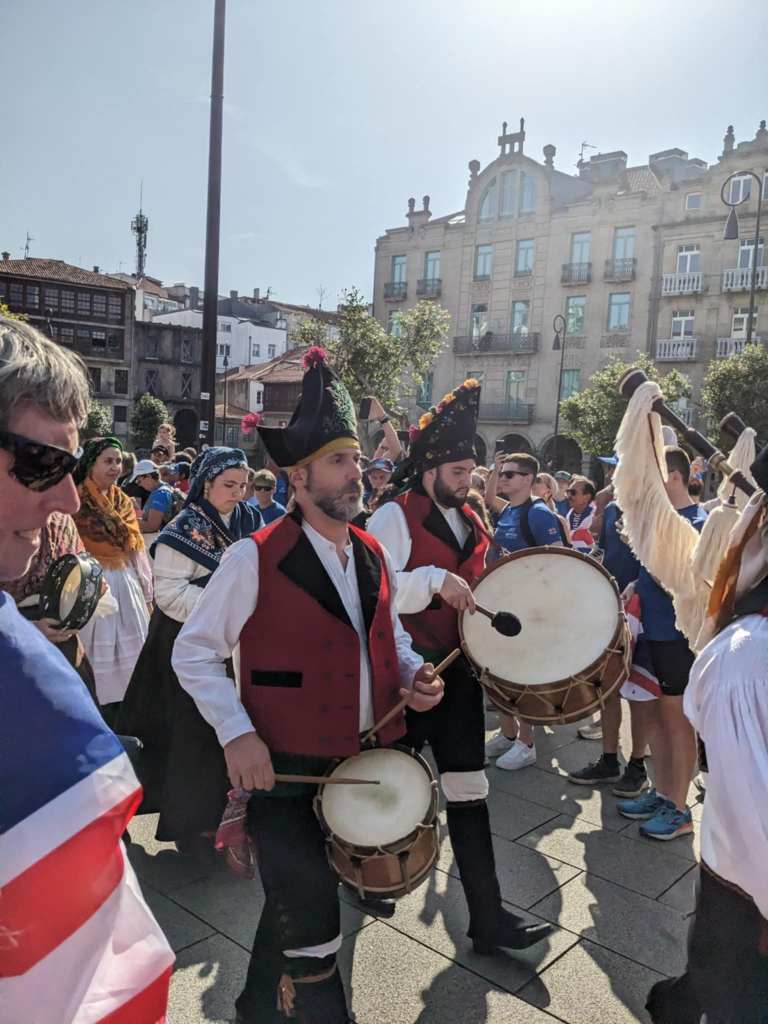
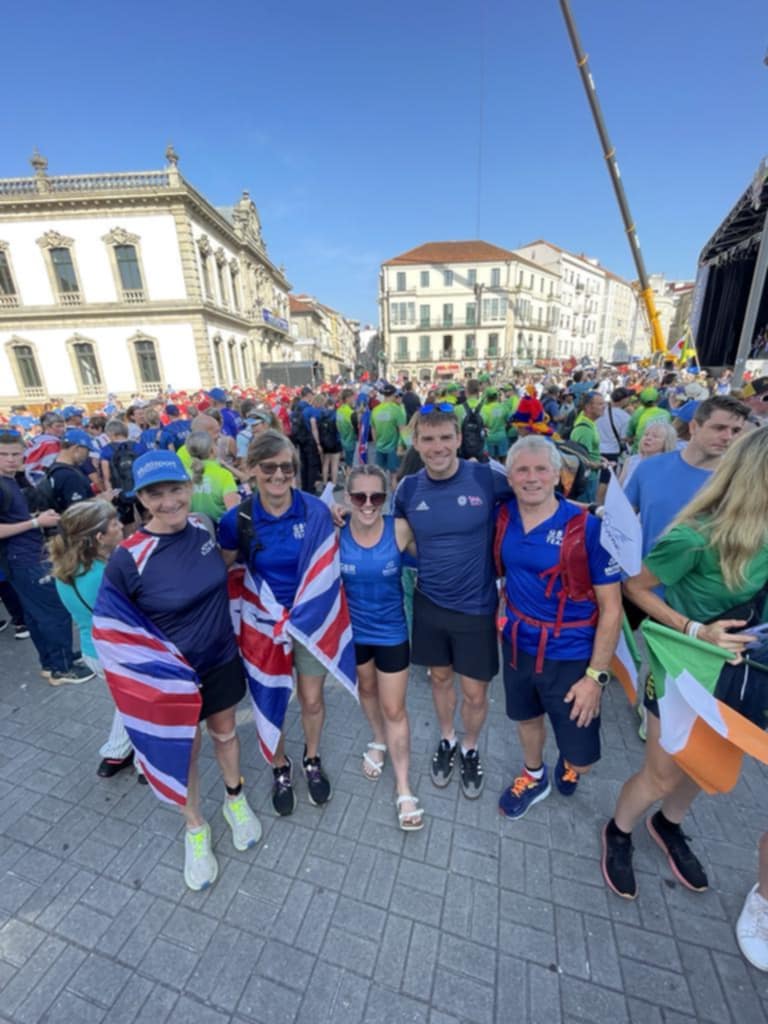
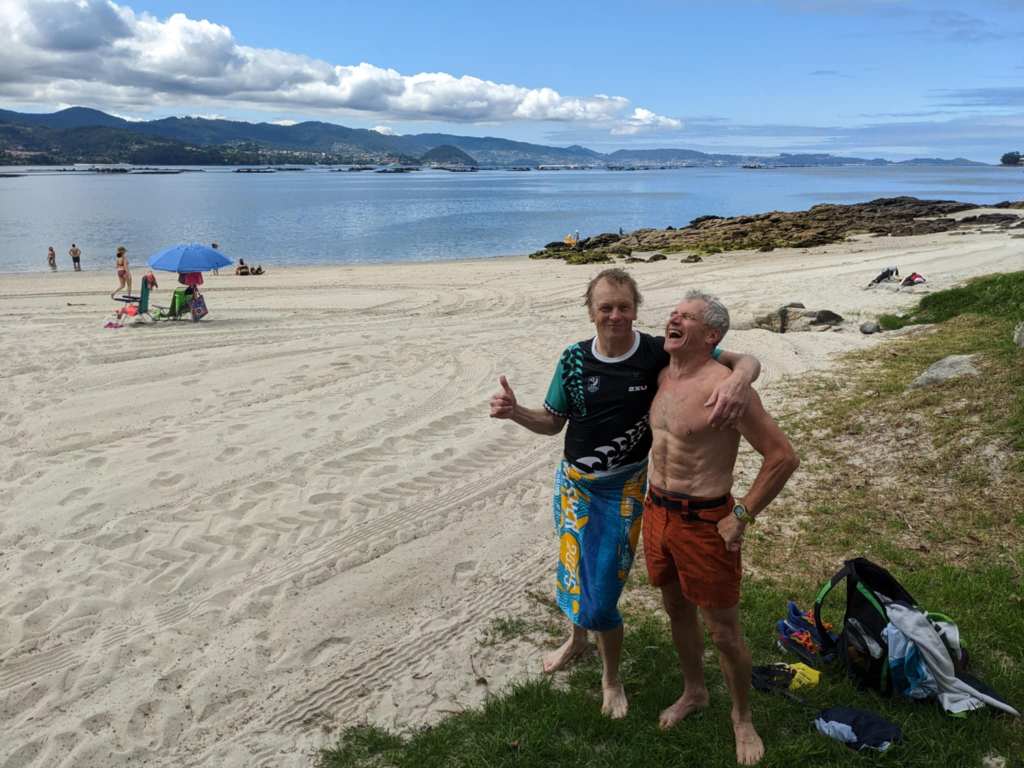
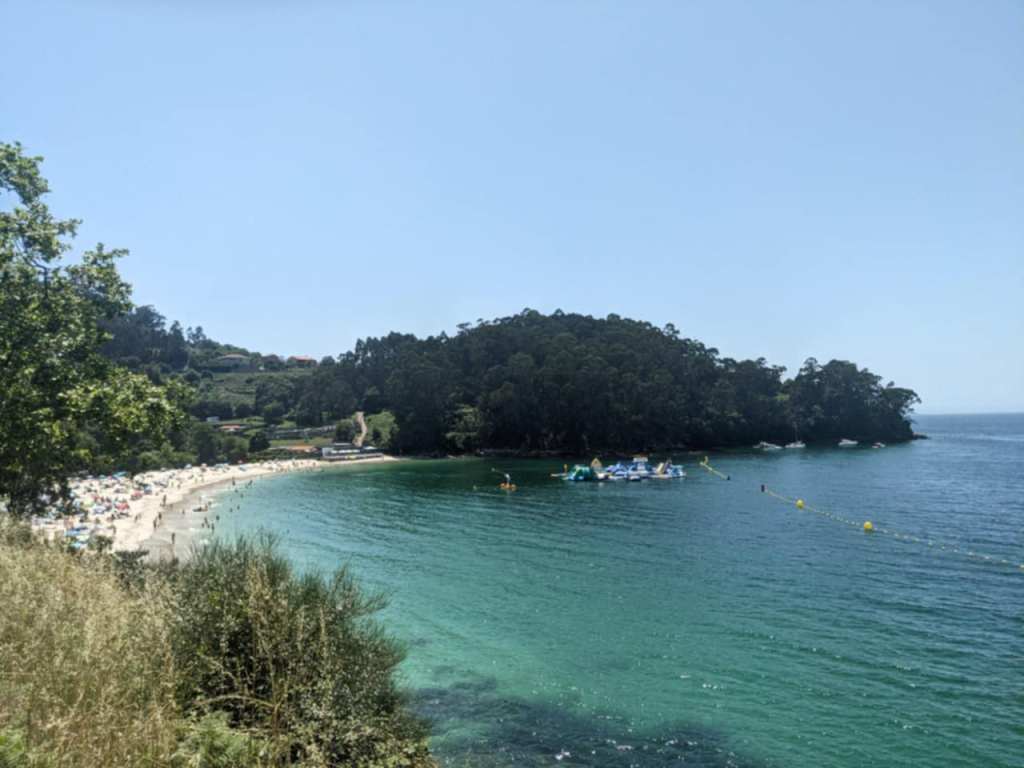
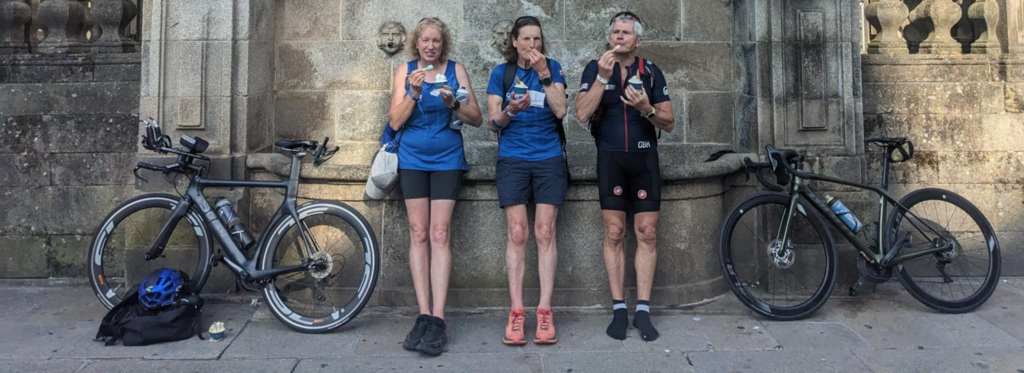
We arrived in Pontevedra on the Thursday for our first race on the following Tuesday. For once we were there for the Parade of Nations and the Opening Ceremony which included a performance by Cirque de Soleil and live music. The Parade of Nations was delightfully chaotic, many athletes gather in a square and are eventually marshalled into some kind of order behind country flags then we walk to another square following a local band. This provides a brilliant time to seek out many old friends. There were about 15 people Paddy and I hoped to catch up with ranging from those living in Kendal to New Zealand, it was quite a week of ice cream, beaches and coffee.
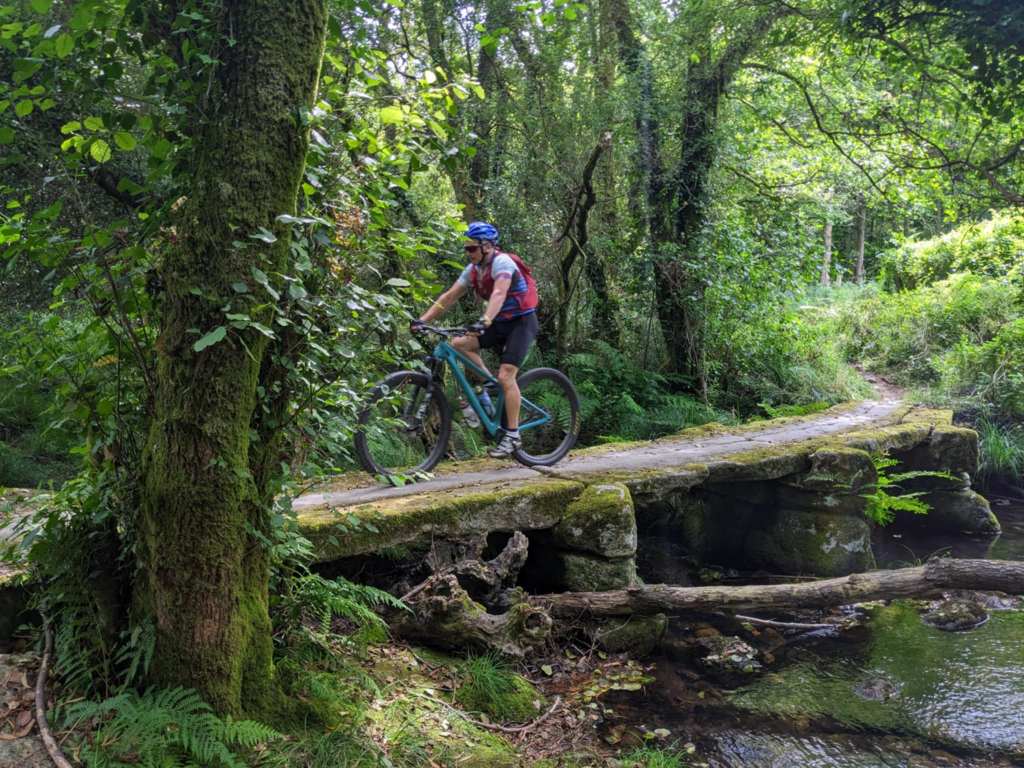
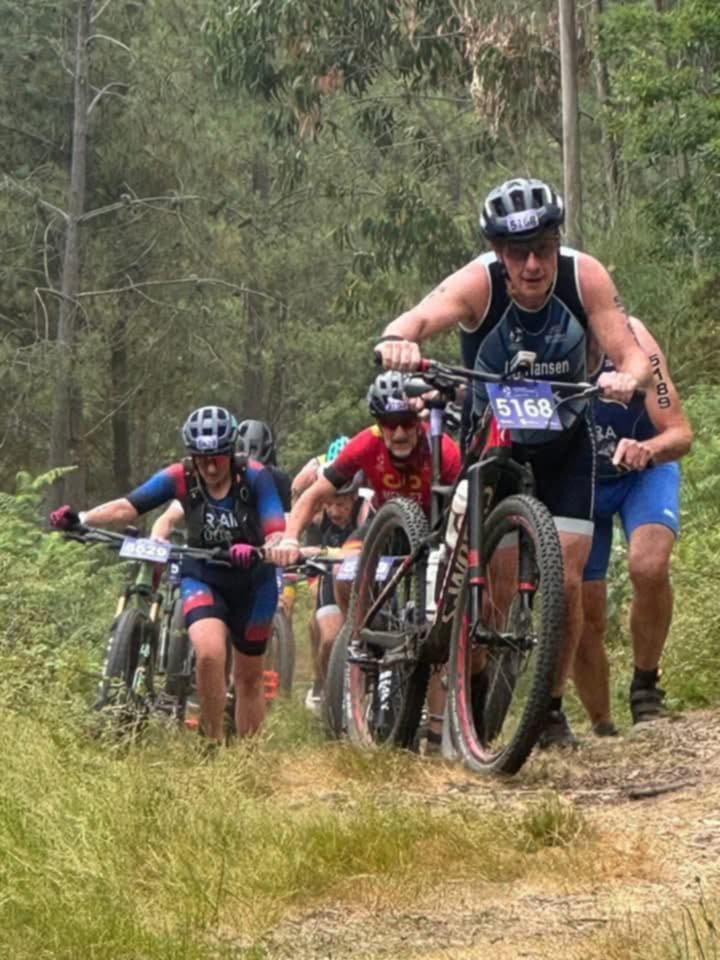
Friday saw us ride one lap of the three lap Long Distance Aquabike course which was one big hill with a flat bit full of speed bumps. Saturday saw us venture out of town to the Cross Triathlon course to recce that, giving us two days to recover before racing it on the Tuesday. What a fab course, loved it. The Cross is always a bit unknown and the courses vary widely. This was kind of blue level, untechnical, but super fun to ride, with lots of bumpy descents and loose gravel. Also very pretty through a forest with some nice touches like a skinny stone bridge. Lots of descents means lots of ascents and it had over 1500ft of climb per lap of 9 miles, some of it too steep to ride unless you were elite or about 20 years old. All of us old gits walked on the day.
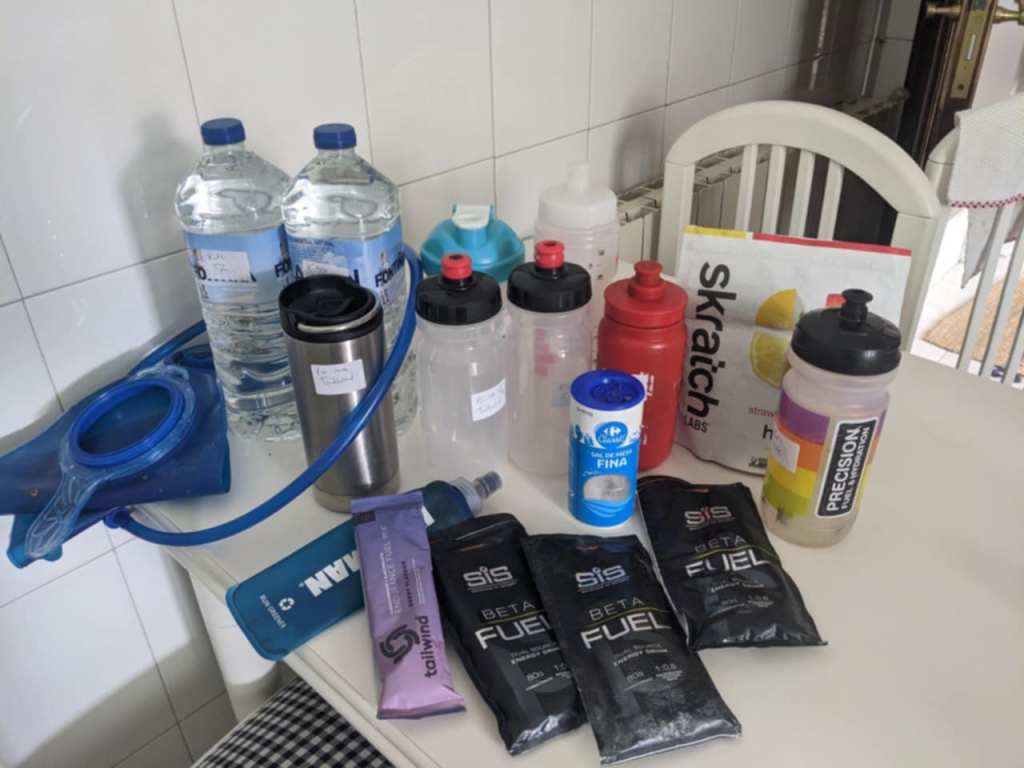
Before race day we needed to register, support Caroline Holden and various other friends in the Sprint Duathlon in town, do our swim familiarisation for the cross tri, (12km out of town in a lake) carb load, kit sort and amass the biggest load of liquid you’ve seen.
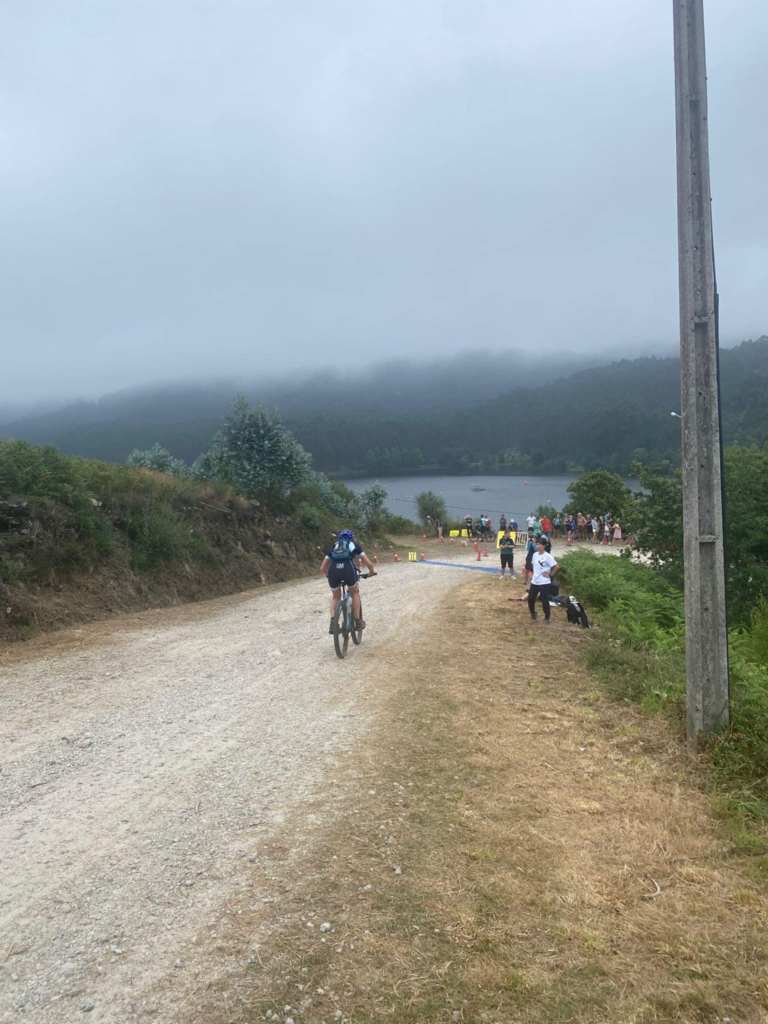
We had to be at race site on Tuesday four hours before we started as they were closing the roads and car parking looked limited. So we needed to pack for maintaining hydration and stabilising body temperature if it was 30 degrees, for hanging around for ages and for racing. All went smoothly with that time scale giving us ample time to check out transitions and the swim start, chat to people and read our books. The weather was blissfully about 24 degrees. Thank goodness.
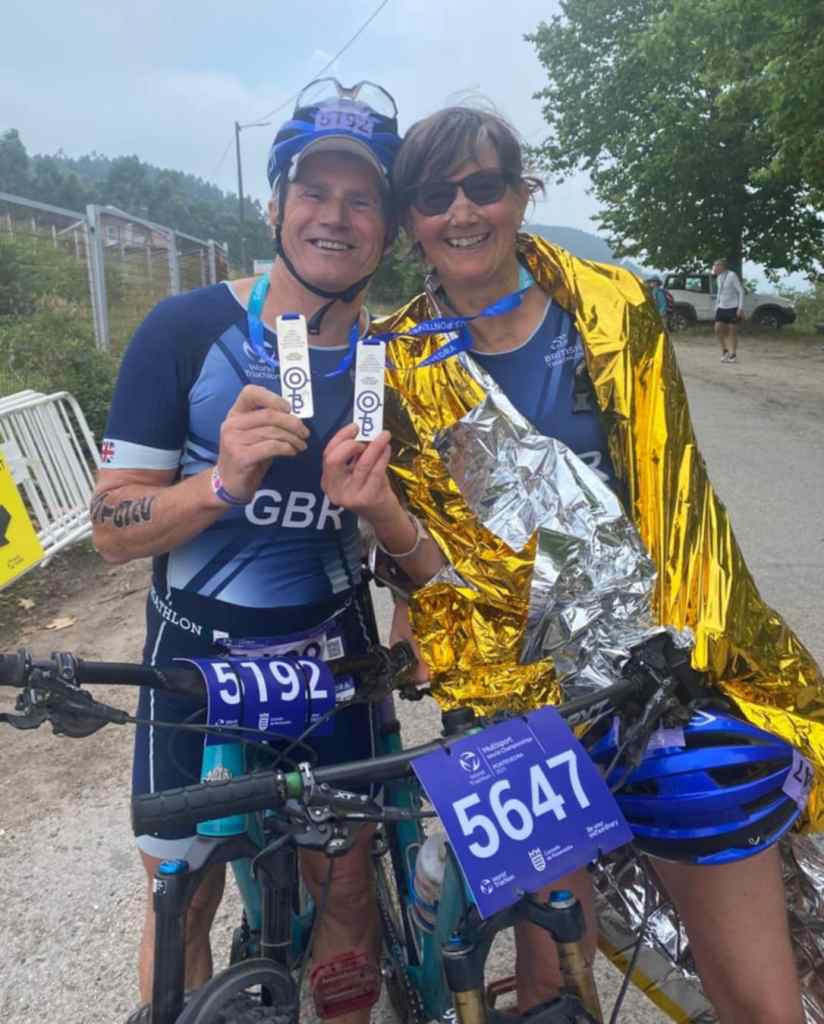
Swim was 1km, non wetsuit and I had a poor one. Partly as I seem to have forgotten how to sight, but also I hadn’t swum recently after coming off my MTB and bruising my ribs quite badly. Three weeks previously I hadn’t been able to swim a stroke but with the help of physio and tape and painkillers on the day all was possible. Loved the bike, haven’t lost my nerve which was a relief. 2 laps, 3,000ft up, 18 miles. Lost one of my bottles, but had my bladder as well so managed enough fluid. Then on to the run which was 5 miles and another 500ft or so uphill. I had a blinder of a run which was great. Came in after about 3.5hrs in 6th out of 9, but second Brit so I get to qualify again for next year. Paddy was 14th , again with a time good enough for next year as he hits the next age group up, the heady heights of 70-74.
Then recover, recover, recover – but juggle that with frantically waving the Tri Club bells for friends in the aquathlon, registering for the aquabike, doing swim familiarisation in the river, carb loading and racking our bikes the day before racing. The temperature was steadily rising and sleeping was a challenge with the windows shut against traffic noise and a fan on all night.
Hit Sunday hot but happy and feeling reasonably good. The swim for this one was 3km in the tidal river in the centre of town and, thank goodness, the influx of sea had held the temperature to wetsuit legal. I’d still be out there if we’d had to swim against the tide without a wetsuit for that distance. Very happy with this swim, sighting was better and I had good fun on the downward leg using the current. Shot through a very long transition and onto the bike. 75 miles and over 4,000ft of climb with the temperature climbing into the mid thirties. Hot, hot, hot. Think of riding up Shap from Kendal three times and that is about it. Far more fluid than I thought I’d use. About four litres I think over 5 hours. I got to enjoy the first big descent before the afternoon wind got up, which made the next two a bit tricky. They were wonderfully unprepared for hot weather on the food stations. They ran out of electrolyte and proper bike bottles by the time I got half way through the second of three laps. Luckily I hadn’t chucked both of my empty bottles and could refill one with water, getting a bonus soaking while I did so to try to hold my temperature down a bit. Held effort down until the last lap then used whatever I had left – which wasn’t much to be fair. Great day out, finishing in 6 hrs and 9/19, again with a time good enough for next year. Paddy was also 9th with a qualifying time for next year. I have never ever been so glad that I didn’t have to run given the temperatures. I have seen the light, aquabike it is!!
Before we race GB Paddy and I always say ‘it’s so expensive, such a faff, we won’t do it again’ and every time afterwards it’s – ‘ that was SO amazing, when are we going again!’ I think we will have to wait until 2026 but bring on another wonderful experience full of colour, logistics, friends, smiles, excitement and FUN.
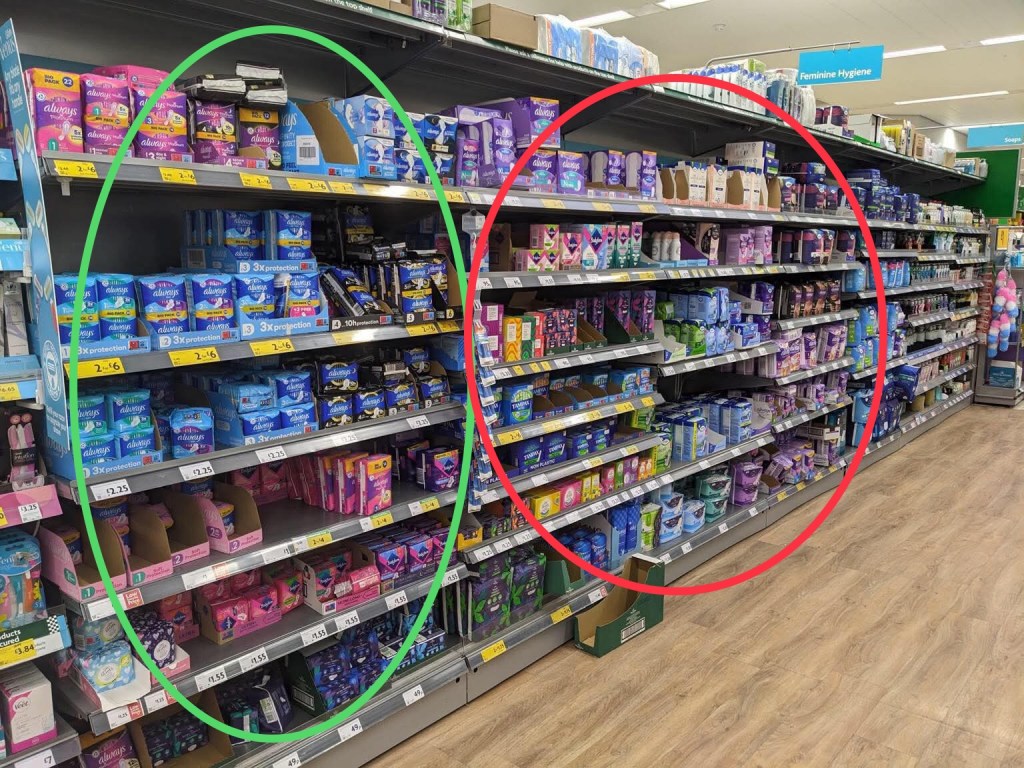
This looks like an unspoken epidemic in the UK with the incontinence pads taking up more room in the supermarket than period products. (three sets of shelves to one)
43% of women in the UK in their 50s will suffer and this rises to 51% of women over 65. Main contributory factors are giving birth naturally, menopause and ageing when facia damage and muscle weakness become issues. Chronic constipation, heavy or repeated lifting without correct abdominal bracing, constant coughing eg smokers chronic cough, being very overweight or frequent vigorous high impact exercise may also contribute. It is not solely a female issue but it impacts far fewer men.
There are two main types of urinary incontinence – urge and stress.
Urge incontinence – this is when you are desperate to go to the loo and can’t hold it, this may involve some leaking. Urge is mostly caused by your bladder being irritated by insufficient fluid or by the nature of the fluids consumed. It is also triggered by hormone imbalances during menopause. It is normal for you to urinate 4 to 8 times a day, or every two to three hours. It is also very common to get up once in the night to urinate. If you are constantly up and down in the night, and/or peeing super frequently with desperation, please make an appointment with your GP
If you go more frequently what actions can you take?
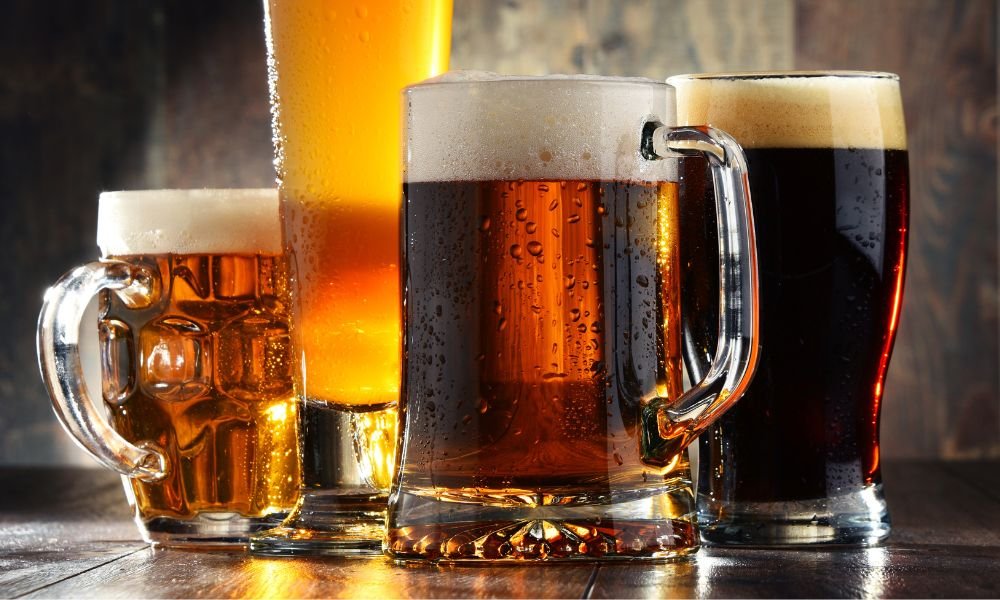
You can remove irritants from your diet. This will prove very hard for many as the biggest culprit is caffeine, closely followed by alcohol. Then fizzy drinks, so beer is a bit of an issue! Other irritants are citrus fruits and juices, chocolate because it contains caffeine, green tea and tomatoes. You may be more irritated by some things than others so it is worth testing things out.
You can make sure you drink enough non irritant fluids. We need approximately two litres a day, without factoring in dehydration from exercise. This can include water, milk, decaffeinated drinks, herbal teas, diluted fruit juice (non citrus) and milk shakes. You can also add in there electrolyte drinks, and sports carbohydrate drinks. The sugars in some sports drinks may be irritants for you though, experiment with different brands.
As we become older we lose our thirst mechanism so it becomes more and more of a discipline to drink. ‘I’m not thirsty’ doesn’t cut it.
In menopause HRT and oestrogen pessaries may provide some relief from urinary urges.
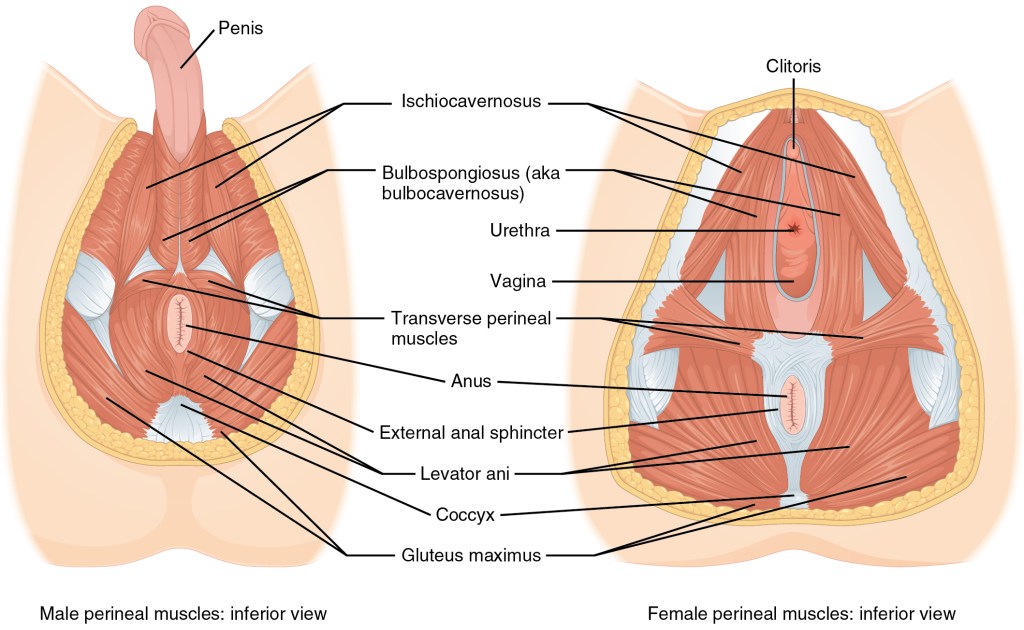
Stress incontinence – this is when you leak urine without meaning to. For example when laughing, sneezing, coughing, skipping or running. The most common reason is that the pelvic floor muscles are not functioning correctly. All the bladder, bowel and sexual functions require good pelvic floor function. The pelvic floor muscles are thin bands of muscles in a figure of eight around the anus, urethra and vaginal opening which form a thin sheet of muscle. They support the bladder, uterus and bowels. Like any other muscle in the body they may become weak, overstretched, slow to work, too tight or torn. And just like any other muscle in the body we should look after them by exercising them regularly. But if you are like most humans you will forgot or ignore them as ‘out of sight out of mind’. The time we generally start to think about them is when they stop working properly!
What should we do? We should do pelvic floor exercises daily. This involves tightening your pelvic floor and holding for ten seconds. Do this ten times.
Then quickly tighten them and let go after a couple of seconds, also do this ten times. When doing both exercises relax the pelvic floor completely in between each exercise.
If you don’t know where they are try stopping the flow of urine while you are urinating and be aware of which muscles you are activating. Only do this to get the feel for what your are trying to do, don’t do it regularly. The muscles around the anus should contract as well as the ones at the front of your lower abdomen, just above your pubic bone.
If you are currently experiencing leakage do pelvic floor exercises three times a day for three months. If you are still struggling after this go and see your GP. There are solutions and there is no reason why you should suffer for years. Your GP may prescribe menopause treatment, examine you, to ensure there are no other issues which need treating, and may refer you to an NHS specialist physiotherapist. Taking this course of action may ease embarrassment, self esteem issues and loss of confidence outside of the doctor’s surgery. It might enable you to enjoy things which you have given up due to bladder issues and it may save you a fortune in Tena pads over future years!
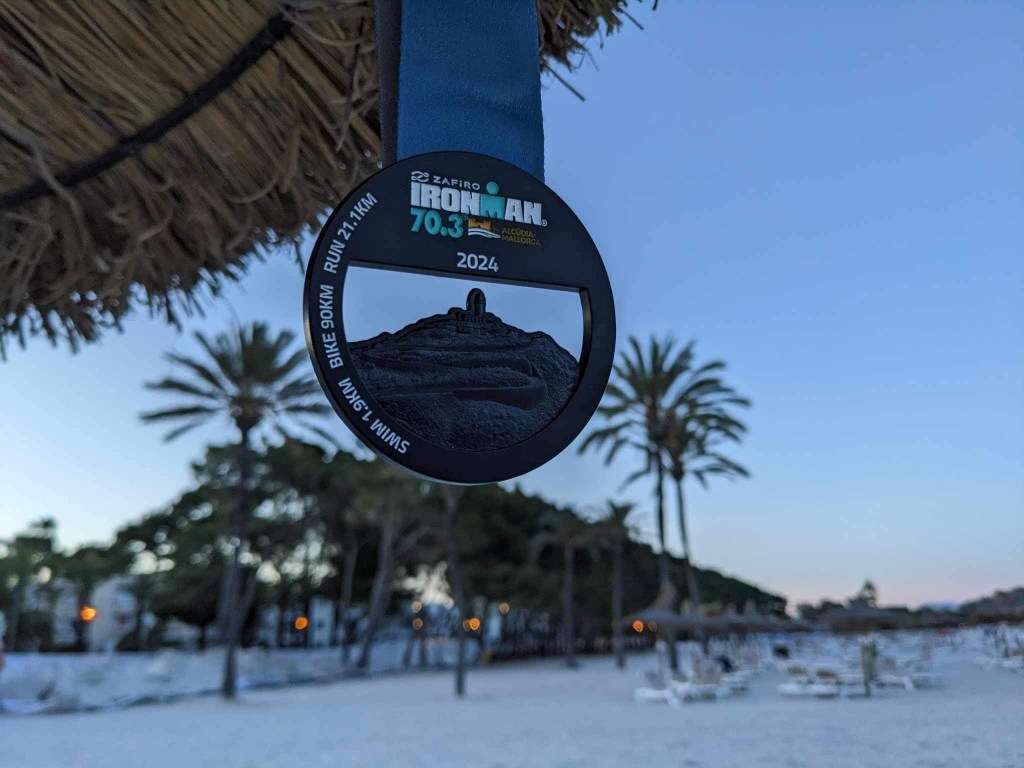
I only manage to do a high level of prep two or three times a year. Both mentally and physically racing takes a toll. When you have paid to fly somewhere to race it’s worth investing a bit of time in getting to race day well prepared but what does that really involve? My husband, Paddy, and I chose Ironman 70.3 Mallorca, so 1.9km swim, 56 mile bike with 800m of climb, 13 mile run. May 11 2024
Why this race? – ummmm, seemed like a good idea at the time! I needed a middle distance about 2 months out from a full Ironman in July. I’ve done the only ones this early in the season in Britain a couple of times so it felt good to have a change. And it kind of fitted with being in Mallorca for the cycle club trip three weeks before. Now that had the makings of a good holiday. Great course, sea swim, lovely bike route with a big climb and technical descent. Likely to be sunny, what’s not to like except the entry fee as its Ironman.
But what does the prep look like?
We flew to Mallorca almost a month before we raced which was very unusual for us. It was weird making race decisions that long before a race. We decided to take our time trial(tt) bikes and hire road bikes for the first week. It’s hard to hire a tt bike and feel comfortable on it and we needed some practice time on them anyway. We couldn’t ride them all the time as they are not safe in groups and do not climb well. Not good material for the Club week. Which wheels, I had a choice of four different wheel sets. No disc wheel, too hilly. No carbon rims in case it rains. Big cassette on the rear, 36, as we knew there was a big climb. Off to the bike shop to get a pre race service. Test rode it, gears didn’t work properly, back to bike shop. Tested power pedals and garmin 530 so I could remember which buttons to press. Booked an extra massage and tried to eat well, supplementing with an electrolyte tab daily. Checked paperwork – flights, insurance, (ensuring it has cover for racing abroad, most don’t) race licenses, passports etc. Collected vast amounts of kit for all eventualities and bought the obligatory ‘can’t do withouts’ including lightweight scales to weigh food for carb loading day and a new tool carrier to fit a bottle cage. Lists everywhere….
The night before packed the bike box, def should have done that before, the bike nearly didn’t fit. Ooops. I did remember to mark everything and take pictures so I could fit it all back together. I discovered when it came to rebuilding the bike that the bit that holds the saddle is in fact four bits, all of which fit down the frame and then won’t come out. Finally…. they rolled across the floor. I haven’t flown with this bike before, that’s a lesson for the future. Clothing choices, kit selection etc.
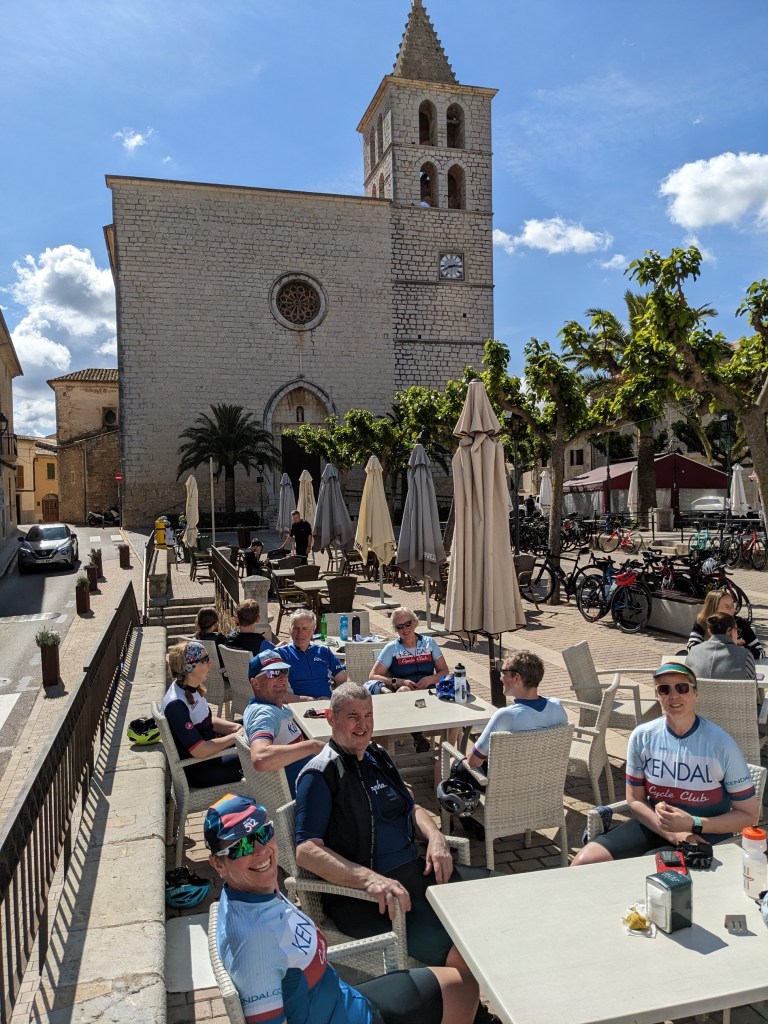
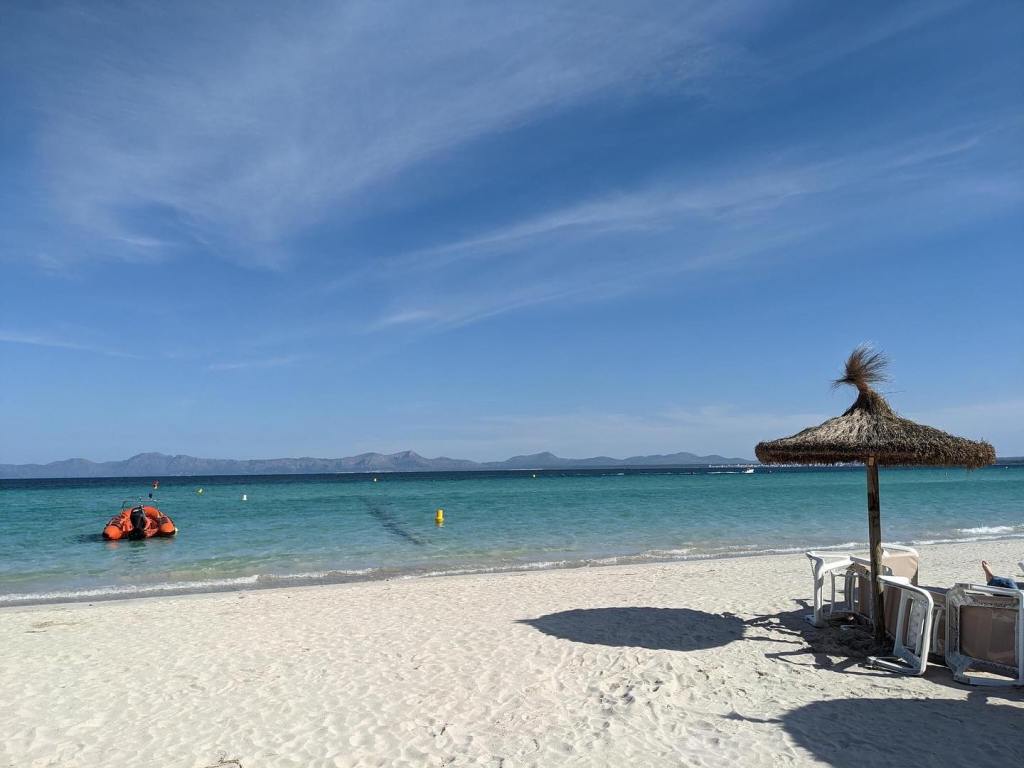
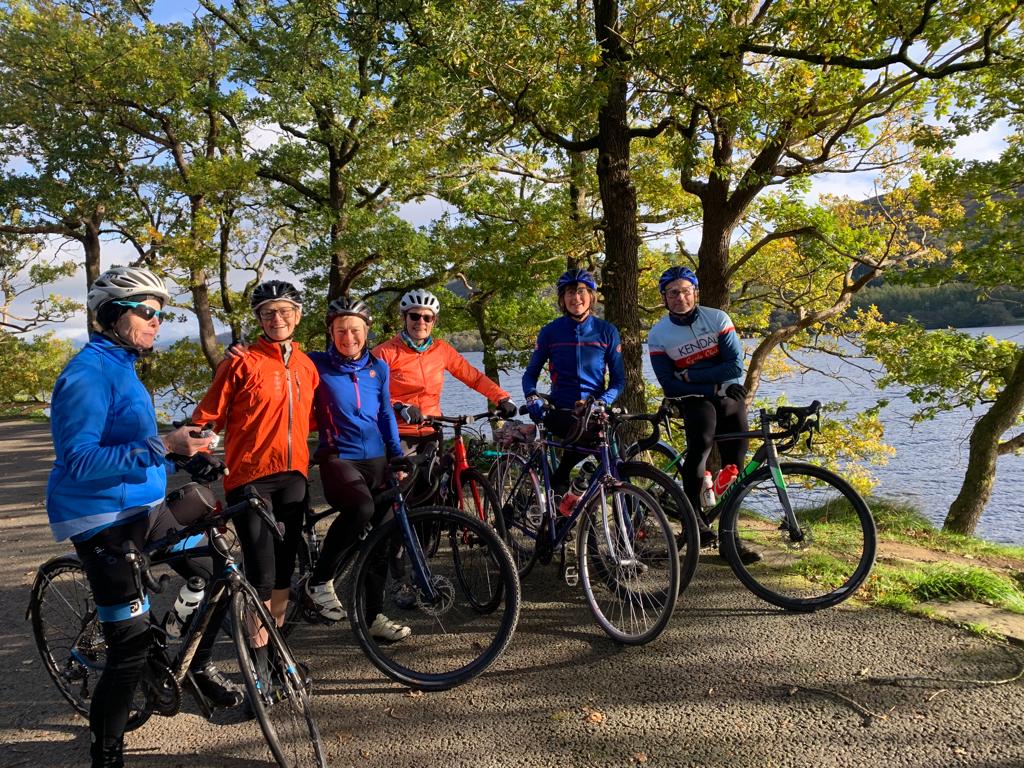
The first week was the local Cycle Club annual trip so we cycled unhealthy amounts, for me that was about 288miles with 18,000 feet of climbing. Five days of great riding with friends and coffee stops. (and the odd swim). Which obviously left me knackered. Less obviously, at least to me, also left me nursing a couple of overuse injuries. But after a couple of days recharge I was ready to put in my last week of training which saw 20 hours of sessions and race practice. It is amazing to have the luxury of spending time just training and relaxing without having to fit in the rest of life. Lots of little bits of race prep fitted into this week. Swimming was amazing, in our own private pool about 100m by 500m, which in reality was a roped off area in the sea with our own private lifeguard. Mallorca has been unseasonably cold so no one else seemed to think the sea was warm enough but compared to Windermere it is barmy. Fish and sunlight reflecting off ripples on the sand, I love it. The swim is a straight out and back swim so we have swum into waves and surfed back again, drafted, turned round buoys, peed while swimming and inspected the swim site.
We practiced putting our wetsuits on properly, a better fit giving better shoulder flexibility. And practiced getting them off fast every time we swam. Where to put my watch, under the neoprene or clear of it? (under) Which tri suit, do they both fit under the wetsuit ok. Do arm sleeves work? Yes, they make the wetsuit easier to remove as well as reducing dehydration during the rest of the race and saving watts. Do calf guards stay on and do gels stay in my tri suit pockets. Can I remember to let water in my wetsuit neck just before getting out to make it come off easier and to kick my legs harder for the last bit to wake them up a bit. All these questions are answered and practiced. Practice makes perfect, practice reduces faff and reduces stress. And practicing these little bits often gets lost in the chaos of home life.
We have walked to where we think the start and transition are and guessed at the swim exit point. We have run one loop of the run as one of our run sessions, luckily it is flat. I have altered the laces in my run shoes to Greepers so I have the support of laced up shoes on the run without the faff of trying to tie laces in transition. We have done lots of short brick runs and practiced flying dismounts and fast shoe changes. My shoes this time don’t support flying mounts so I didn’t need to practice those, luckily perhaps.
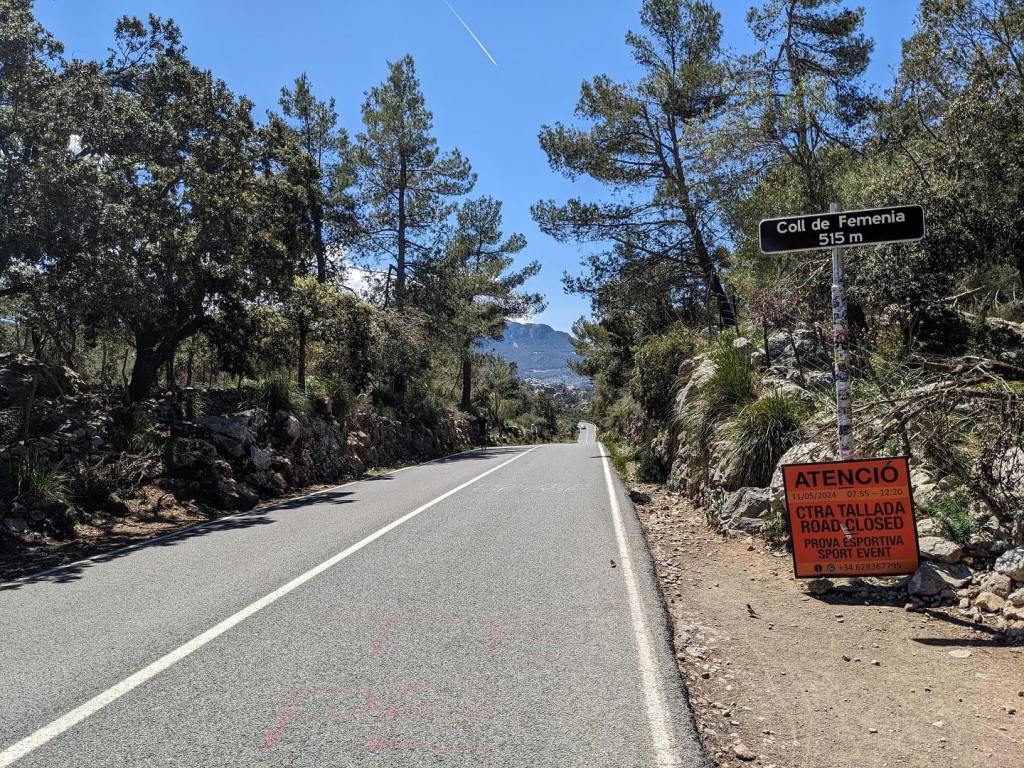
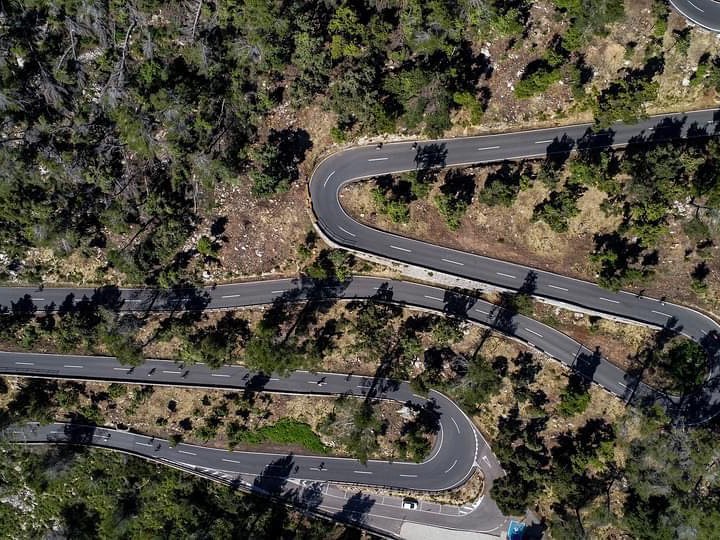
The joy of being able to ride the bike course twice. Bliss, its a cracker. We rode it first on our road hire bikes as we knew it had an interesting descent. We don’t really do long hairpin descents in Britain. Then we went back and rode it again on our tt bikes. Fantastic roads, can’t wait to ride them traffic free, a beautiful 7 mile climb, with about 8% gradient, a zig=zag descent then a wander through flatter lands with small villages and farmland – and inevitably a head wind from some direction or other. We felt our bike handling improving, neither of us had ridden our time trial bikes outside in Britain due to the weather conditions so this period of practice was really valuable. Turbo riding doesn’t quite give you the balance practice and tt bikes handle so differently to road bikes.
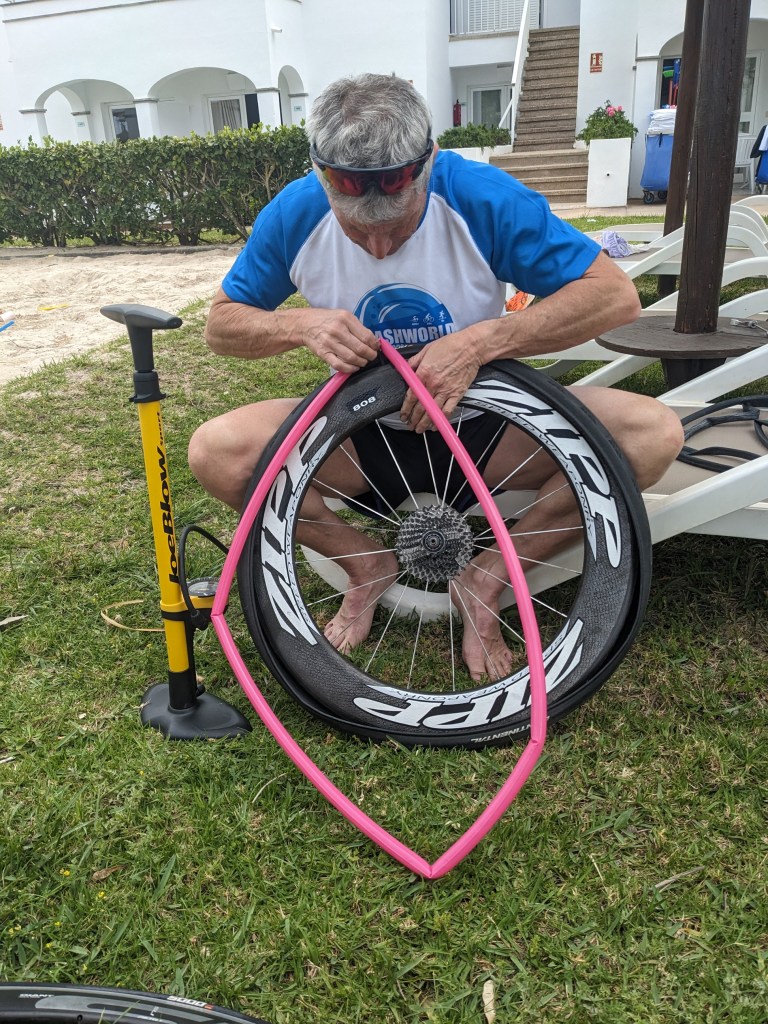
We have had time to check everything works – power pedals, garmin holders, bottle cages, repair kits with tubes with correct length valves. I’ve tested the course and myself to judge my power output for the race and we have practiced climbing at a pace that won’t blow us up for the rest of the race. We know where the food stations are and what is on them, even in what order. We have practiced our nutrition and know what we are carrying, where and what we hope to get from the food stations. 1.75 litres of fluid approx and about 250-300g carb. We have ridden in our tri suits and helmets, neither of which are our weapons of choice if we are just going for a ride, checking the fit and the comfort. The question of which socks has been answered. They need to be stretchy enough to go on easily but taut enough to stay up. Many people don’t ride with socks but my feet have given me some hassle in some races so I’m trying to be kind to them.
Going into the last week, surely there can’t be more to do?! Oh yes, more of the same, taper the training, get a massage and keep practicing. Training cut by 75% and that feels very strange. Tried using the flip lid bit in my helmet where you are supposed to be able to pour water to cool yourself. If I could find the button and get water in the nossle of the water bottle then got stuck! Lol. Humm, design error or user error. Whichever I think I might give that a miss in packed water stations in the race!! Take the bike for emergency rescue as my front changer was starting to be problematic. Change our inner tubes to the ‘go faster’ variety. Rest, eat, six days out start taking nitrate shots to improve vaso dilatation. Cut toe nails a few days out, not the night before incase you over or undercut. Then we are almost there…
48 hours to go – Eat impossible amounts of carbs 48 hrs before racing. 8-10g per kg body weight. That is a lot of rice! Although Ben and Jerry’s ice cream did give the total a bit of a boost. Pump up the tyres to the correct psi so we can work out how much they go down overnight. That helps us calculate how much air to put in the afternoon we leave bikes in transition, about 20 hours before we ride them.
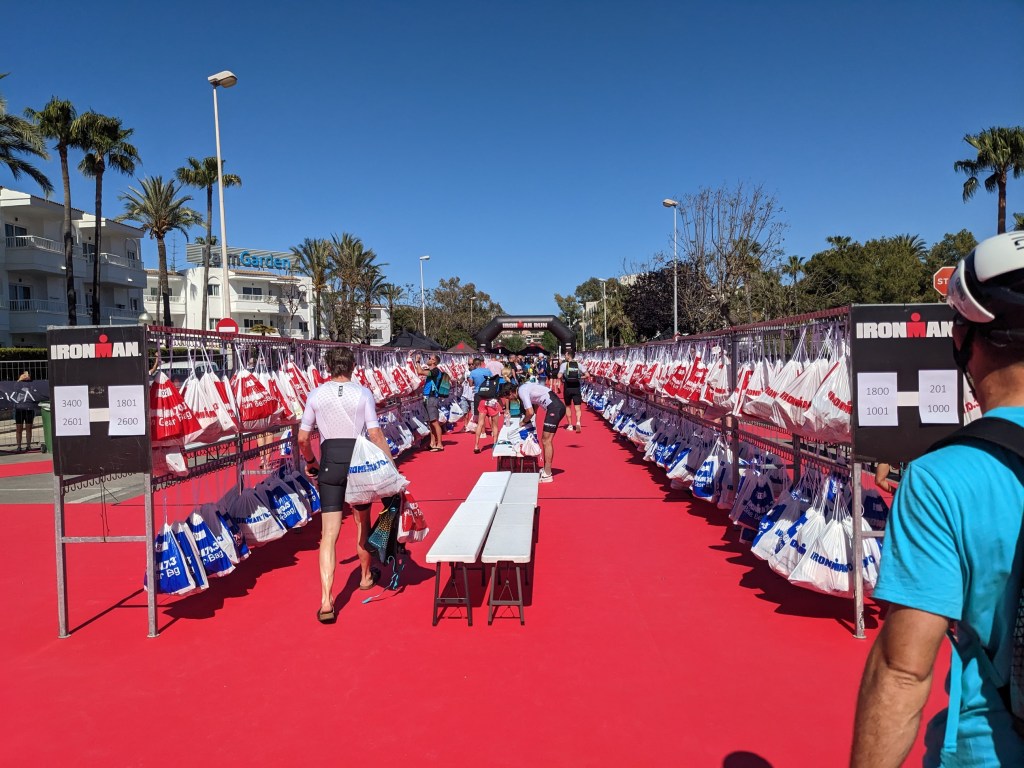
Register – hurrah, we collect our bags for our gear. On big races bikes are racked the night before and transition gear is stored in bags in another area, not by the bikes.
Back to the apartment and clean the bike chain, re-lube, getting each individual link.
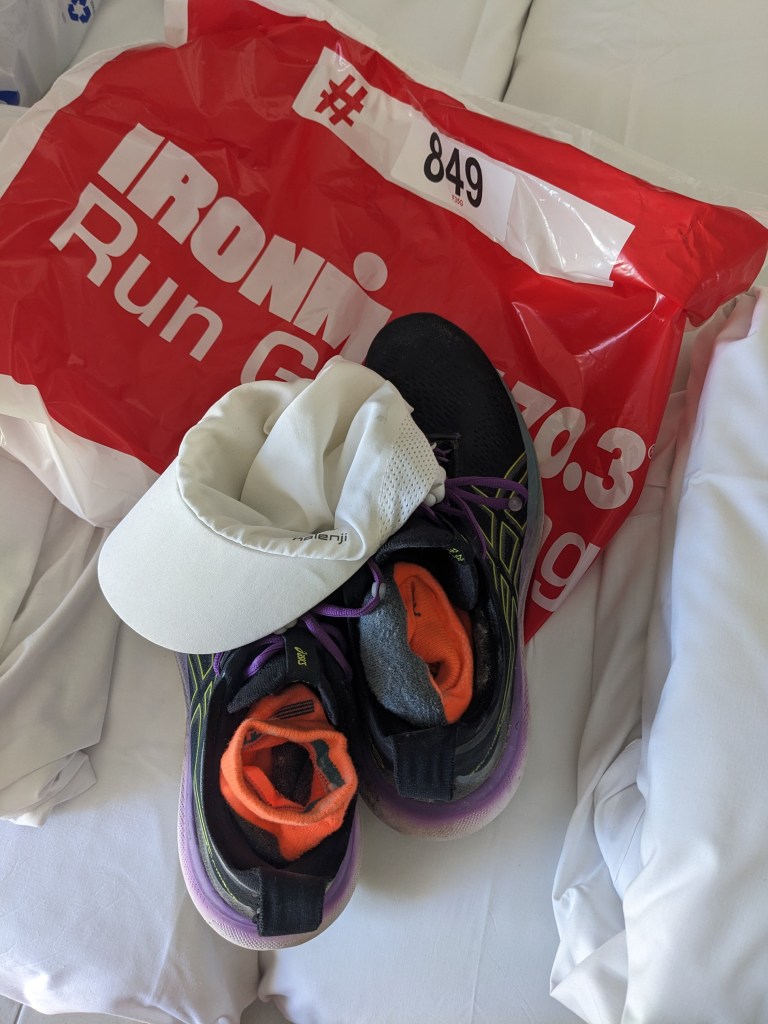
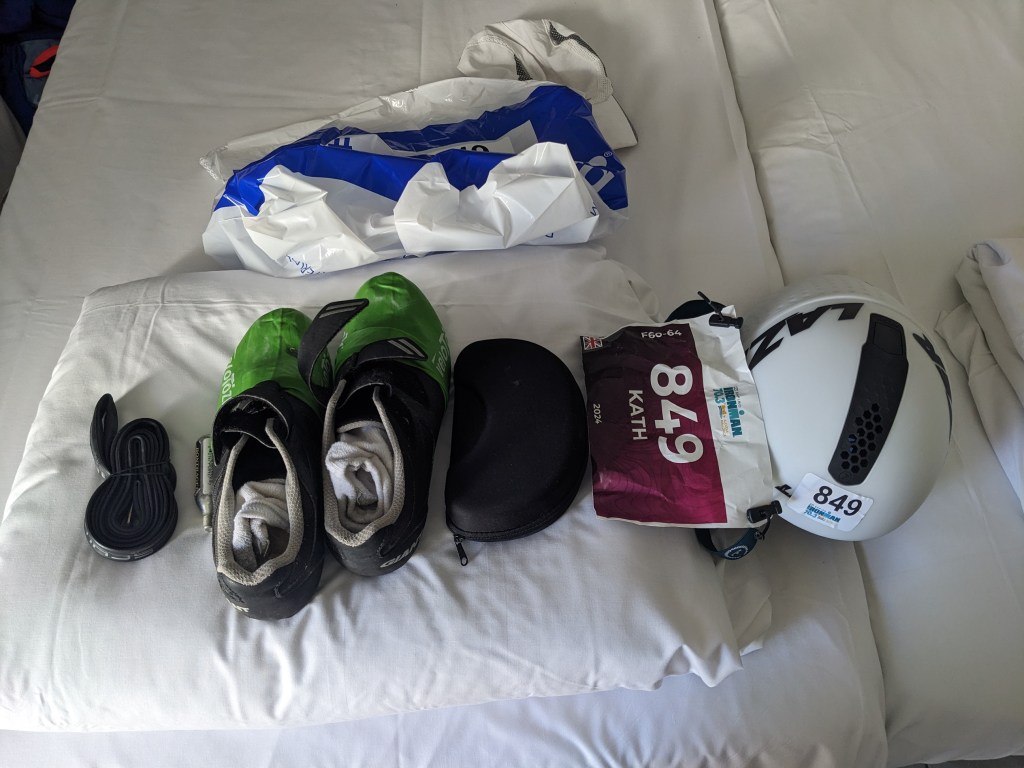
Start putting stickers on and packing our bags. Blue for cycling gear, red for run stuff and white for ‘street wear’ for after the race. Photo the kit that goes in each bag so that you can check you haven’t forgotten anything after you have racked.
Buy plastic bottles, for warm water to put down the wetsuit just before thte start to reduce the shock of the cold sea. Also for carb drink in the hour before so we can just bin the bottle, and for fresh water to rinse goggles with before getting into salt water.
Go to the race briefing, English version. Mainly just repeated the race guide but also said we had to put our shoes on where the bags were unless they are tied onto your bike. Damn, we were going to run with ours in our hand as a km is a v long way in cleats. My old tri shoes which tie to the bike hurt my feet and new ones were the wrong size and went back for a swop before we left. Needless to say the swop didn’t arrive in time to be packed. Such is life.
Day before –
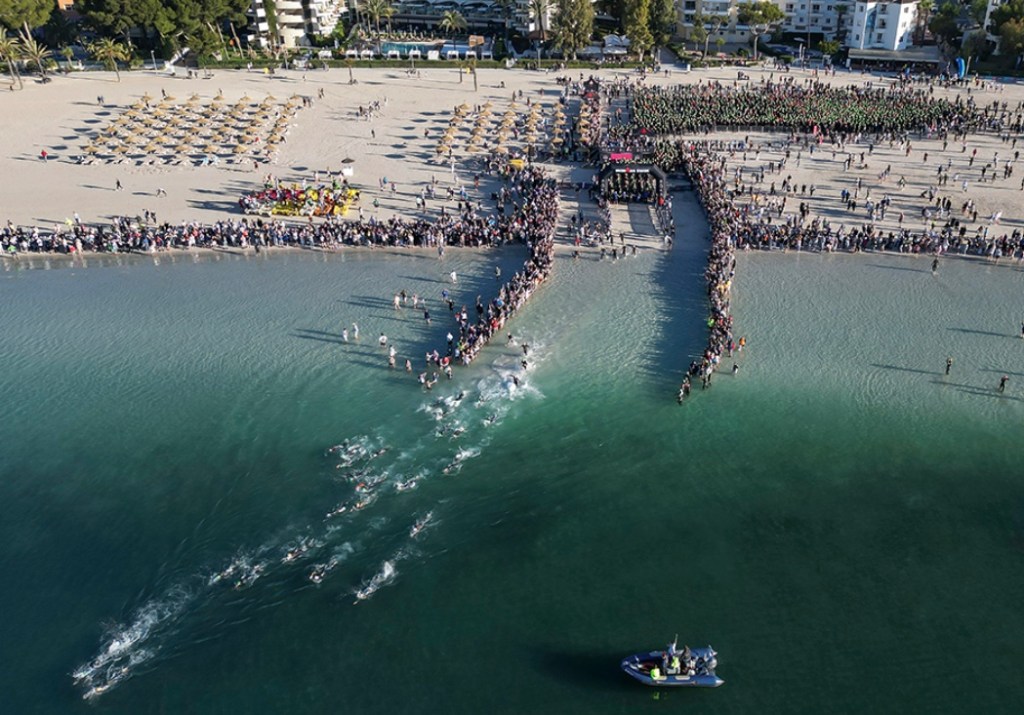
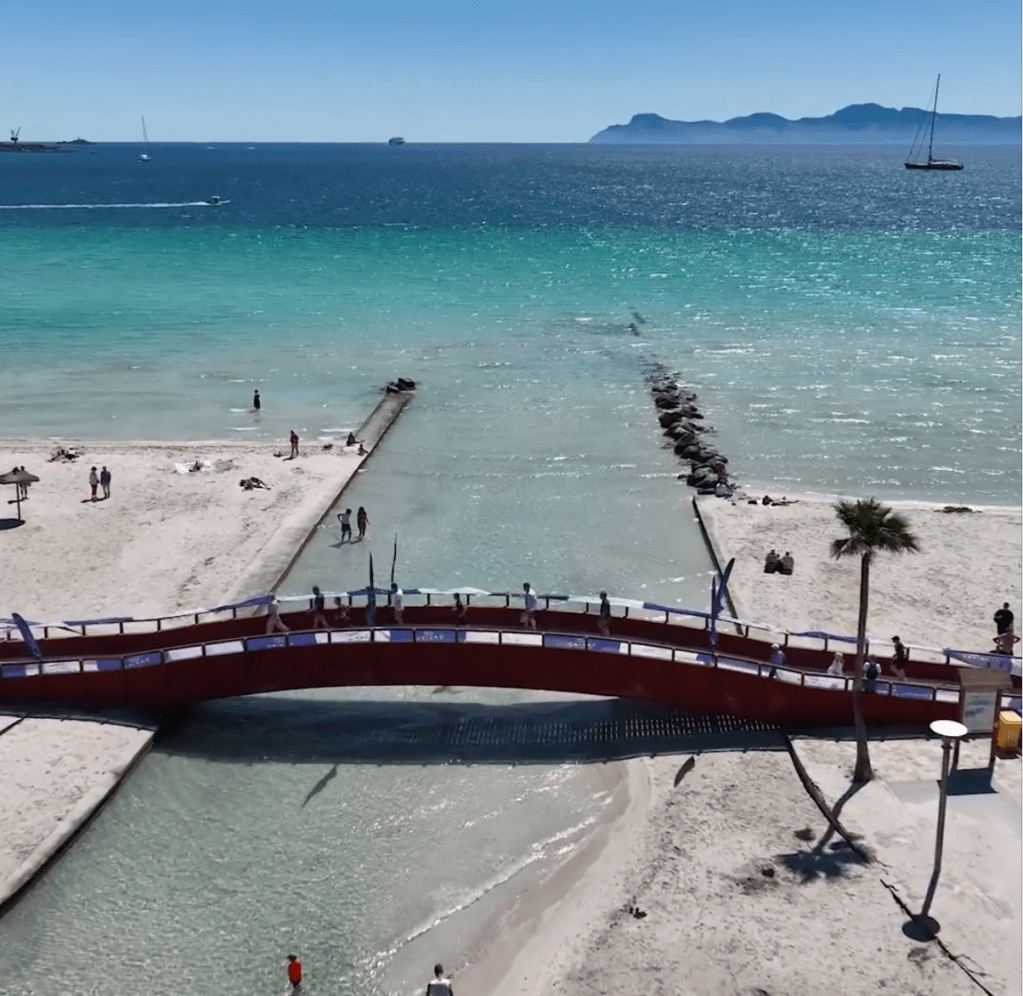
We went to the swim start site for our final swim. Well worth it, its a little further down the beach from where we have been swimming. Discovered that it is quite a long run in in shallow sea but the dark turquoise line starts where we can start swimming without hitting the bottom. Worth discovering that. The area is also more sheltered and we had an idyllic swim, sun, deep blue sky, fish, warm water and palm trees. Covered an easy 600 metres and got out, no need to do more, just turn the arms over.
Screenshot
Lots of rest before taking our bikes and bags to transition and buying just one more thing we can’t live without from the Expo! Goggle de-fogger. Tyres checked, water bottle straw position checked, shoe fit with shoe covers on checked, helmet checked.
Put watch and garmin on to charge. Work out the timings for tomorrow, 4.45 am start for 8.15 race start.
Mix drinks, add salt, sort race food and lay out gear for tomorrow. Suncream, chamois cream, HR strap, arm sleeves, calf guards, tri suit, wetsuit, neoprene hat, race hat, goggles, spare goggles, lube, nose strip, face flannel to make sure nose clean so it might stick, de-mister, gel, scratch solution to drink, water to rinse goggles, bottle for warm water to go down wetsuit, black bag to keep any wind off me and socks and plastic bags for feet. Street bag clothes, the things I need after the race. Cash, not cards or phone in case they get nicked, warm clothes as I often chill, protein drink. Finally almost here and nothing left to do. ..
Except sleep badly!
After all that what happened? I am in the 60-64 age group, all of 12 people in it. 3,800 participants overall, and less than 500 of them female.
Swim, 1.9km – a dream, 35:12, fast for me, my pb is 34:08. Warm, well marked course with a beautiful water colour, fish and lots of people to follow/draft off. Loved it.
T1 – second/12, all that practice paid off.
Bike – 56 miles and 800m climb, loved it. Felt like I rode well, beautiful course and completely closed roads, bliss. Disappointed with 9th initially but then realised only 5 mins separated five of us. So believe I can still ride a bike after all. Interesting to look at my data afterwards and realise at which points my power dropped. Maybe heat, fatigue causing loss of concentration, sore feet not helping or just not got sufficient muscular endurance. 3:43:56
T2 – 4th out despite changing socks and massaging feet.
Run – 13 miles, hard and hot. Started slowly then tried to speed up, dodgy concept at that point. Took water over as much of me as possible at each water station.
2:07:50 and 5th which I am really pleased with, I normally go backwards in the run.
6th overall, with four minutes separating 4th – 6th.
So even racing over this time every second does count. I’m happy, solid race with some good learning for my next one.
Would I recommend? Yes, absolutely, fabulous race.
Surely this is the time when you just kick back and relax? Or not as the case may be. I feel relaxed and healthy but realise that in the last few months I have done a considerable amount of work in different directions towards next season. Recovery, reflection, nutrition, blood tests, kit, next year’s races, well-being, habits, body check, head sort and, of course, training – all these have recently been worked on. They are all important components of next year’s races and all take time and energy to accomplish. A little run through is below so you get an idea of what happens under the bonnet before proper training begins.
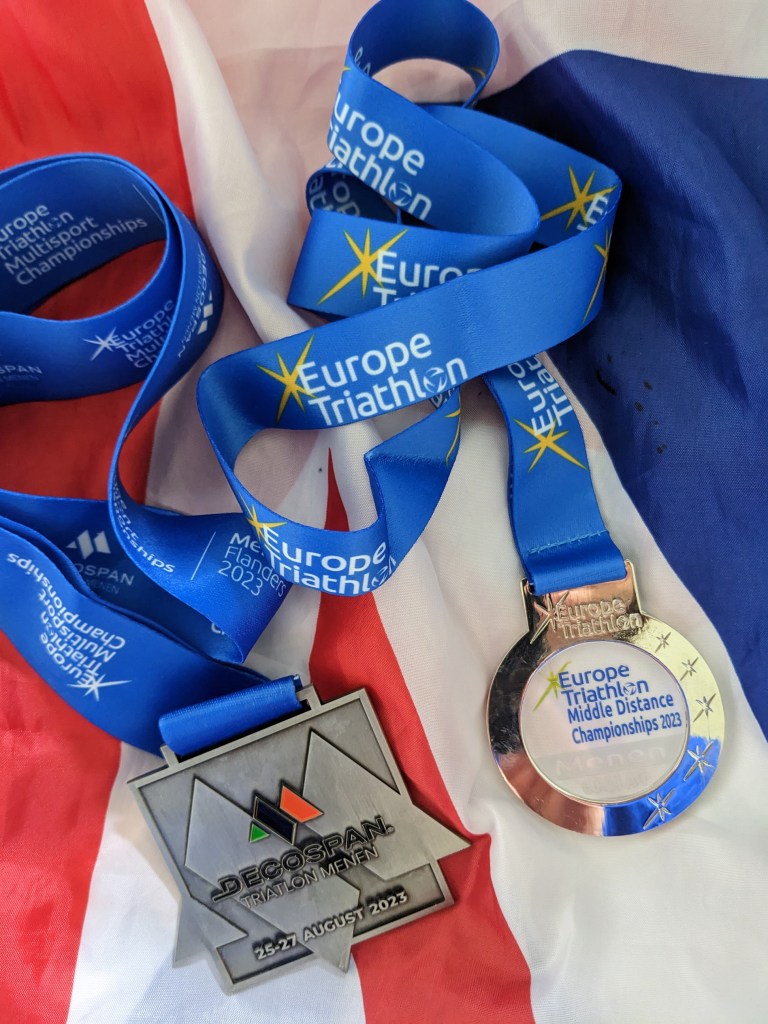
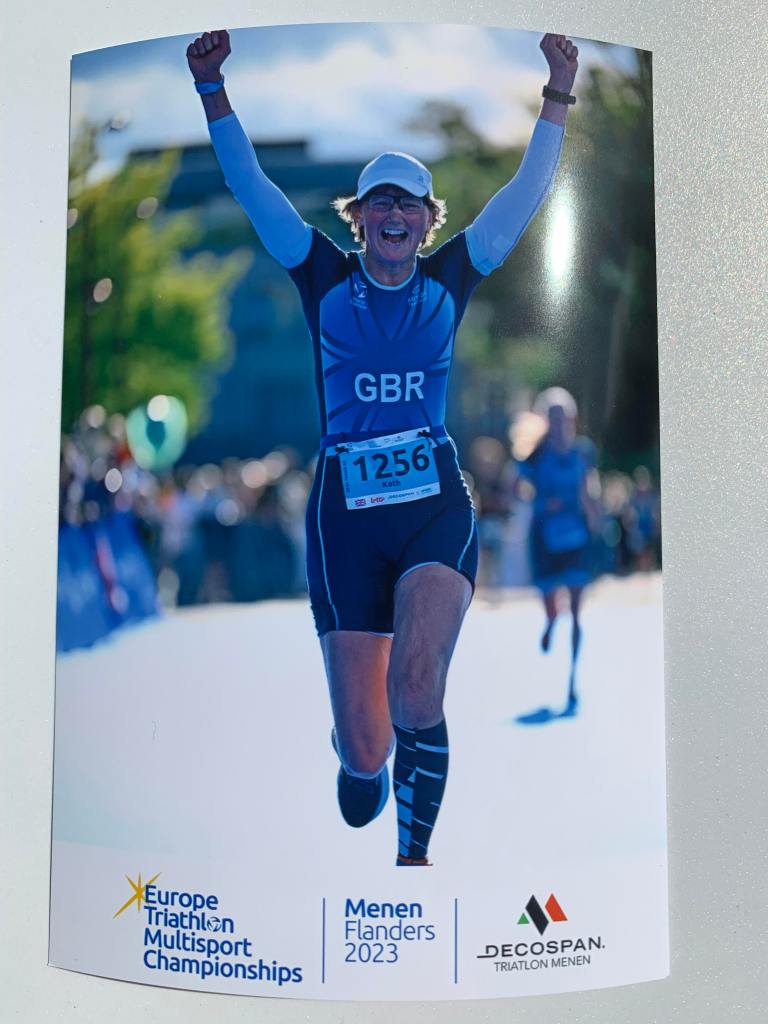
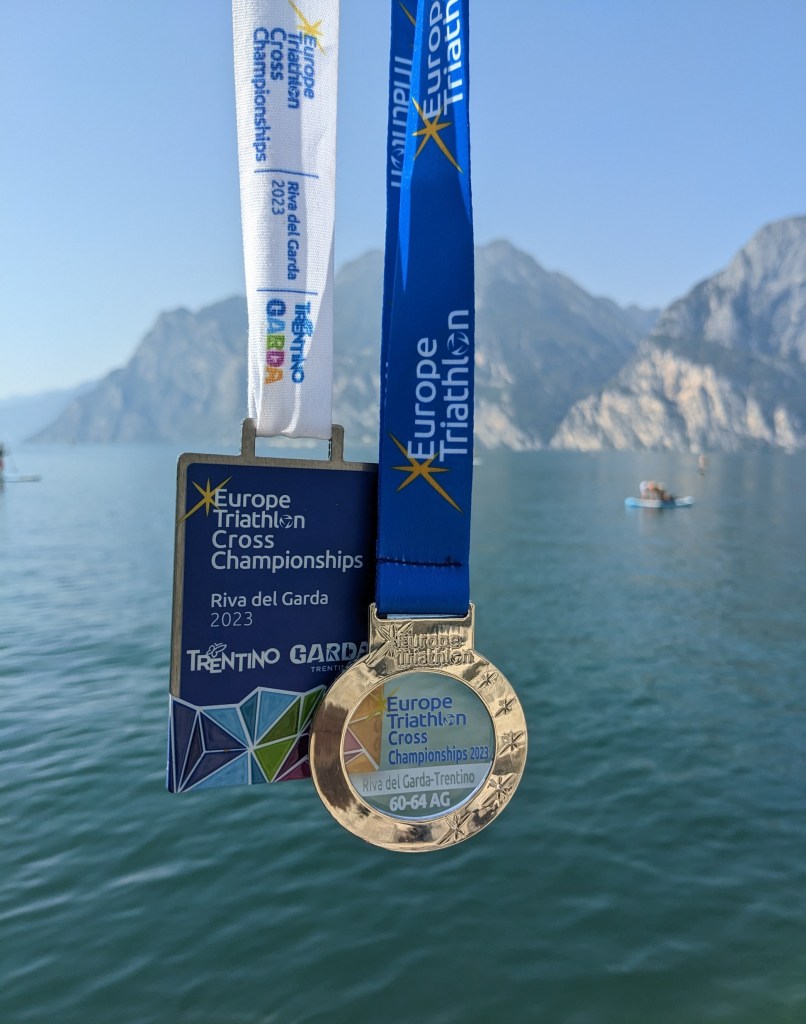
Recovery – I finished racing early in September with three races in two weeks at European level, winning two silver medals, so I was ready for a rest mentally and physically. I spent the next six weeks not doing a lot having learnt from last year when I did waaay too much and it took ages to recover. I caught up with lots of friends, celebrated my sixtieth birthday in style and did some exercise for fun at a level where it would give me energy, not exhaust me.
Reflection – in the recovery phase I also reflected and wrote race reports, covering both what had gone well and what had I had learnt. All this feeds forwards into future races. For next year some of the biggest lessons are that I can have a strong run mentally, I need to be on top of timings in races and I badly need to sort my bike shoes out. There were many more learning points around mountain biking but those aren’t relevant next year. It’s a great time to notice the progress one has made with aims from previous seasons as well.
Blood tests – my lovely doctor’s surgery needs to blood test my hormone levels every year as I have no working thyroid so they also tested my iron and a few other things. Iron is down again so I am back to working out how to persuade my body to absorb iron. Everything else is ok though, so that’s good. And all done for free.
Nutracheck isn’t free but it is cheap and it’s a great way of monitoring my nutrition intake. I just ran a check for a week or two. That means I weighed and recorded my food. Results showed that my fat intake is now at a respectable level, having been too high. I need to be mindful of fruit and veg intake in the winter, it’s easy in the summer. I also need to continue the endless quest to eat enough protein. A daily 120g of protein takes some finding even as a meat eater. Using a free glucose monitor for a couple of weeks was really interesting. I was concerned that my constant diet of sweet stuff on the bike was spiking my sugar levels but no, flat as a board! As for the result with brown rice though, that’s another matter.
Next Year’s races – Choosing these is often hard as there are so many great things to do. This time I have ignored about eight age group opportunities and gone for a full Ironman in Vitoria, northern Spain with my practice race as a 70.3. They are good choices as I feel excited when I think about them. Whatever the aim is it has to generate that little butterfly in the pit of your stomach and put you on the edge of comfort. No, it’s not my first IM, it’s my sixth, so I know exactly what I’m getting into. The races are entered and accommodation and flights are booked.
Kit – Yes triathlon is expensive, there is no way round the fact you are using kit for three sports and things wear out. Black Friday is the instigator of a big shopping list in our house and most of our immediate kit replacement needs have now been covered. So have our specialist sports nutrition needs for next season, so much cheaper to do it now.
Habits – I’ve done some work around daily habits. This told me that some things I have tried to integrate are now habits ie I just do them automatically. These include taking Vitamin D3, standing on one leg while I clean my teeth, stretching in the evening and taking my HRV (Heart rate variability). Others I could be far better at such as skipping, doing neural gliding and calf stretching. A way to go, but it was great to see that progress has been made over the last couple of years. There was a time when standing on one leg for 2 seconds was a challenge, never mind two minutes, so the investment does pay off.
Head sort – there is a certain kind of anxiety present when racing with a partner who has had several years of heart issues and has struggled with his breathing in the swim. This was impacting my thoughts about racing so I found a lovely, friendly life coach who has helped sort my head out. Less catastrophizing and more claiming the race as my own. Lots of positive visualisation. Sorted.
Body check – Aches and pains. I went to ‘the body man’ which was certainly an experience. ‘Oh, what a lovely body, I like your right side.’…’hum, I don’t like your left side so much though’. He does just clearly and plainly love bodies and the game of getting them to move smoothly. His pearly sheen nail varnish did make me feel more secure as I stood there being inspected in my underwear ! I was referred to the joys of Feldenkrais – look it up guys. I learn something every day. And now I’m trying to make my left foot move and left fibula rotate. If I can sort that it will help my left lower back and left shoulder …..
Well-being – there is only one well of energy and when you draw too much out for any reason things get a bit thin. After one particularly disastrous over-geared session, where my power was minimal, ‘well-being’ sessions arrived in my training diary. I’m sure that is good for me but it is really irritating sometimes. So I have spent a while working out what constitutes down time and having to implement that into my week. I have to do it or I will have failed on completing my training for the week so that’s not ok! Which reminds me I haven’t had any down time today…..
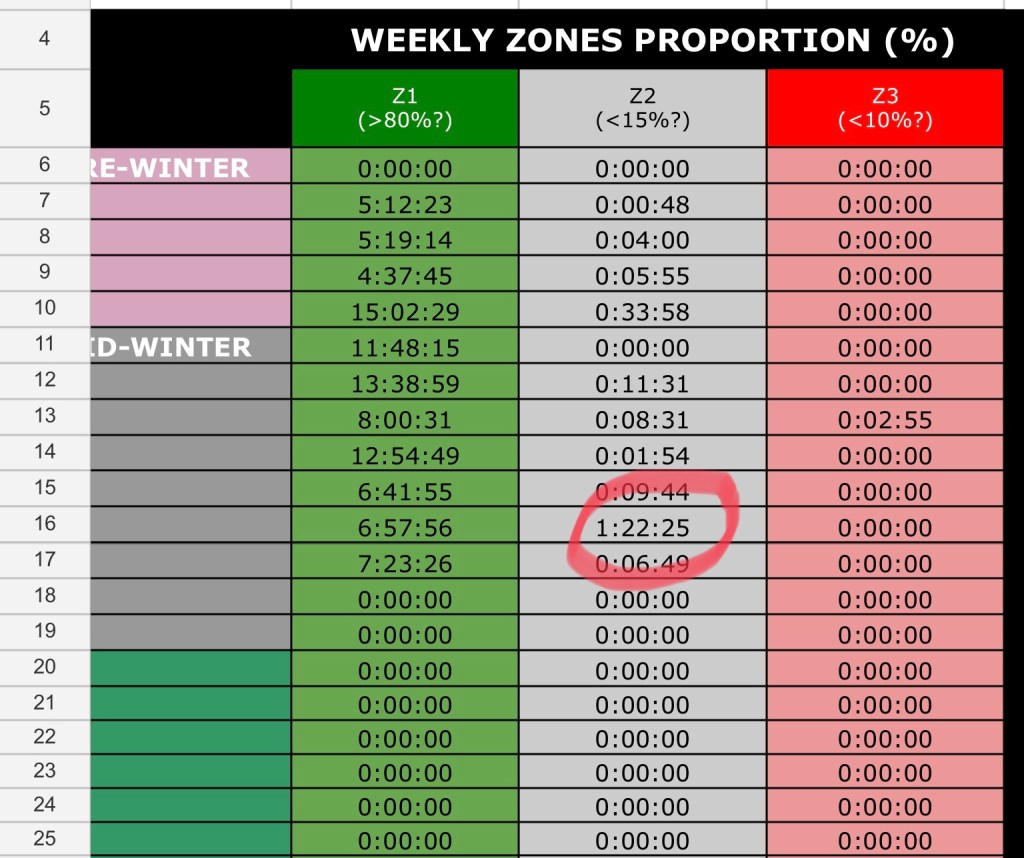
Training – oh yes, of course. I’ve done that too. It’s base time. Lots of variety, lots of fun, social trips out, fell walks, and the gym for building overall functional strength. Now it is more about skills and efficiency than speed. Specificity comes later. So I have had my swimming videoed and I am clearly as bad as last year! I have bought a cadence monitor for my winter bike to practice skill work in the form of high cadence on the wet roads. I attended off road uphill and downhill technical run training and am supporting my running with isometric strength work and skipping. It kind of averages 2 swims, 2 runs, 2 gyms, 2 bikes a week but all low key, many short and mostly in zone one on Stephen Seiler’s model. This is under lactate threshold one or in my aerobic zone depending what terminology you wish to employ. Occasionally I have been off piste by mistake like the club mountain bike ride which left me with 1 hr 22 mins in zone 2. Oooops. But the majority has remained easy. Time for harder stuff later.
The photo shows hours of training per week in my different heart rate zones since the end of September, not counting strength work. Where hours are high it includes fell walking/jogging. You can see the Mountain bike ride clearly circled in red. Apart from that small hiccup the proportion out of Zone One is very small. It will increase a little in the build phase.
So in the last four months have been ‘off’ in once sense but certainly not in another. What do you think – have I made good use of my ‘off season?’ Have you made good use of yours?
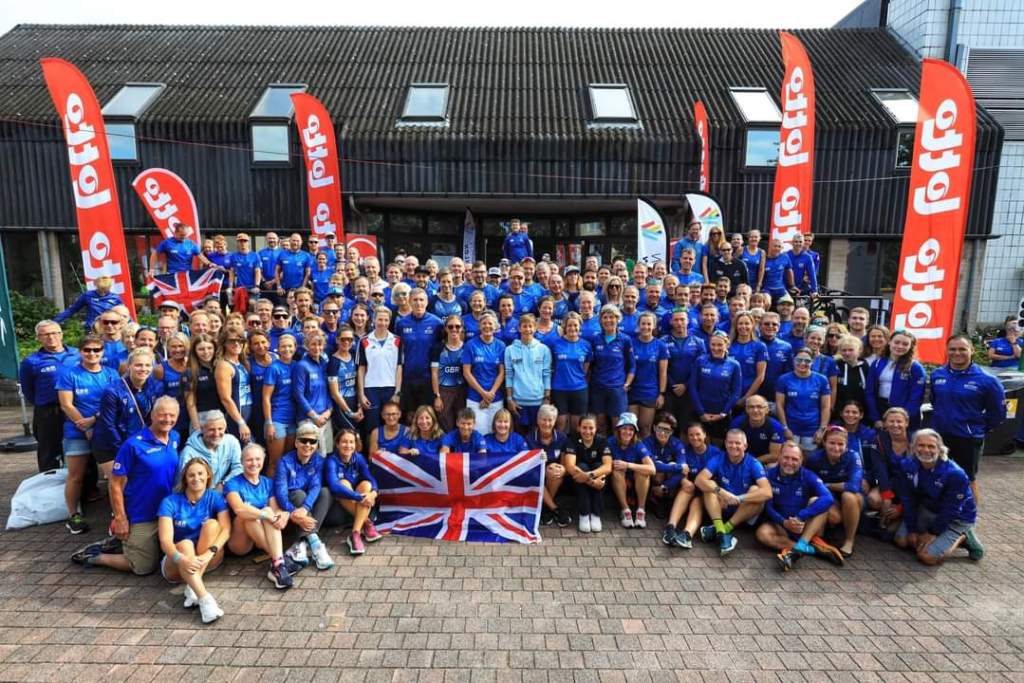
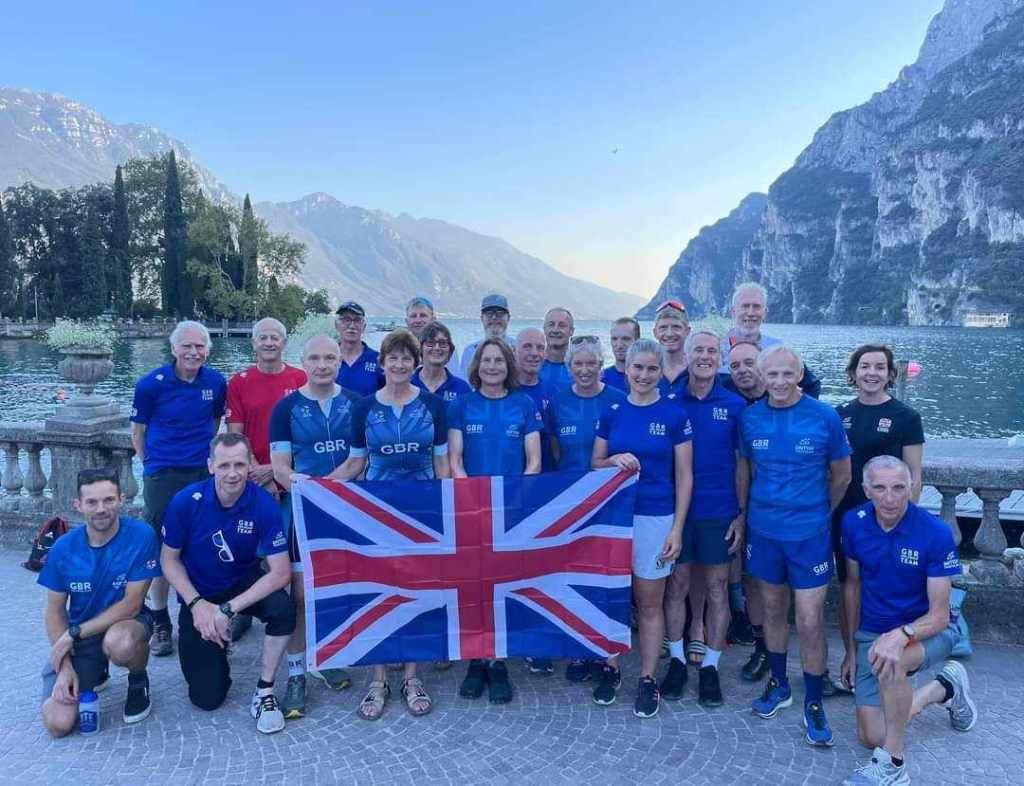
First up at the end of August 2023 was the European Middle Distance Championships in Belgium which was my ‘A’ race for the season. Belgium’s claims to fame are being completed flattened in the war and having ‘frites’ as a national dish. They also had one of the best organised Age Group races I have had the privilege of racing, and a very large GB contingent!
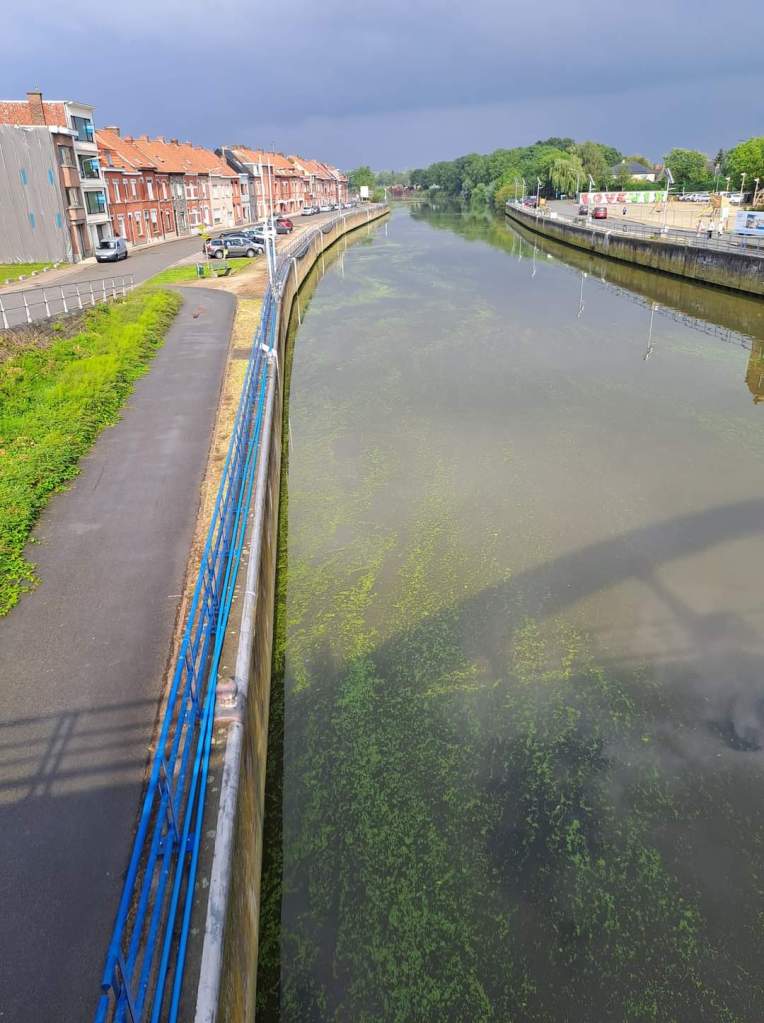
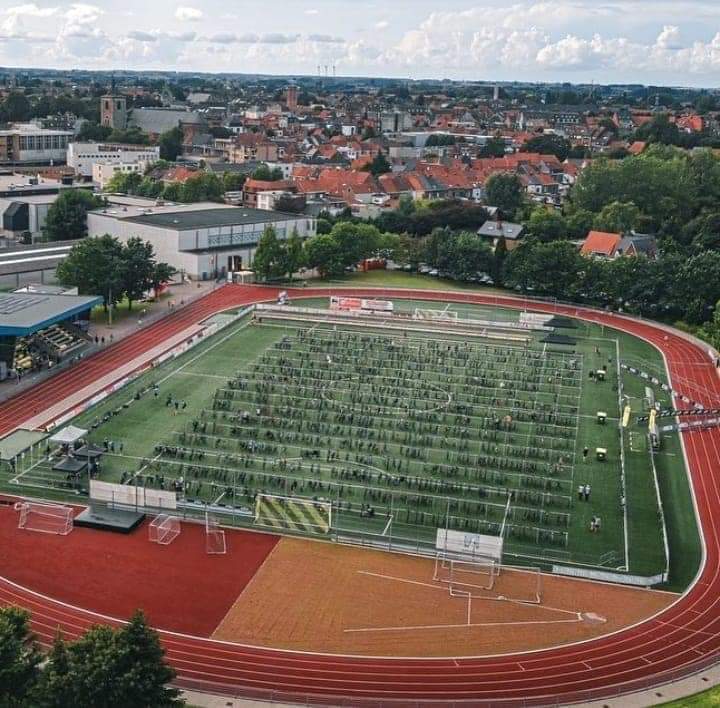
However the river looked as attractive as a four year old’s potion. ‘Keep your mouth shut and drink coke afterwards’ were my thoughts. Glad I did as many were sick and water samples taken on the day failed quality tests. But as results take a week to process, it was all a bit late! It was a pontoon start so I practiced diving the day before. On the day I managed to pull off my first ever dive start and keep my goggles on. I then had an adequate swim and ran into transition, which was the centre of an athletics track where 1200 bikes were racked. Remembered where my bike was and then the least said about the debacle with my shoes the better. Sufficient to say that I need to rethink footwear and that I lost a chunk of time.
Loved the bike though. Just moseying along trying to keep power between 120 and 130 watts as planned. There were some long gradual uphill drags and some fast downhill sections and the two laps seemed to go very fast. For once I didn’t feel alone as an older woman on the course as they set the aquabikers off just after us, nice to have company. It’s the first time my ‘new’ tt bike has really felt solid after lots of experimenting with arm positions, and some tortuous time trials. I could even read all my figures with a new garmin holder. I wondered what the run would bring as I strained my Achilles in early May and have only run 2 x easy 30 mins a week for the last three months. Great prep for a half marathon! The plan was go slowly the first 3 miles or so and let the legs come back to me. I tried, and as I hit three miles someone in my age group went past so that was great motivation to speed up at the planned time. Paddy told me I was third at that point. I worked hard to stay on her tail until I managed to go past with about three miles to go and I just tried to keep going . Delighted to come over the line in second, also delighted to manage to fuel properly on the run, not my strong point, and run negative splits. Job done, very happy. Total time 5:46:00 with a run of 2:01:00 which is around what I manage normally – so maybe this run training stuff is over rated? Or maybe not! Don’t listen to me on that one!
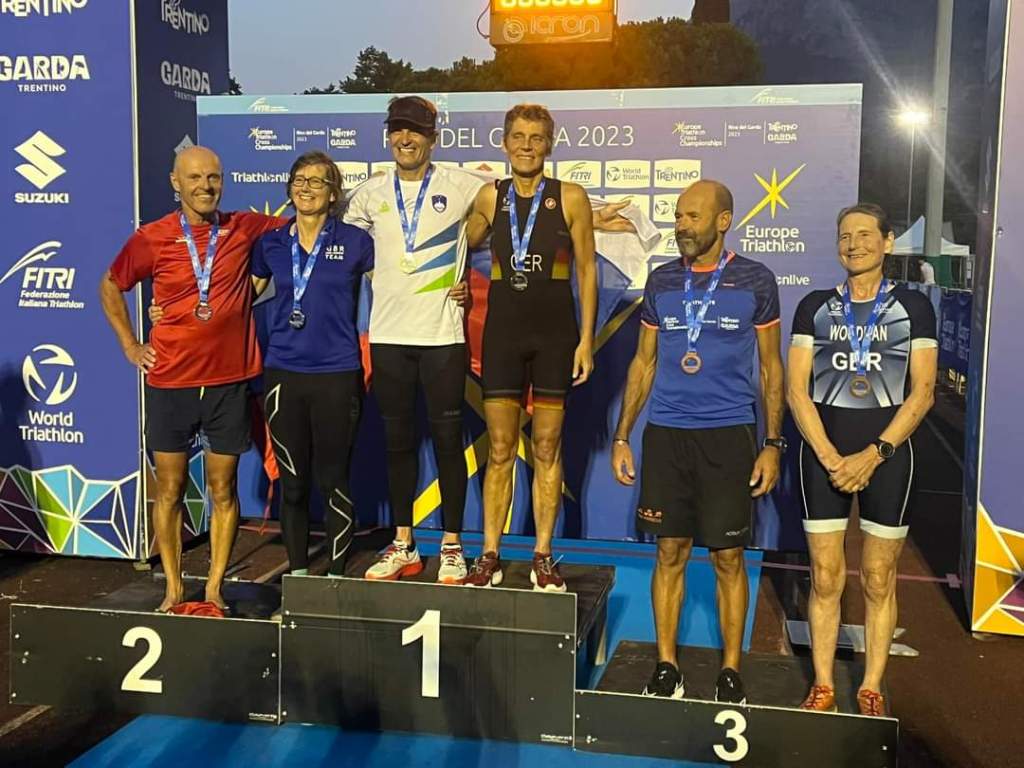
Second and third up Italy, Lake Garda, for the European Cross Duathlon and Cross Triathlon Championships. We did stop off on Lake Como first for a few days of rest and recovery. Hardly ever been to Italy but these areas are beautiful, a bit like Windermere on steroids – better weather, bigger mountains, bigger lakes.
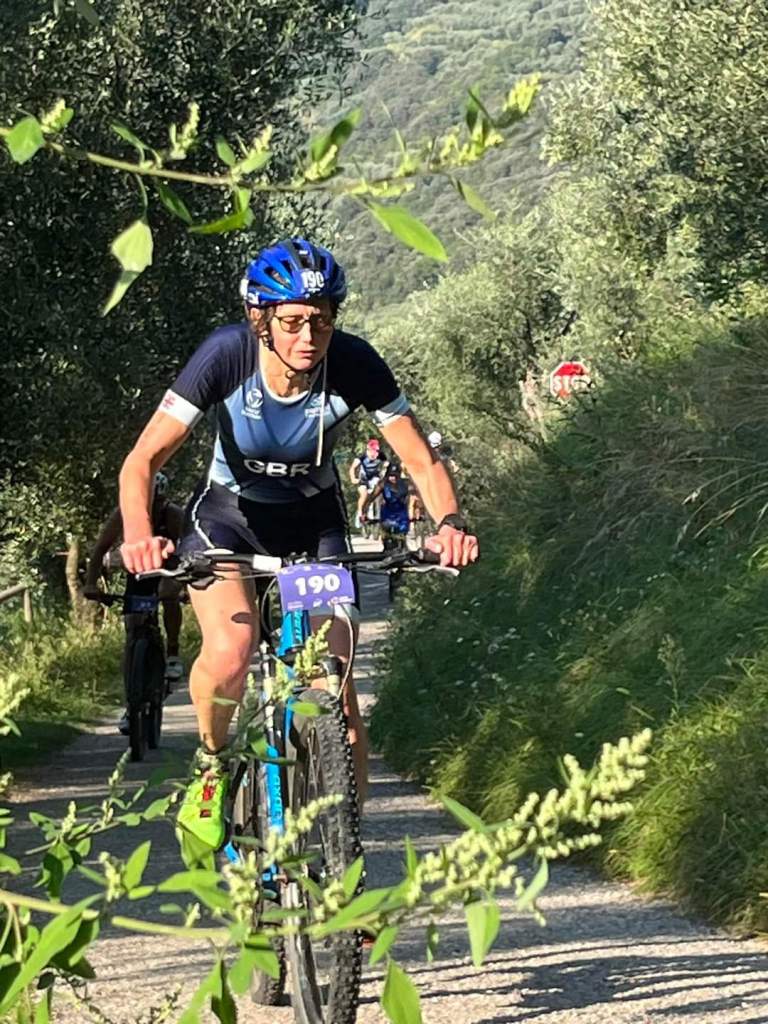
Lake Garda was HOT! 30 degrees plus which is hot for slogging uphill on a MTB dressed in the sweat bag which is the GB tri suit uniform. And FRIENDLY as a number of friends were racing which made for a good crack. The duathlon was first up and with two hours to go the organisers announced that over 60s would do two laps instead of four on the bike course due to extreme heat; that caused a bit of an outcry! It was quite short anyway with an initial 4 mile run on the flat, unusual for cross, and 28km bike course with four laps and 2,500ft of climb, then a final run of just under two miles.
The bike course was then reduced to nearer 13km for us with 1,500 ft of climb. The course was hard work to ride but not technical, lots of steep uphill. I had a poor first run, no idea why really, then onto the bike where I could see Helen, friend and rival, in front. She is better technically than me and two falls on the same corner (duh) put paid to my chances of catching her. Any ego I had left was flattened by a younger male shouting ‘out the way Grampa’ as he shot past! He could at least get the sex right! Survived the last run and ended up 5th out of 5 with 4.5 mins separating 2nd to fifth, with racing time just under two hours. Good fun and I learnt lots.
I had 48 hours to digest my learning and recover enough to repeat the experience. So my rest day involved a little swim, a little bike, lots of ice cream and a bit of replanning.
Then I lined up again to compete in the European Cross Triathlon Championships. This was a really interesting race for me as reflecting on the duathlon meant I made quite a number of changes. It was the same course as the duathlon with a swim in Lake Garda to start with. An on shore wind and strong sunlight made the first leg of the swim challenging, like being in the sea without the salt. The oldies won out here though as we were the only ones allowed optional wetsuits, we all chose to wear them. I realised that Angela, the German in my age group, was drafting on my feet. Came out for the Aussie exit with her on my heels, dived back in again and my goggles came off. Couldn’t see so I stopped to put them on, Angela went past and I then jumped on her feet and drafted her for the second lap. We laughed about that afterwards.
Didn’t bother with MTB shoes this time, went straight for running shoes, and left the bladder behind. This also meant I had to re-think my repair kit options as I was carrying it in my bladder rucsack. I just took water bottles on the bike as the course was shortened for us wrinklies again, so I needed less fluid. I arrived at the three flights of stairs along with two others and with Angela in my sights. A flying dismount took me infront of the other two and I set off up the steps waaaay too fast, causing a huge HR spike which meant the whole of the first lap was hell. There was about 15 mins of uphill riding after the steps so I never really recovered. Come the second lap I realised I needed to fuel alot more for the run and that the hills where I’d planned to fuel where too steep to take my hands off so I did a bit of recalculating. Ingested 60g carb in the half hour before the start, then 140g in 1.5hrs of riding and 20g on the run. So a total of 220g, about right. Despite putting more air in my tyres to go faster on the tarmac I managed to stay on this time on the technical sections and eventually came barrelling into transition. Last effort, four mile flat run. Like a park run instead of the usual uphill challenge – thank goodness by then! Eased into it and hoped my legs would come back to me, gradually they did sufficiently to pick up the pace a little. Not anywhere near enough to catch Angela but good enough to hold on for my second silver of the holiday.
A great ten days in Italy, friends, ice cream, sunshine, beautiful scenery and some taxing racing where I learnt a lot.
Britain is going to seem a little dull after this and it’s over and out on racing for this season. Time to reflect and recover.
I led a session about Managing the Menopause and many an interesting discussion was had.
One of the questions which came up was ‘How do we train during and after menopause?’.
Menopause is defined as the one day a year after your last period finishes. The average age for this to happen in the UK is 52. A woman may have several years with symptoms as part of the perimenopausal phase and several more in the post menopause phase. Or they may breeze through with no issues.
That immediately tells us that the answer to ‘how do we train’ needs to be very different for different individuals but there are some main guidelines according to current research.
I’d like to split the answer into two sections –
Firstly Functional Fitness for healthy aging. Secondly Training for sport.
The first one forms the foundation for the second and that is an area which is sometimes neglected by athletes. The first gives us functional strength and movement which assist us with efficient movement patterns and improves our resilience to injury. Menopause is part of the aging process, which is inevitable, but it is not a disability. I know that unfortunately some people have illnesses, conditions or injuries which severely limit them. If this is you please try to focus positively on what you can do.
FUNCTIONAL FITNESS FOR HEALTHY AGING
1 STAY MOBILE
Do as much as you can to move your joints and muscles.
Walk. Walking is amazing exercise, it is weight bearing and non stressful. The recommendation is 10,000 steps a day. So walk to engagements, park the car further from your destination, go for a walk with a friend. Some people find it helps to have a phone/watch/app which records steps so they can track their consistency.
Do ‘exercise snacks’. So if you are desk-bound or quite static in the day get up and move around, walk or run up stairs (if you have them) for no reason. Do calf raises while the kettle boils. Do ten weightless squats. Stretch your ankles. Stick some of those in your day and you will quickly notice that you feel different.
Pelvic Floor – here is another area of our bodies which often becomes less efficient with menopause, especially if we have gone through natural childbirth. Urge or stress incontinence blights many people’s daily lives and is usually possible to avoid. Pelvic floor exercises or Kegels should be one of our ‘exercise snacks’. They are very easy to do anywhere – lying, sitting or standing. The NHS app Squeezy gives good explanations. If you have done these conscientiously for three months and are still struggling pay a visit to the doctor.
Balance gradually becomes worse leading to less efficient movement patterns in sport and falls as we get older. Counter this by standing on one leg at times. For instance when cleaning your teeth, get it into your routine. Make sure you do both legs!
Flexibility/Mobility Do some form of yoga, pilates or stretching. No time? Everyone can make ten minutes, again stretching can be done in front of TV or while listening to a podcast or music. Ditch scrolling the internet in whatever form and be active instead. Yes you can go to classes but Yoga with Adriene on YouTube has anything from a ten minute chill out to full on hour long strength yoga, or Patrick Beach does a strength focused yoga on line. Something is always better than nothing. Watch TV, if you do, in different positions – sit on the floor, sit self supported, sit on the sofa but ring the changes.
Feet – they have carried us around for a long time by now. Foot yoga helps to keep them mobile and can reduce pain. Another one for in front of the telly! This helps with running efficiency. A frozen water bottle makes a great foot roller, especially in hot weather, helping to reduce inflammation around those 26 bones.
We lose muscle as we age, know as sarcopenia. We also lose bone density which leads to increased risk of fractures.
Strength Train – at any level, something is better than nothing. Again you can do this through Apps at home, go to a gym, work with a Personal Trainer or go to a class. This is the biggest single thing you can do concerning exercise to help yourself in older age. Strength training helps retain muscle strength and the forces placed on the bones through the muscles also helps bone health. This should be backed up with taking Vitamin D3 2000-4000 and eating increased levels of protein, about 1.6g per kilo of a healthy weight for you as an individual.
Apps for this include Her Spirit and Be Mobile. The photo is from the ‘Be Mobile’ website and you can use bags of rice or tins of beans if you haven’t got weights.
TRAINING FOR SPORT
This section assumes you are doing some of the above and that you are a training athlete looking to complete personal challenges or races. It also assumes you know some training terminology. How should you adapt to the phases of menopause? Well now, that depends! You knew I was going to say that didn’t you. There are some principles, but there is very little research.
Joe Friel’s book ‘Fast After 50’ is worth a read, but remember the lack of research on women in general. Stacy Sims wrote ‘Roar’ and ‘Next Level’. Both of these are good although some information contrasts with research produced by well respected British researchers.
Up the strength training. This does SO much. Good quality strength training will help prevent injury, keep your mobility and make you strong. This means you can hold your posture running and on a bike for hours, you can move around a mountain bike, you are efficient in your movements which means more speed, less effort. It is an out and out win. There are limits though. You are looking to be an endurance athlete, not a bodybuilder. If you get anywhere near deadlifting or squatting your bodyweight for five that is more than enough. You are strength training to do your sport, not the other way round. Get some help with technique and a programme to prevent injury. Do it twice a week most of the year and once a week the rest of the time! Add hopping and skipping in and it will improve your running. Support your strength training through the intake of some carbohydrate before and possibly during a session and protein and carb within the forty minutes after a session. There is some debate about whether this forty minute window is important, currently I support the view that it is, particularly for females who have a shorter metabolic window than males. Fuel ingested at this time is used more efficiently by the body, and protein intake here helps increase protein ingestion which is a constant battle. If you are training at this kind of level you should be ingesting about 2g of protein per kg of body weight in portions of 20-30g at once. Strength training should follow an annual cycle, like the rest of your training with peak phase just before your main build phase for your event.
Up the recovery. One of the symptoms of menopause is lack of energy and we can attempt to counter this by being really on it with our diet but there are limits. We need to listen to our bodies very carefully and provide them with the amount of recovery that they need. One of the benefits of maturity is increased wisdom around this! If your mojo is down it might not be hormones, it might just be that you are tired and need to rest. The same for being irritable. If morning heart rate is up you are doing too much. There are lots of over training symptoms you can read about elsewhere but consider whether you need to increase the amount of down time in your schedule. Possibly decrease the amount of aerobic training you are doing to accommodate strength training. Take rest days and take easier weeks, possibly every fourth week. This impacts the strength training verses high intensity training debate. If you are doing the suggested twice a week quality strength training you are unlikely to recover week on week from doses of high intensity training as well.
High Intensity Training – there is much rhetoric about doing high intensity training to maintain fitness and burn fat as you age. However there appears very little research to substantiate this for older women. Yes there are benefits but it also carries high levels of risk especially HITT/cross fit type training and running. If you already do some of this training then fine. But remember that about 90% of your training should be at an intensity where you can chat and strength training counts as high intensity in your week. Higher intensity intervals certainly have a place in sport specific sessions in the few months before a main event. If you don’t already do it and are swayed by the public debate then I advocate a cautious start. These are very hard work and stressful for the body so only do very short high intensity intervals in your sport with lots of recovery time between intervals to start with, build up very slowly and give yourself more recovery time in your week as they will take a toll. You are aiming for sustaining zone 4/5 in garmin. Fuel with carbohydrate before and during and with carbohydrate and protein afterwards. If that doesn’t sound like fun them I’m with you, stick to good quality strength for most of the year.
I led a session on managing menopause symptoms and here is the summary of
thoughts and information –
We started with symptoms and these are fairly widely known now. We listed lack of energy, hot flushes, night sweats, anxiety, low mood, depression, loss of mojo, brain fog, lack of sleep, vaginal dryness, itchy skin, incontinence issues, irritability, joint pain, muscle pain, lack of sex drive, headaches. On the up side this time of life means no more periods and, for some, a cession of migraines.
The GP view – Michelle, a phenomenally empathetic GP, gave us some great information on medical interventions to manage symptoms –
Menopause is a hormonal shift, be sympathetic to yourself. Hormone tests for menopause are very unreliable so medics take 52 as the age by which most women are through it. The menopause is the day a year after the last day of your last period. It is really helpful to go to the GP with a list of symptoms and an idea of what you would like. The GP may wish to check for other things such as thyroid function and iron levels as there may be other causes for the symptoms. Hormone Replacement Therapy (HRT) dosage is very individual and it can take a while to find the right method and level. It takes 8 – 12 weeks to see a change. If someone is on the maximum dose and symptoms are not relieved it is likely that there is another cause. ‘Menopause experts’ and private clinics are often money driven, be careful.
When taking HRT here is a slight increase in blood clot risk, this is reduced if you are on patches, sprays or gels. There is also a very small increased risk of breast cancer, of ovarian cancer and of endometrial cancer, which is cancer of the womb. Like many medical decisions it is a balancing of risk and benefit.
There is no fixed time when you ‘should’ be off HRT. It is good to try a reduced dose every couple of years but if that makes you feel awful then go back on. This can continue into your 70s.
There is no evidence that taking ‘preventative’ HRT has any benefits so it is unlikely that HRT will be prescribed to a younger woman unless they have a strong medical need. Eg after a hysterectomy.
There is also a poor evidence base for prescribing HRT purely for bone health when people are in their 60s. The only way to investigate bone density without suffering a number of fractures is to have a Dexa scan. If you eat sufficient calcium and do weight bearing exercise you will probably be OK.
The evidence is very mixed concerning the impact of HRT on the chances of a person developing Alzheimer’s.
Vaginal oestrogen pesseries are very very safe. They help with vaginal lubrication, comfortable sex and comfort on a bike saddle. They can be used with HRT. Lubricants for sex may make life more pleasurable. ‘Yes’ is recommended as it is water based. Chamois creams may also help when cycling, make sure you get a female specific one.
Testosterone can be prescribed, but solely to improve sex drive, the person should be on HRT.
Menopausal weight is very unfair as people often eat less, exercise more and they still put weight on. It is a hard battle this one.
Menopausal Hacks – we asked what the audience did to reduce the impact of menopausal symptoms. I should warn that these come from the experiences of individuals and will not work for everyone or may not be safe for everyone, so treat with caution. Here we go –
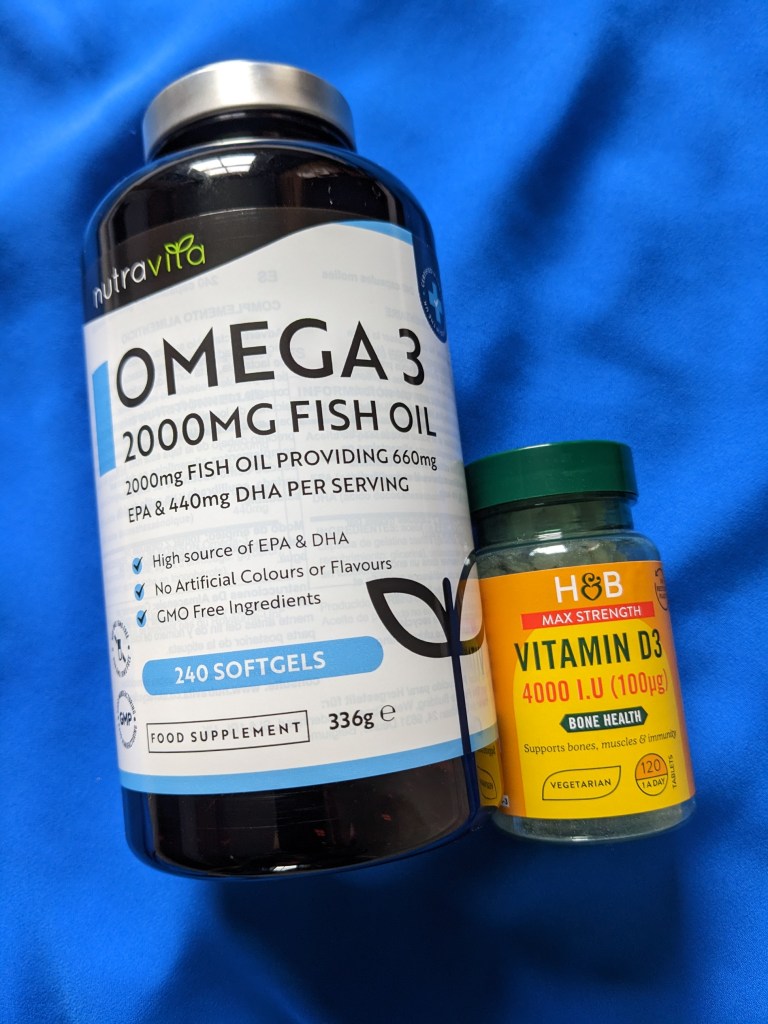
Double dose of Omega 3 helps with anxiety
Removing gluten from diet helps reduce muscle pain
Eye shield helps increase sleep time
Increase protein intake to help muscle retention
Have a good sleep routine to improve sleep quality
Have a good, consistent exercise routine
Record your steps so that you know how much you are walking and have a target to hit
Consider your energy and don’t over commit
Reduce alcohol, this reduces empty calorie intake and improves sleep quality
Same for caffeine, stick to consuming it before midday to protect your sleep
Do weight training to maintain muscle and bone strength
Do high intensity interval training (HIIT) to maintain fitness
Do yoga – Adriene or Patrick Beach on YouTube for instance
Use the NHS App Squeezy to help with pelvic floor exercises
Use Apps for memory maintaining eg Neuro Nation
Make arrangements with friends, you are far more likely to turn up to exercise
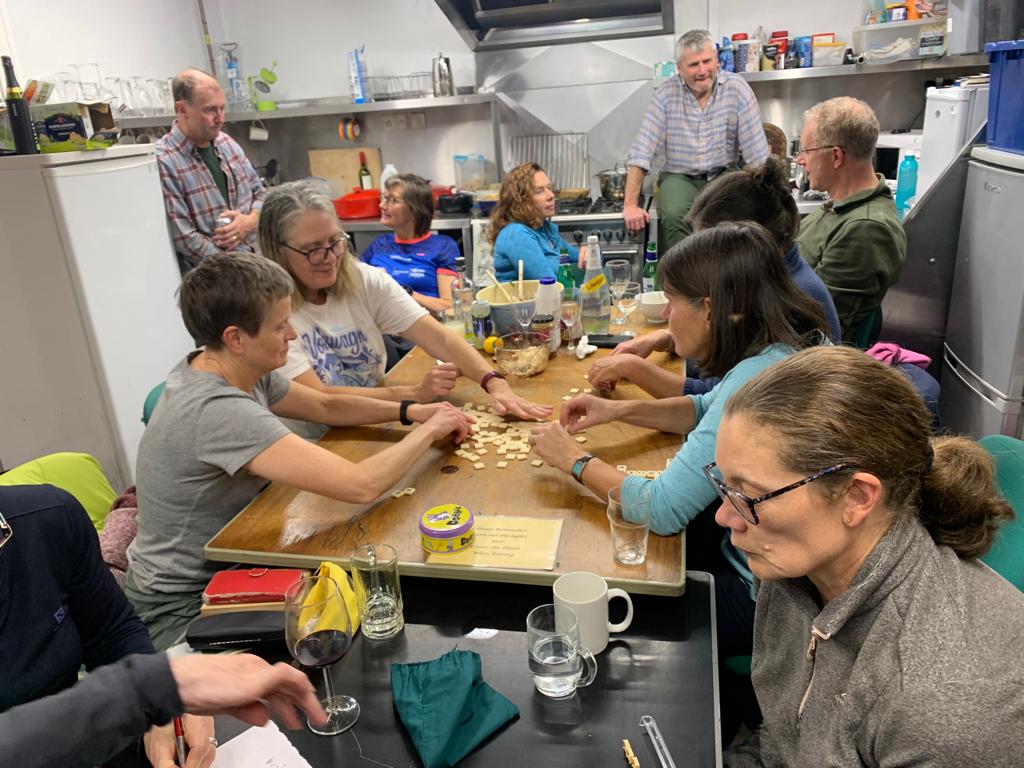
Play games such as suduku or cross words, again to stimulate the brain
Use the Balance App developed with Dr Newsome for managing menopause
Use the Her Spirit App to manage your exercise. This includes strength, yoga, pilates, cycling and enables you to track it all.
Avoid nylon clothing as it can be very hot
Take B12, found in marmite and red meat
Take iron supplement, we are often short, improves ferritin stores and therefore energy reserves. Be careful not to overdose
Manage diet using a glucose monitor in the short term and help from the book ‘Glucose Revolution’ by Jessie Inchauspe. May help lose weight. Reduces insulin spikes and helps energy flow and reduction of insulin spikes.
Primrose oil and star flower combination helps settle hormones
Noom App supports weight reduction through tracking and education
The apps Nutrachecker or MyfitnessPal track calories and food types so you can monitor protein intake for instance. Or you may discover that your health breakfast shake is actually 700 calories! My preference is Nutrachecker, much more intuitive.
Drinking Kaffir helps digestion
Take D3 2000-4000 strength. This supports bone and muscle health and your immune system
Try removing different foodstuffs from your diet and see how your body reacts
Make time for yourself, work out how to feel less guilt and learn to say NO!
People asked how to manage their training through menopause and there is a whole separate article on this. But in a nutshell – do good quality strength training twice a week. Listen to your body carefully, it will probably need more recovery time than it used to. You may need to reduce the amount of endurance exercise you do to get sufficient recovery. Your body also needs fuelling very well. Do some high intensity work if you already do. Approach high interval work with caution if you haven’t ever done much – start with short hard intervals and lots of rest between them. Enjoy – if the enjoyment has disappeared it’s time to rethink things.
My head said this recently and I’m now working on it! How? What can you do when a challenge seems really big, maybe too big? Time to find some strategies. But if you don’t go for challenges that are new and possibly unattainable are you really pushing your boundaries and discovering yourself?
Firstly what is the issue –
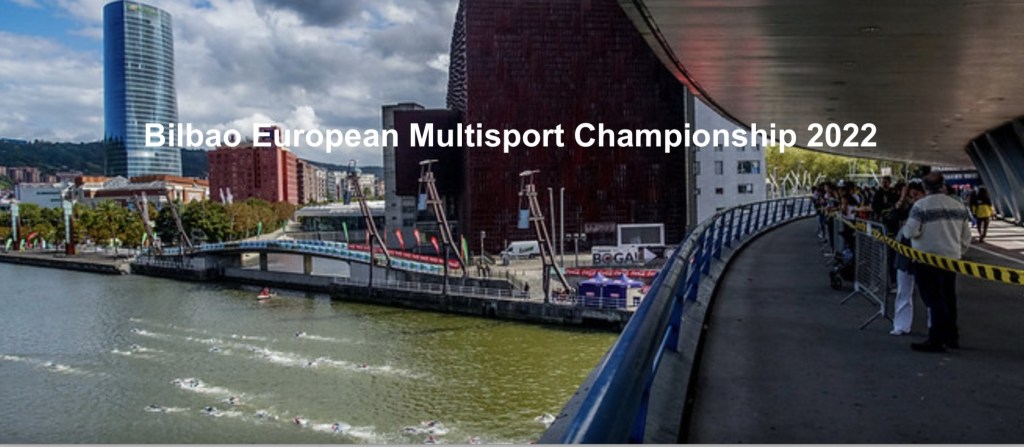
I managed five qualifications out of seven races for the European Multisport Championships in Bilbao in September 2022. Interesting and, yes, I am proud to have achieved that. I’m at the top end of my 55-59 age group so podiums are unlikely. If anyone finishes four Championship events in the week they are awarded a special medal and ‘Legend’ status. So the aim is Legend status. Time to ring the changes, expand my comfort zones and hopefully have some fun.
That was fine until I had a brush with Covid at the end of March followed by a patchy recovery at best and some races where I got results but went very deep. A mid season two week break gave me time to look at the Bilbao events. And my head went ‘HOLY ****!’.
Out of all the Championships to choose this has an enormous amount of climb across my races with even the Standard distance duathlon sporting 15km of climb out of 40km, with a max gradient of 14% and a total of 700m of ascent. Similar to the Shap/Orton route for anyone who lives in South Lakes. And as for the cross events – duathlon and triathlon on mountain bikes, lets not go there.











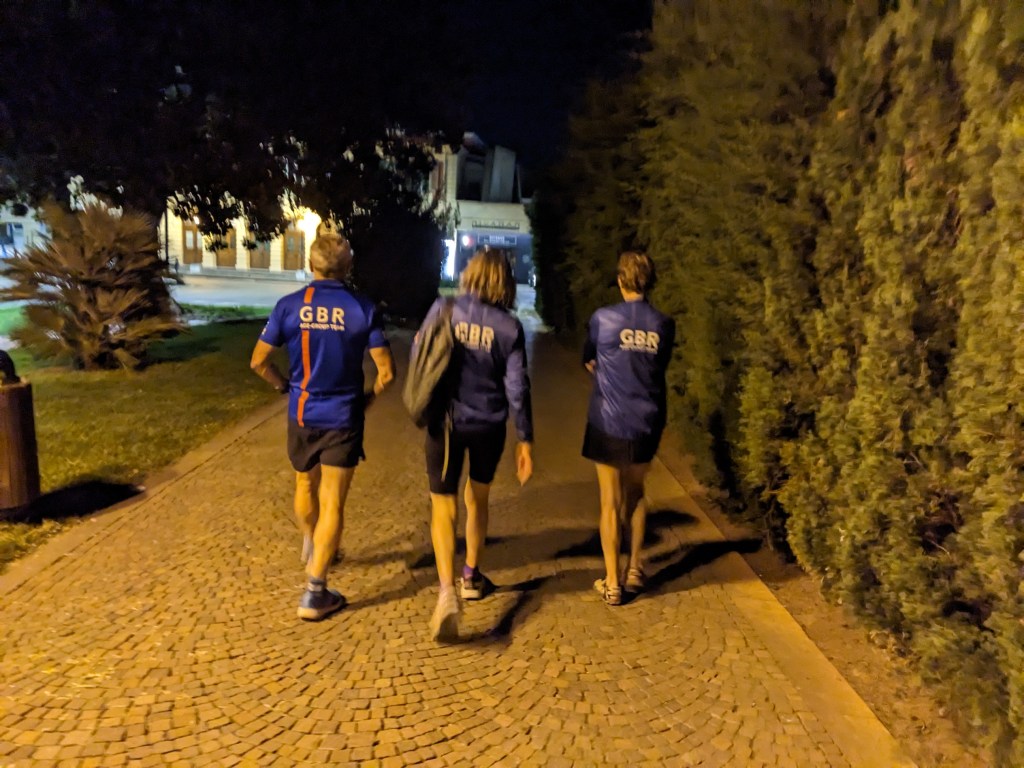
 The recommendation is 10,000 steps a day. So walk to engagements, park the car further from your destination, go for a walk with a friend. Some people find it helps to have a phone/watch/app which records steps so they can track their consistency.
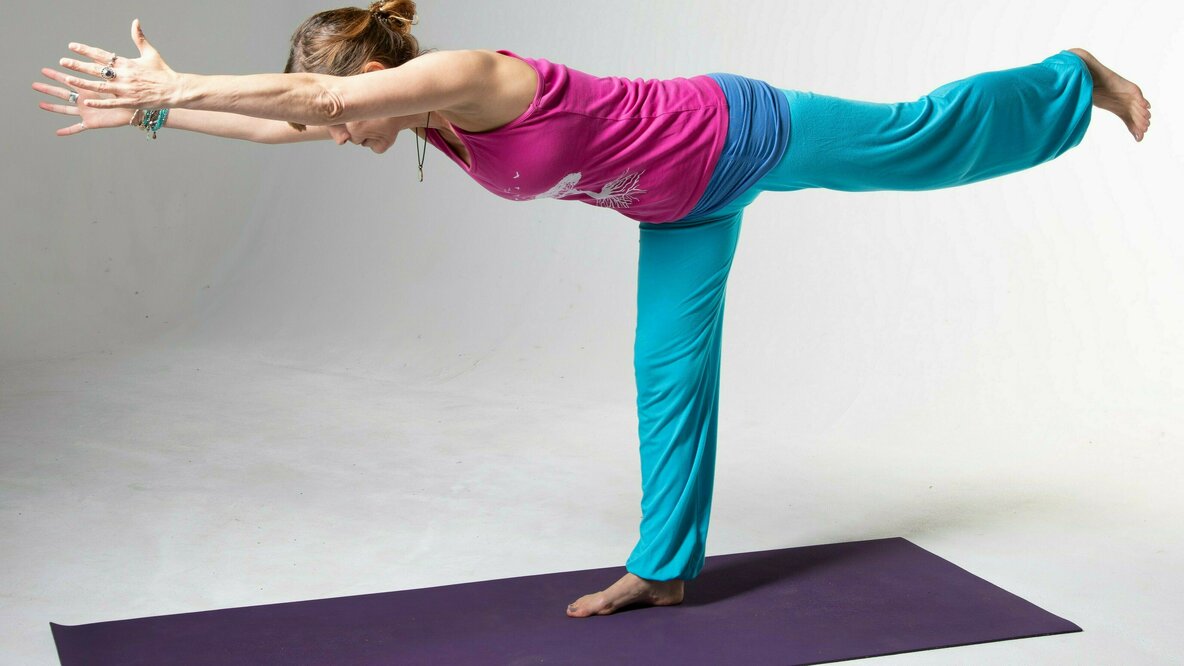 minutes, again stretching can be done in front of TV or while listening to a podcast or music. Ditch scrolling the internet in whatever form and be active instead. Yes you can go to classes but Yoga with Adriene on YouTube has anything from a ten minute chill out to full on hour long strength yoga, or Patrick Beach does a strength focused yoga on line. Something is always better than nothing. Watch TV, if you do, in different positions – sit on the floor, sit self supported, sit on the sofa but ring the changes.
 Again you can do this through Apps at home, go to a gym, work with a Personal Trainer or go to a class. This is the biggest single thing you can do concerning exercise to help yourself in older age. Strength training helps retain muscle strength and the forces placed on the bones through the muscles also helps bone health. This should be backed up with taking Vitamin D3 2000-4000 and eating increased levels of protein, about 1.6g per kilo of a healthy weight for you as an individual.
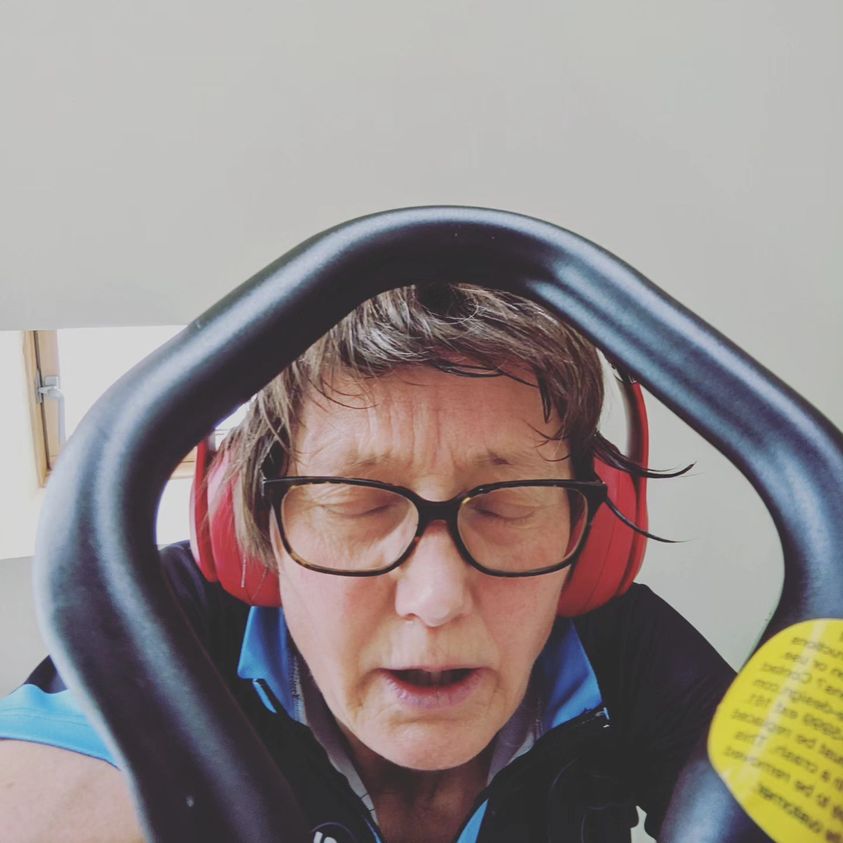 But remember that about 90% of your training should be at an intensity where you can chat and strength training counts as high intensity in your week. Higher intensity intervals certainly have a place in sport specific sessions in the few months before a main event. If you don’t already do it and are swayed by the public debate then I advocate a cautious start. These are very hard work and stressful for the body so only do very short high intensity intervals in your sport with lots of recovery time between intervals to start with, build up very slowly and give yourself more recovery time in your week as they will take a toll. You are aiming for sustaining zone 4/5 in garmin. Fuel with carbohydrate before and during and with carbohydrate and protein afterwards. If that doesn’t sound like fun them I’m with you, stick to good quality strength for most of the year.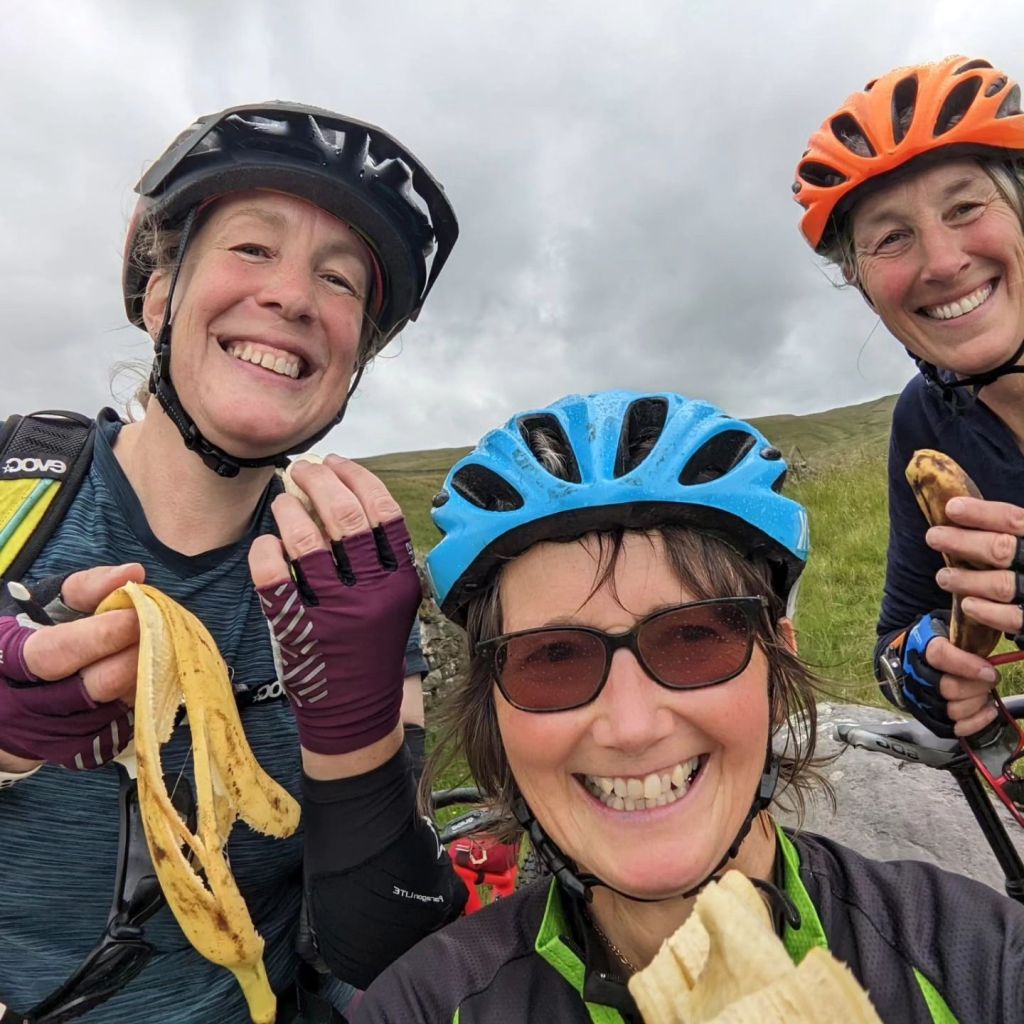


 Karma Cycling