I led a session about Managing the Menopause and many an interesting discussion was had.
One of the questions which came up was ‘How do we train during and after menopause?’.
Menopause is defined as the one day a year after your last period finishes. The average age for this to happen in the UK is 52. A woman may have several years with symptoms as part of the perimenopausal phase and several more in the post menopause phase. Or they may breeze through with no issues.
That immediately tells us that the answer to ‘how do we train’ needs to be very different for different individuals but there are some main guidelines according to current research.
I’d like to split the answer into two sections –
Firstly Functional Fitness for healthy aging. Secondly Training for sport.
The first one forms the foundation for the second and that is an area which is sometimes neglected by athletes. The first gives us functional strength and movement which assist us with efficient movement patterns and improves our resilience to injury. Menopause is part of the aging process, which is inevitable, but it is not a disability. I know that unfortunately some people have illnesses, conditions or injuries which severely limit them. If this is you please try to focus positively on what you can do.
FUNCTIONAL FITNESS FOR HEALTHY AGING
1 STAY MOBILE
Do as much as you can to move your joints and muscles.
Walk. Walking is amazing exercise, it is weight bearing and non stressful.  The recommendation is 10,000 steps a day. So walk to engagements, park the car further from your destination, go for a walk with a friend. Some people find it helps to have a phone/watch/app which records steps so they can track their consistency.
Do ‘exercise snacks’. So if you are desk-bound or quite static in the day get up and move around, walk or run up stairs (if you have them) for no reason. Do calf raises while the kettle boils. Do ten weightless squats. Stretch your ankles. Stick some of those in your day and you will quickly notice that you feel different.
Pelvic Floor – here is another area of our bodies which often becomes less efficient with menopause, especially if we have gone through natural childbirth. Urge or stress incontinence blights many people’s daily lives and is usually possible to avoid. Pelvic floor exercises or Kegels should be one of our ‘exercise snacks’. They are very easy to do anywhere – lying, sitting or standing. The NHS app Squeezy gives good explanations. If you have done these conscientiously for three months and are still struggling pay a visit to the doctor.
Balance gradually becomes worse leading to less efficient movement patterns in sport and falls as we get older. Counter this by standing on one leg at times. For instance when cleaning your teeth, get it into your routine. Make sure you do both legs!
Flexibility/Mobility Do some form of yoga, pilates or stretching. No time? Everyone can make ten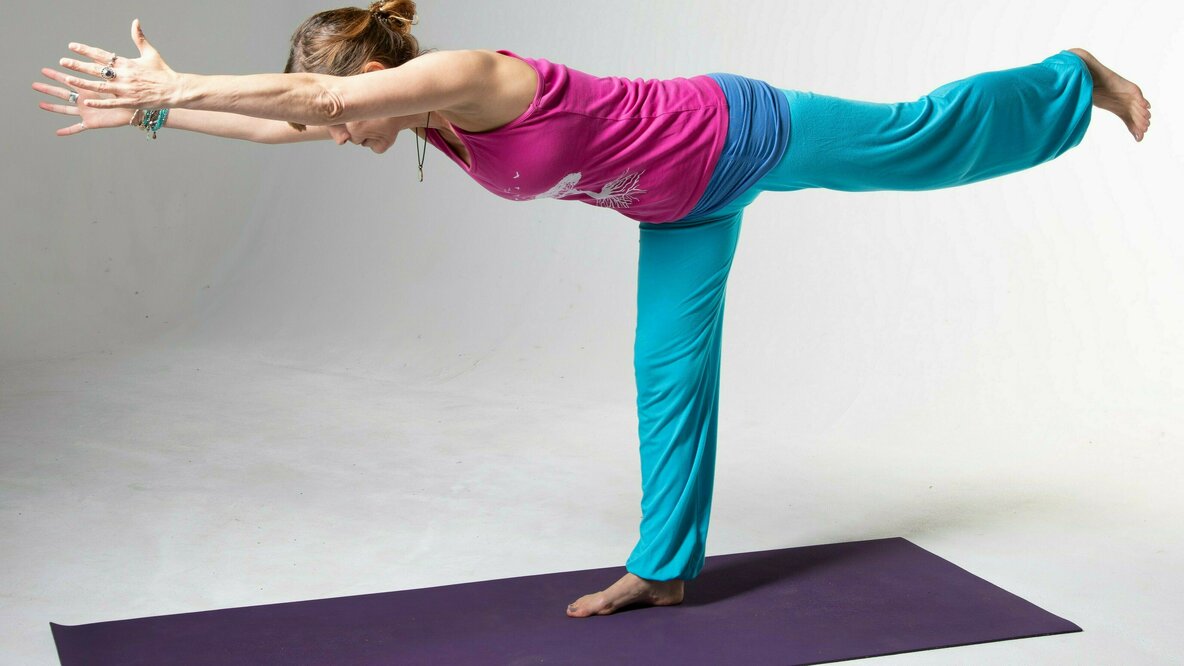 minutes, again stretching can be done in front of TV or while listening to a podcast or music. Ditch scrolling the internet in whatever form and be active instead. Yes you can go to classes but Yoga with Adriene on YouTube has anything from a ten minute chill out to full on hour long strength yoga, or Patrick Beach does a strength focused yoga on line. Something is always better than nothing. Watch TV, if you do, in different positions – sit on the floor, sit self supported, sit on the sofa but ring the changes.
Feet – they have carried us around for a long time by now. Foot yoga helps to keep them mobile and can reduce pain. Another one for in front of the telly! This helps with running efficiency. A frozen water bottle makes a great foot roller, especially in hot weather, helping to reduce inflammation around those 26 bones.
https://www.youtube.com/watch?v=n-gJOwWRAN8
toe yoga
https://www.vivobarefoot.com/uk/blog/engage-your-feet-with-a-spot-of-toega?
Toe yoga
https://www.youtube.com/watch?v=ea4MF7IqILA
Adriene
2 GET STRONG
We lose muscle as we age, know as sarcopenia. We also lose bone density which leads to increased risk of fractures.
Strength Train – at any level, something is better than nothing. Again you can do this through Apps at home, go to a gym, work with a Personal Trainer or go to a class. This is the biggest single thing you can do concerning exercise to help yourself in older age. Strength training helps retain muscle strength and the forces placed on the bones through the muscles also helps bone health. This should be backed up with taking Vitamin D3 2000-4000 and eating increased levels of protein, about 1.6g per kilo of a healthy weight for you as an individual.
Apps for this include Her Spirit and Be Mobile. The photo is from the ‘Be Mobile’ website and you can use bags of rice or tins of beans if you haven’t got weights.
TRAINING FOR SPORT
This section assumes you are doing some of the above and that you are a training athlete looking to complete personal challenges or races. It also assumes you know some training terminology. How should you adapt to the phases of menopause? Well now, that depends! You knew I was going to say that didn’t you. There are some principles, but there is very little research.
Joe Friel’s book ‘Fast After 50’ is worth a read, but remember the lack of research on women in general. Stacy Sims wrote ‘Roar’ and ‘Next Level’. Both of these are good although some information contrasts with research produced by well respected British researchers.
Up the strength training. This does SO much. Good quality strength training will help prevent injury, keep your mobility and make you strong. This means you can hold your posture running and on a bike for hours, you can move around a mountain bike, you are efficient in your movements which means more speed, less effort. It is an out and out win. There are limits though. You are looking to be an endurance athlete, not a bodybuilder. If you get anywhere near deadlifting or squatting your bodyweight for five that is more than enough. You are strength training to do your sport, not the other way round. Get some help with technique and a programme to prevent injury. Do it twice a week most of the year and once a week the rest of the time! Add hopping and skipping in and it will improve your running. Support your strength training through the intake of some carbohydrate before and possibly during a session and protein and carb within the forty minutes after a session. There is some debate about whether this forty minute window is important, currently I support the view that it is, particularly for females who have a shorter metabolic window than males. Fuel ingested at this time is used more efficiently by the body, and protein intake here helps increase protein ingestion which is a constant battle. If you are training at this kind of level you should be ingesting about 2g of protein per kg of body weight in portions of 20-30g at once. Strength training should follow an annual cycle, like the rest of your training with peak phase just before your main build phase for your event.
Up the recovery. One of the symptoms of menopause is lack of energy and we can attempt to counter this by being really on it with our diet but there are limits. We need to listen to our bodies very carefully and provide them with the amount of recovery that they need. One of the benefits of maturity is increased wisdom around this! If your mojo is down it might not be hormones, it might just be that you are tired and need to rest. The same for being irritable. If morning heart rate is up you are doing too much. There are lots of over training symptoms you can read about elsewhere but consider whether you need to increase the amount of down time in your schedule. Possibly decrease the amount of aerobic training you are doing to accommodate strength training. Take rest days and take easier weeks, possibly every fourth week. This impacts the strength training verses high intensity training debate. If you are doing the suggested twice a week quality strength training you are unlikely to recover week on week from doses of high intensity training as well.
High Intensity Training – there is much rhetoric about doing high intensity training to maintain fitness and burn fat as you age. However there appears very little research to substantiate this for older women. Yes there are benefits but it also carries high levels of risk especially HITT/cross fit type training and running. If you already do some of this training then fine. 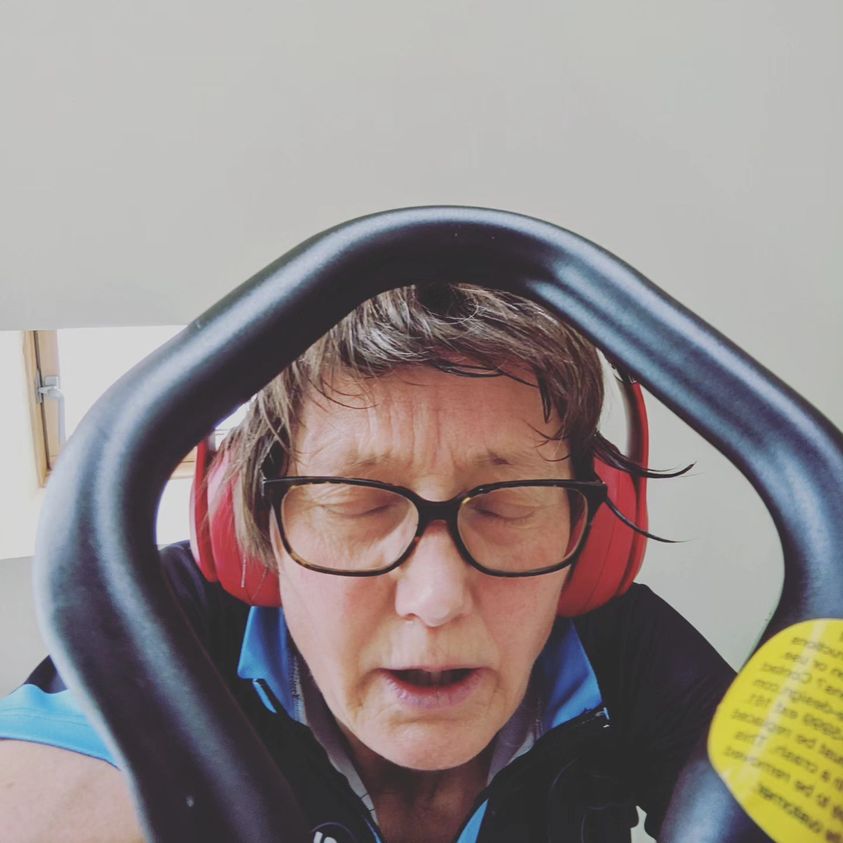 But remember that about 90% of your training should be at an intensity where you can chat and strength training counts as high intensity in your week. Higher intensity intervals certainly have a place in sport specific sessions in the few months before a main event. If you don’t already do it and are swayed by the public debate then I advocate a cautious start. These are very hard work and stressful for the body so only do very short high intensity intervals in your sport with lots of recovery time between intervals to start with, build up very slowly and give yourself more recovery time in your week as they will take a toll. You are aiming for sustaining zone 4/5 in garmin. Fuel with carbohydrate before and during and with carbohydrate and protein afterwards. If that doesn’t sound like fun them I’m with you, stick to good quality strength for most of the year.
This is a balanced podcast from Simon Ward about the subject. https://podcasts.apple.com/gb/podcast/simon-ward-the-triathlon-coach-podcast-channel/id1286604688?i=1000619312006
So to summarize – do strength work, recover well, consider high intensity with caution and fuel like a ninja. Above all have fun.
 Karma Cycling